







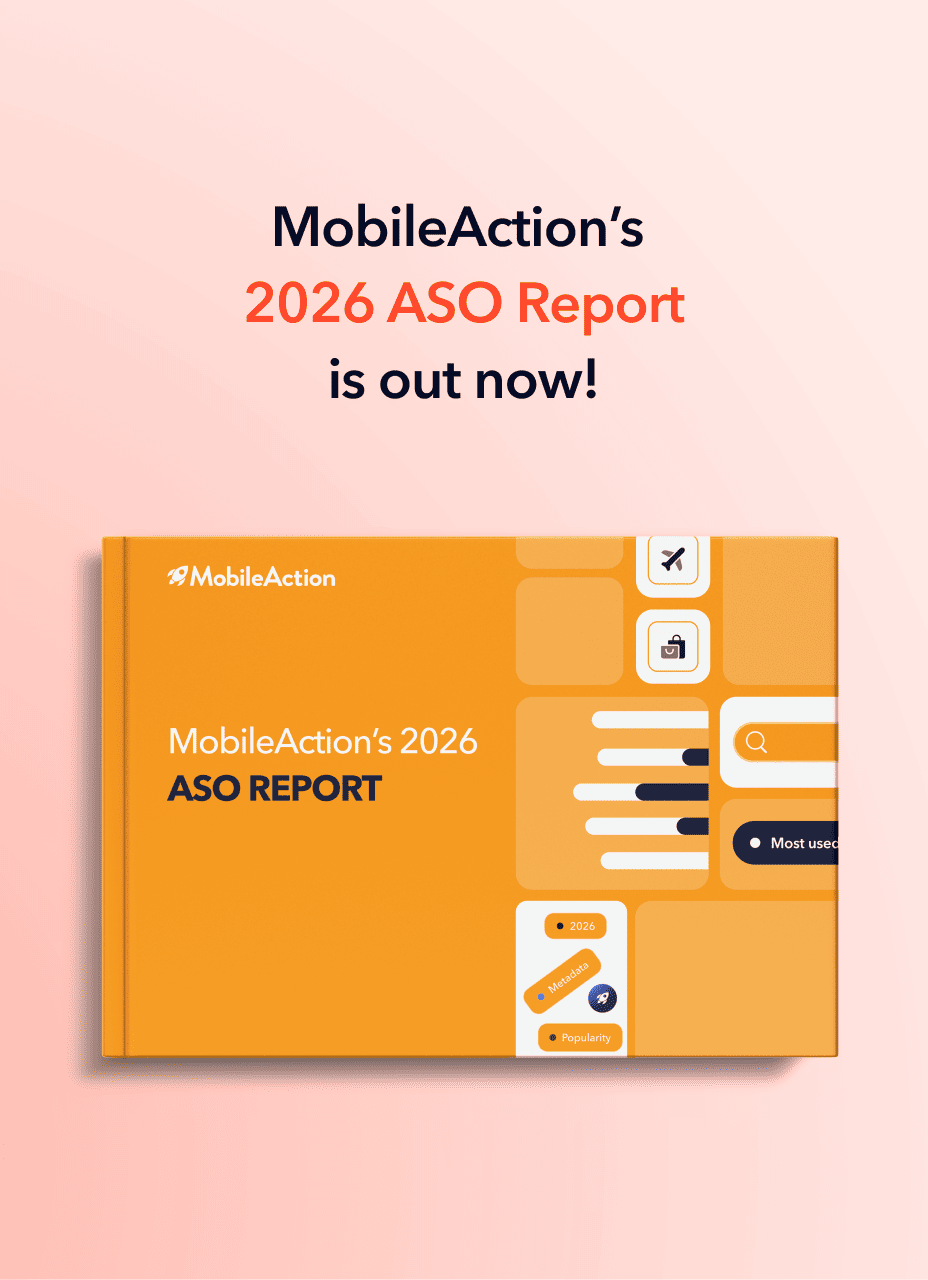



Looking to boost your app's visibility and acquire more users? Our 2025 ASO Report is your ultimate guide to navigating the evolving app store landscape. Packed with data-driven insights, keyword trends, and top-ranking app strategies, this report will equip you with the knowledge to optimize your app's presence and achieve organic growth.
The mobile app market is huge, competitive, and still growing rapidly. Yet success in this booming market is far from guaranteed.
A major reason behind this is inadequate app market research. In other words, many apps flop because they didn’t validate that people needed the app, or they failed to understand the market and competition before launch.
In this blog, we will show you exactly how to do app market research step by step, from validating your app idea and sizing the market demand, to analyzing competitors and planning your go-to-market strategy.

What is app market research (and Why Does It Matter)?
App market research is the process of thoroughly understanding your app’s target market, user needs, competition, and overall market trends before (and during) development. This research later feeds into your App Store Optimization (ASO) efforts. It’s essentially market research for mobile apps, investigating whether there is a real demand for your app, who your ideal users are, what those users want, and how your app can fit into (and stand out in) the existing app marketplace.
This involves collecting data from primary research (directly from potential users through surveys, interviews, polls, etc.) and secondary research (using existing data sources like app store analytics, industry reports, competitor research, and online tools).
In simpler terms, doing market research for an app means answering key questions such as:
- Is there a market need for my app? (Are enough people experiencing the problem my app solves?)
- Who exactly are my target users? (What are their demographics, behaviors, and pain points?)
- Who are my competitors? (What similar apps exist and how well are they doing?)
- What makes my app unique? (How will I differentiate or do better than competitors?)
- What features or content do users really want? (What feedback are users giving in this app category?)
- What is the viable business model? (Will it be free, freemium, paid, subscription, etc., and what are people willing to spend?)
- How can I effectively reach and convince my target audience? (Which marketing channels or app store keywords will connect me to users?)
How to do market research for an app: 9 key steps
Conducting app market research may sound complex, but it becomes manageable if you break it into clear steps. Below is a practical, end-to-end framework you can follow to research your app idea thoroughly. These steps cover everything from initial idea validation to ongoing post-launch research.
1. Define your app’s idea, value, and purpose
Every successful app starts with a clearly defined purpose and value proposition. So the first step of your app market research is introspective: crystallize what your app is and why it matters. Ask yourself and your team:
- What problem does this app solve, or what need does it fulfill?
- Who would find this app useful or entertaining?
- What are the core features and unique aspects of our solution?
Having an answer to these questions will guide the rest of your research. Be prepared to refine your idea as you gather research. In some cases, you might even pivot your concept if research shows a different need is more pressing or a different audience could be more lucrative. The outcome of this step is a solid hypothesis of your app’s purpose and its intended users, which you’ll test in the following steps.
Also, check out our article titled How to create an app and make money as an indie developer
2. Identify your target audience
Next, drill down into who your ideal users are. Defining a specific target audience is absolutely crucial; saying “my app is for everyone” is destined for failure. Instead, figure out the exact profile of people who have the problem your app addresses or who would be most excited about your app.
Consider characteristics such as:
- Demographics: age range, gender, location, language, education, occupation, income level, etc.
- Psychographics: interests, lifestyle, values, attitudes.
- Behavior/Tech Usage: How comfortable are they with tech? What devices do they use (iPhone vs Android)? How often do they use apps in your category? Do they prefer certain app features or styles?
- Pain Points: What frustrations or needs do they have that your app could solve?
- Current Solutions: How do they currently address the problem (maybe using a competitor app, or a manual process, or not at all)?
To gather data for your audience research:
- Start broad, then narrow down: Look at any relevant statistics or reports (for example, Pew Research or Statista reports on smartphone user demographics, or trends among a certain group).
- Use social media and forums: Check Reddit, Facebook groups, or online communities where your target audience might hang out. See what topics or complaints come up. If your app is about fitness, for example, browse fitness forums to hear people’s challenges.
- Leverage existing customer data (if applicable): If you have a similar app or a following, analyze who those users are. If not, look at competitor app user reviews to glean what types of people are using those apps and what they say (more on this later).
3. Estimate market demand with app store research
Now that you have an idea and target users defined, it’s time to answer the million-dollar question: Do enough people actually want what you plan to offer? One of the fastest ways to gauge demand for a mobile app idea is to do app store market research, basically, use the App Store and Google Play as giant databases of user demand signals.
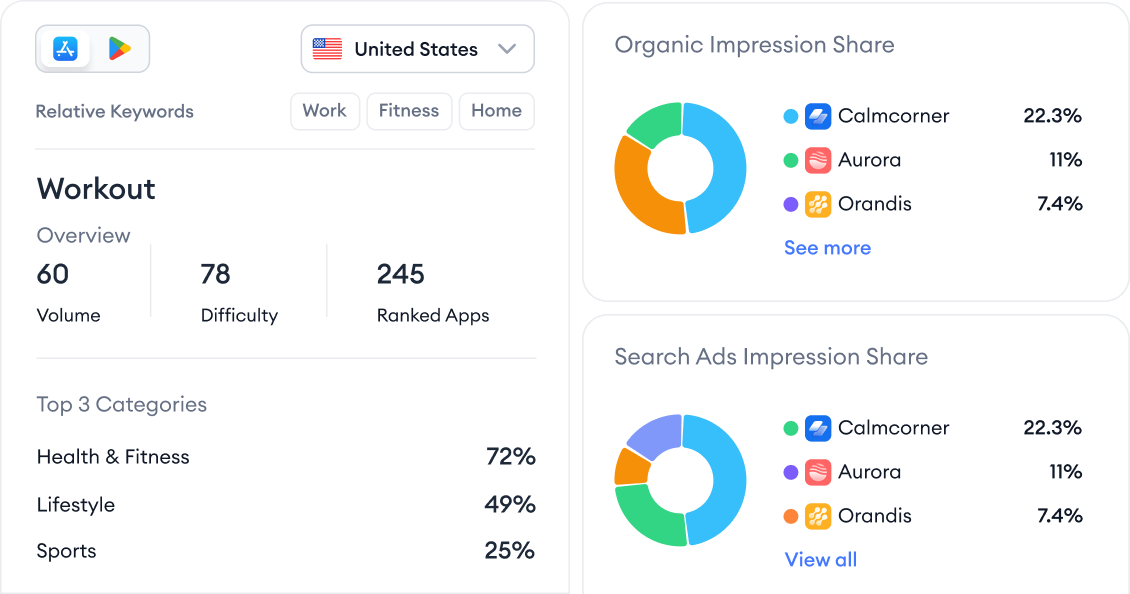
Here’s how to size up demand using app stores:
- Keyword Research: Think of the keywords or phrases someone would type into the App Store or Google Play to find an app like yours. Using MobileAction’s ASO Intelligence, check the search volume for those keywords. A high search volume indicates a lot of people are actively looking for that solution. This is a strong sign of demand.
- Trend Analysis: Use Google Trends or app industry reports to see if the interest in your app’s category is rising or falling. If you find that interest is trending upward, that’s a green light; if it’s declining, you’ll need to investigate why (maybe the problem was solved by existing players or the need shifted).
- Top Charts & Categories: Browse the app store categories related to your idea. See which apps are currently top-ranked in your category. If you find apps similar to yours in those top charts, that means the category is active, and users are downloading such apps.
- Competitor Popularity: Search for keywords and identify specific competitor apps that target the same problem. How popular are they? Look at the number of reviews or installs. If an app solving the same problem has millions of downloads or a very large, active user base, that confirms demand but also means you’ll have stiff competition.
- Category Size and Revenue: Research how big the overall category is in revenue. For instance, if you want to build a meditation app, look up the market size for meditation apps or health/fitness app revenue. If the category market size is, say, $1 billion/year, and growing, that’s a promising sign that users spend money or time in this space..
#Pro tip: If possible, create a simple landing page or use a survey to gauge interest, essentially a smoke test. Describe your app idea and see if people sign up or say, “I want this.” This isn’t strictly app store research, but it complements it by directly measuring interest. You can run a small ad campaign, driving to the page to see if people bite. Low conversion might indicate low interest or that your messaging is off; strong conversion validates demand.
4. Analyze the competition
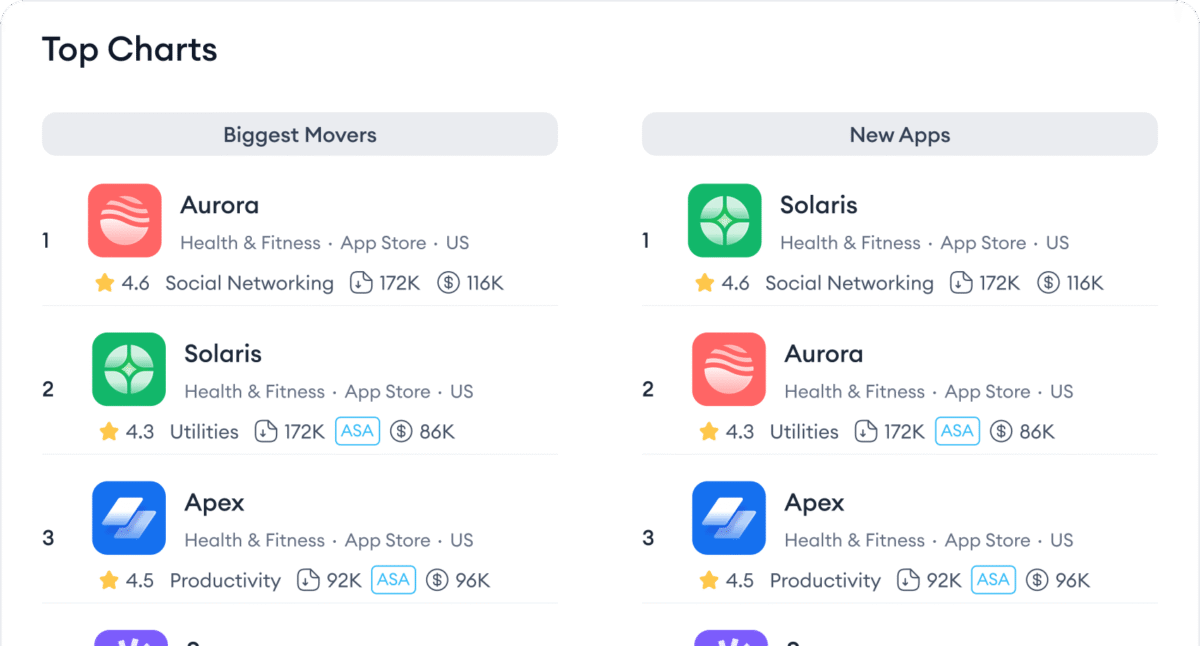
No app market research is complete without a thorough competitor analysis. You need to know who you’re up against and how you can differentiate. Start by identifying the direct competitors, apps that offer similar functionality or target the same user need as yours. Then also consider indirect competitors, apps that solve a somewhat different problem but could compete for your users’ attention and budget.
To analyze competitors, do the following:
- Compile a Competitor List: Using your app store searches from the previous step, list out the top 5-10 apps that are most similar to your idea. Include big players and smaller emerging ones.
- Download and Use Their Apps: This might seem obvious, but experience your competitors’ apps firsthand. Sign up for them, go through their onboarding, and try out key features. Take notes on what you like and dislike as a user. Pay attention to their design, usability, feature set, and any innovative approaches.
- Read Competitor Reviews: App Store and Google Play user reviews are a goldmine for market research. Users often mention what they love or hate about an app in reviews. Look for common praise and complaints in the 4-5 star reviews (and in the 1-2 star reviews.
- Analyze Their Marketing & Monetization: Visit the competitors’ websites (if any) and social media. How are they positioning their app? What’s their branding like? This can inspire how you differentiate your branding. Also note their business model, are they free with ads, freemium with in-app purchases, one-time paid, or subscription? How do users react to their monetization?
By the end of competitor analysis, you should have a clear picture of what you’re up against: the strengths and weaknesses of other solutions. This will directly feed into the next steps, where you determine your differentiation and strategy.
5. Study user reviews and feedback in your niche

We touched on this in competitor analysis, but let’s emphasize the importance of user feedback research as its own step. Beyond just competitor app reviews, gather app market insights on user needs and preferences from various sources:
- App Reviews: As mentioned, scour reviews on the app stores for all apps similar to yours. Don’t just read the top couple; sort by most recent to see current issues, and consider using tools or scripts to aggregate common keywords in reviews. Look for patterns. Do many users complain about a particular missing feature or bug across multiple apps? Do they frequently request a function that none of the existing apps have?
- Online Forums and Social Media: Outside of app store reviews, people often discuss their problems and app recommendations on sites like Reddit, Quora, Twitter, or specialized forums. Search for keywords related to your app on these platforms. These open discussions can validate that the problem exists and show how users talk about it in their own words (which can even help your marketing copy later).
- Direct User Conversations: If possible, talk to some potential users directly. This could be informal chats or more structured user interviews. Identify a few people in your target demographic (friends, colleagues, or connections from social media who fit your user persona) and ask about the problem your app addresses. Even a handful of interviews can deepen your understanding beyond what you get from anonymous reviews.
- Beta Testing / Prototype Feedback: If you have a prototype or even just wireframe designs of your app, get it in front of some potential users early. Their reactions to even a low-fidelity demo can reveal a lot about whether your solution resonates. Early feedback loops ensure you’re building something users will actually like.
Also, don’t forget to check out our guide titled How to respond to app store reviews the right way in 2025
6. Validate your monetization and pricing strategy
A critical part of app market research that’s sometimes overlooked is researching the business side of your app. In other words, figuring out if and how the app will make money, and what pricing model works in the market. Even if you plan a free app, you likely have a monetization plan. Research can guide whether your monetization assumptions are viable:
- Study Competitor Pricing: How are your competitors monetizing? For example, maybe all the top apps in your category are free with an in-app subscription for premium features. If users have become accustomed to that model, launching as a paid-upfront app might be a hard sell. On the other hand, if competitors charge $X per month, and users seem to be willing to pay (check their download counts and revenue estimates if available), that gives you a benchmark.
- Market Willingness to Pay: Use your survey or interview opportunities to inquire subtly about price. For instance, ask “Have you ever paid for an app or subscription to solve [this problem]? If yes, how much was it and for what?” or “Would you prefer a free app with ads or a $4.99 one-time purchase for an app like this?”
- Consider Different Models: If your research indicates that cost is a big barrier for your audience (say they are teenagers with no budget, or a segment known to rarely pay for apps), you might lean towards ad-supported or freemium. Conversely, if it’s a business app and your users are professionals, a subscription might be entirely acceptable because they view it as a tool or investment. Also, research how apps in similar spaces monetize.
- Cost of User Acquisition: While not exactly pricing, part of market research is understanding the economics of reaching users. Look at marketing channels in your niche, are competitors heavily running ads (you might notice their presence on social media or search ads)? If so, the cost to acquire users via ads might be high. Also, check if any competitors have referral programs or viral features indicating they rely on word-of-mouth.
- Market Research on Revenue Potential: If you can find any reports or case studies on how apps in your category monetize (sometimes blogs or developer postmortems share this), use that data. One data-driven approach is: if the total addressable market is X users (from your demand research) and you expect Y% to pay Z dollars, does that meet your business goals? It’s a sanity check.
By validating pricing and monetization with the market, you’ll be able to design your app in a way that supports your chosen model. It also gives you confidence to justify your pricing in marketing materials because you’ll understand the value perception users have.
7. Perform a SWOT analysis for your app idea
Now that you have gathered a trove of data on the market, the users, and the competition, it’s helpful to compile and summarize these insights. A classic framework for this is a SWOT analysis, which stands for Strengths, Weaknesses, Opportunities, Threats:
- Strengths: Based on everything you’ve learned, what are the inherent strengths of your app idea or team? This could be a unique feature you’ll have that competitors lack, an advantage like your personal domain expertise, or positive feedback you got from users.
- Weaknesses: Be honest, what weaknesses or challenges does your app or team have? Did research reveal a feature gap you haven’t figured out yet? Or maybe a weakness could be a lack of marketing budget. It could also be something like needing more technical refinement or uncertainty in one area of the concept.
- Opportunities: These are external factors in the market that you can take advantage of. Your research likely uncovered some opportunities. A growing user segment with unmet needs is an opportunity. A trend (like rising interest in gamified learning apps, for instance) is an opportunity. List the market gaps and trends that favor your app’s success.
- Threats: These are external risks or obstacles. For instance, a threat could be a large company rumored to be entering your app’s space, or an overall decline in app usage for a certain demographic. It could also be the risk of platform changes (if Apple/Google introduce a similar feature at the OS level, it threatens third-party apps). Another common threat is simply heavy competition; a very crowded market means higher marketing costs and difficulty standing out. List all the things that could hinder you despite your strengths.
Doing a SWOT analysis condenses your market research into a strategic snapshot. It helps you internally to ensure you have plans to leverage strengths/opportunities and mitigate weaknesses/threats.
Once you have it, you essentially have the outline of your strategy: maximize strengths, seize opportunities, address weaknesses, and guard against threats. Keep this analysis handy; as you proceed to development and marketing, refer back to ensure you’re following through on it.
8. Position your app and plan your go-to-market strategy
With all the research and analysis done, you’re ready to craft a compelling positioning for your app and outline your go-to-market strategy. This step is about deciding how you will present your app to the world and how you’ll attract your first users.
Positioning means defining the key message and identity of your app in the minds of your target customers. It answers questions: What category are we in? Who is it for? What main benefit do we offer? What makes us different?
Remember, a go-to-market plan is a hypothesis based on your research. Once you launch, you’ll get actual market feedback (real users, real usage data) that might lead you to tweak your approach. However, entering the market with a researched plan gives you a strong head start over competitors who might be winging it. You’ll be able to pitch your app confidently: you know exactly who it’s for and why it’s great for them, and you have a plan to get it in front of those people.
9. Continue market research post-launch
Your app is now launched, congratulations! But app market research doesn’t end at launch. In fact, the most successful apps treat market research as an ongoing, continuous process. This allows you to adapt to changing user preferences, stay ahead of competitors, and find new growth opportunities. Here’s what to do post-launch:
- Track and Analyze Your App Store Metrics: Use analytics to see how users are finding and using your app. For example, using Store Analytics, monitor which keywords are bringing the most downloads. If you see new search terms leading users to your app, consider optimizing for those. Track conversion rates on your app listing. If a lot of people view your page but don’t download, maybe your screenshots or description need improvement.
- Listen to User Feedback (Reviews & Support): Continuously read your own app’s reviews and any support inquiries. They will often point out bugs or feature requests. This is basically ongoing market research for your app’s improvement. Users might use the app in ways you didn’t anticipate or request features that align with their needs.
- Watch the Competition’s Moves: Set up a routine (monthly or so) to review what your competitors are up to. Did they release a big new feature? Change pricing? You might even set Google Alerts for their app names or follow their social media. The goal is not to be caught off guard.
- Keep Up with Market Trends: The app market evolves quickly. What’s hot this year might cool off next year. Subscribe to industry newsletters, follow mobile app research blogs, and attend webinars or conferences. For instance, privacy changes, new device types (wearables, etc.), or platform policy changes can all impact your strategy. I
- Iterative Development: Use all the above inputs to iterate on your app continuously. Market research shouldn’t stop once development starts, ideally, each new feature or pivot goes through a mini research validation. Many successful apps use the build-measure-learn loop: they build small improvements, measure user response (analytics + feedback), learn from it, then decide next actions.
- Explore New Markets: As your app grows, your original market research might need updating. Perhaps you researched just the US market initially; after launch you notice downloads picking up in Brazil or India organically. That’s a sign to research those markets specifically, maybe consider localization or targeted marketing there.
As you iterate, you’ll deepen your understanding of your users and market even more, which becomes a competitive moat in itself. Many apps fail because they set and forget; you won’t, because you’ll be learning and improving continuously.
To sum up

Successful apps may seem like overnight hits, but behind the scenes, they are built on a foundation of careful app market research and strategy. By following a structured approach, validating the need, knowing your users, studying the competition, and leveraging real data, you significantly increase your app’s chances of achieving faster growth. Remember that app market research isn’t a one-time task to check off; it’s an ongoing mindset of staying informed about your market and users. As you implement your idea, continue to gather insights, and be ready to adapt.
Most importantly, take action on what you learn. If the research says pivot, then pivot. If users are clamoring for a feature, consider adding it. Use data to drive your decisions at every turn. When you combine data-driven research with your passion and creativity, you’ll be in the best position to launch and grow an app that truly thrives.
And if you need a helping hand, modern ASO and market intelligence tools of MobileAction are there to streamline a lot of this work, from uncovering high-demand keywords to tracking competitors, so you can make informed decisions faster. Sign up today and don’t hesitate to take advantage of MobileAction in your journey.
Frequently asked questions
How to do market research for an app?
To do market research for an app, you begin by defining your app idea and identifying your target users. After that, you conduct secondary research using app store data and online sources. This includes checking how many people search for solutions similar to your idea, studying top apps in your category, and analyzing competitor features and reviews. The next step is primary research, which involves talking directly to potential users through surveys, interviews, or polls. This helps you understand user needs and validate your concept. When you combine these insights, you can determine demand levels, user expectations, and the best market positioning for your app. Finally, you use the collected data to shape your app’s features, marketing message, and differentiation strategy. Effective market research blends quantitative information such as search volume and competition with qualitative input like user pain points and motivations.
How much does market research cost for an app?
The cost of market research for an app varies based on your approach. You can do basic research at little or no cost by checking app stores, reviewing competitors, and conducting your own surveys. This mainly requires your time. If you want more comprehensive insights, you may use paid tools, user testing platforms, or small incentives for survey participants. These efforts may cost a few hundred dollars. Hiring a professional research firm for a full market study is the most expensive option and can cost several thousand dollars. Most developers choose a middle path that combines free methods with selective paid tools. No matter the budget, investing in research usually prevents costly mistakes that arise from building or launching an app without understanding the market.
Can ChatGPT do market research?
ChatGPT can support parts of the market research process, but it cannot replace real market data. It can help you create interview questions, summarize competitor reviews when you provide the text, identify potential competitors, and suggest keywords to investigate. However, it does not have real-time access to app store metrics or current user opinions unless you provide that information. ChatGPT works with the data it was trained on and with the inputs you supply. You can use it for structuring your research approach and analyzing information, but you will still need real user feedback, updated industry data, and actual market tools to complete your research accurately.
What are the 5 P’s of market research?
The five P’s of market research are Product, Price, Place, Promotion, and People. Product refers to understanding the value your app provides and the features that matter most to users. Price concerns the pricing model you plan to use and what customers are willing to pay. Place refers to distribution channels, which for apps means determining whether your target users are primarily on iOS, Android, or both. Promotion involves the channels and messages that will reach your audience, based on where they look for information or apps. People refers to your target users, including their needs, expectations, and behaviors. Evaluating each of these areas helps ensure that your research and strategy cover all aspects of launching and positioning your app.

Content Marketing Manager
Resources that you'll love


Grow your app on the App Store and Google Play Store with our solutions now