







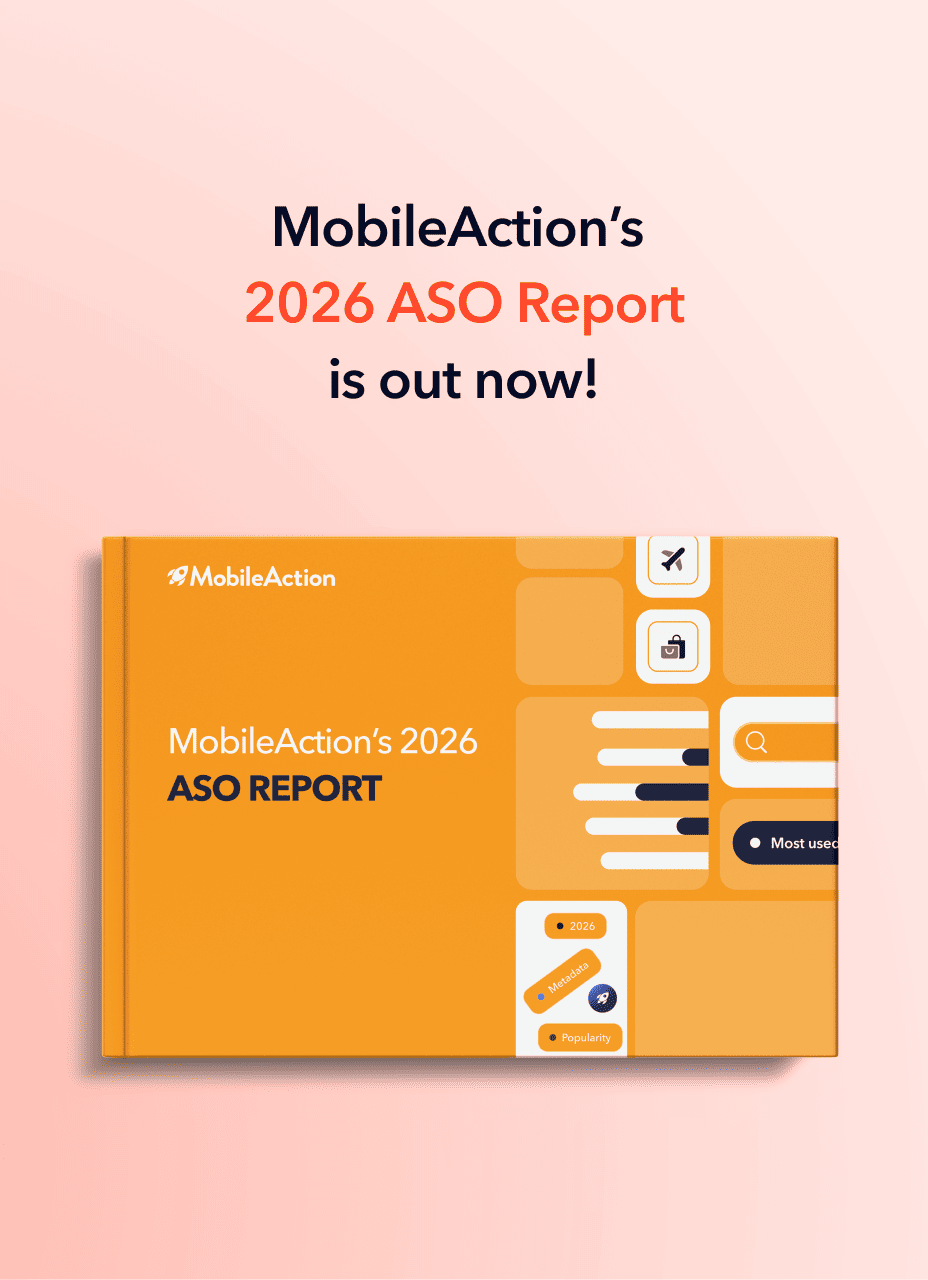


Looking to boost your app's visibility and acquire more users? Our 2025 ASO Report is your ultimate guide to navigating the evolving app store landscape. Packed with data-driven insights, keyword trends, and top-ranking app strategies, this report will equip you with the knowledge to optimize your app's presence and achieve organic growth.
Whether you run a website or have an app, maximizing visibility and discoverability is crucial for acquiring new users and customers.
While SEO and ASO both strive to do just that, they approach optimization quite differently to suit their respective domains of websites versus mobile apps.
So, ASO vs SEO… What is the difference anyway?
ASO and SEO are not substitutes. ASO improves how your app ranks and converts inside Apple App Store and Google Play. SEO improves how your web pages rank in Google/Bing and AI Overviews. In 2026, the best growth teams use both: SEO captures demand, ASO converts that demand into installs and retained users.
In this blog, we will explore ASO vs SEO – what they are, how they differ, and how they are similar.
We’ll look at some of the top tools and resources for both SEO and ASO so you can choose the right ones for your needs.
Our goal is to help you understand how to leverage both strategies effectively depending on whether you want to rank higher in search engines or app stores.
What is App Store Optimization (ASO)?
App Store Optimization (ASO), is the process of optimizing an app’s listing page for major app stores such as Google Play and the Apple App Store. The primary goal of ASO is to increase the visibility of an app and boost organic downloads.
There are two main components of ASO – keyword optimization and conversion rate optimization.
The first involves targeting the right keywords that potential users are searching for in the app stores and optimizing elements like the app name, description, and screenshots to rank higher for those keywords.
By ranking higher in search results, the app becomes easier for users to discover through search.
The second component focuses on increasing conversion rates once users land on an app’s listing page. This involves optimizing elements like the app title, description, screenshots, and app preview video to clearly communicate the app’s value proposition and benefits to users.
The goal is to entice more users to download and install the app after visiting its listing page.
Overall, ASO aims to first get more relevant users to discover an app through improved search rankings, and then maximize the percentage of those users who decide to download and install the app on their devices.
This ultimately leads to an increase in organic downloads and new users.
What is Search Engine Optimization (SEO)?
Search Engine Optimization (SEO), is the process of optimizing websites and their content to rank higher in unpaid search engine results.
The overall goal of SEO is to help websites generate more qualified and organic traffic from search engines like Google, Bing, Yahoo, and others.
There are two core pillars of SEO – visibility and click-through rate. Visibility involves optimizing aspects like page titles, meta descriptions, headings, internal linking structure, and keyword research/implementation to increase the likelihood of ranking highly for relevant keywords. AI SEO tools can support these efforts by analyzing data, identifying optimization opportunities, and automating repetitive tasks, making the process more efficient and effective.
The second pillar focuses on the click-through rate. This refers to optimizing elements such as compelling headline titles, descriptive URLs, user-friendly content, and speed to entice more searchers to click on the result linking to a website.
Key areas of optimization include page content, site structure, site speed, backlink profile, and off-page factors.
By analyzing different components, marketers can identify areas needing improvement and implement changes to increase organic search traffic over time.
The end goal is to enhance both visibility and CTR, bringing more qualified potential customers directly to a website via unpaid search results.
This is done by deeply understanding user intent and shaping content accordingly. If you’re new to the field or want to brush up on terminology, browsing an SEO glossary can be a helpful way to get familiar with key concepts and strategies.
ASO vs SEO: 2026 comparison table
| Dimension | ASO | SEO | Why It Matters |
| Primary surface | Apple App Store, Google Play | Google, Bing, AI Overviews | Different ranking systems and user expectations |
| Core intent | Install-ready intent | Problem/research intent | Different copy and asset strategy |
| Rank unit | App listing | Web page/URL | Metadata and content optimization differ |
| Top metadata | App title, subtitle/short desc, keyword fields | Title tag, meta description, headings, schema | Entity mapping must fit platform rules |
| Creative assets | Icon, screenshots, preview video | Featured image, page layout, SERP snippet | Visual conversion is stronger in ASO |
| Trust signals | Ratings, reviews, update velocity | Backlinks, topical authority, E-E-A-T | Reputation works differently by platform |
| Conversion event | Install (then activation/retention) | Click (then session/conversion) | Funnel math and attribution models differ |
| Test cadence | Listing experiments and creative tests | Content, CTR, and UX iterations | Different experimentation queues |
| Outcome | More qualified installs | More qualified organic traffic | Unified reporting prevents channel silos |
What is the real difference between ASO and SEO?
ASO (App Store Optimization) improves app discoverability and conversion inside app stores.
SEO (Search Engine Optimization) improves website visibility and click-through in web search environments.
If users can install your product, you need both because search journeys are now multi-surface:
- Web search creates awareness and category understanding.
- App-store search captures high-intent install behavior.
- In-app outcomes influence reviews, ratings, and branded demand.
Which KPI model should teams track weekly?
| Funnel Layer | ASO KPI | SEO KPI | Shared KPI |
| Discoverability | Store keyword visibility/share | Non-brand impressions + ranking spread | Total qualified reach |
| Consideration | Product page view rate | Organic CTR | Query-to-visit efficiency |
| Conversion | Store CVR (view -> install) | Landing page CVR | Cost per qualified user |
| Quality | D1/D7 retention by keyword cohort | Bounce/engaged sessions | Qualified conversion rate |
| Brand lift | Branded store searches | Branded web queries | Brand demand growth |
| Business impact | Organic installs | Organic pipeline/revenue | Blended organic contribution |
What should a 90-day ASO + SEO execution plan look like?
- Weeks 1-2: Baseline and entity mapping
Map top intent clusters, current rankings, store CVR, and retention baselines. Build one reporting layer. - Weeks 3-6: SEO demand capture
Publish high-intent comparison and use-case pages, optimize snippet answers, strengthen internal links. - Weeks 3-8: ASO conversion upgrades
Run listing experiments on icon, first 3 screenshots, and value proposition copy by locale. - Weeks 7-10: Demand transfer optimization
Improve web-to-app pathways (CTA placement, deep-link behavior, message continuity). - Weeks 11-13: Scale winners
Promote winning entities/creatives to more locales and adjacent keyword clusters.
When should you prioritize ASO, SEO, or both?
| Scenario | Priority |
| You already have app traffic but low install conversion | ASO first |
| You have low top-of-funnel discovery | SEO first |
| You run a mature app business and need compounding growth | ASO + SEO together |
| You enter a new market/locale | SEO demand mapping + localized ASO launch |
Best ASO Tools 2026
MobileAction offers ultimate ASO tools and resources that will empower your success in 2024!
ASO Intelligence
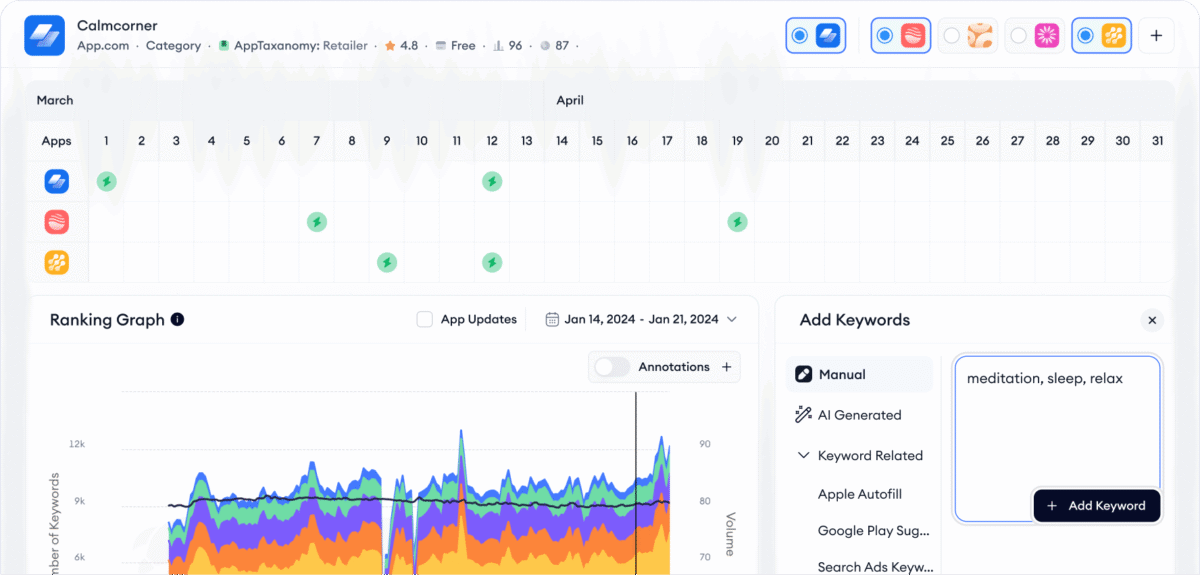
ASO Intelligence helps app marketers and developers gain a competitive edge in a sea of similar offerings.
These tools provide insights into competitor strategies, allowing for unique positioning and differentiation.
ASO plays a crucial role in localization, ensuring content lands with diverse audiences across the globe.
MobileAction ASO Intelligence enables app owners and marketers to grow organically with its unmatched Basic and Advanced tools.
Basic Features of MobileAction ASO Intelligence
Store Management
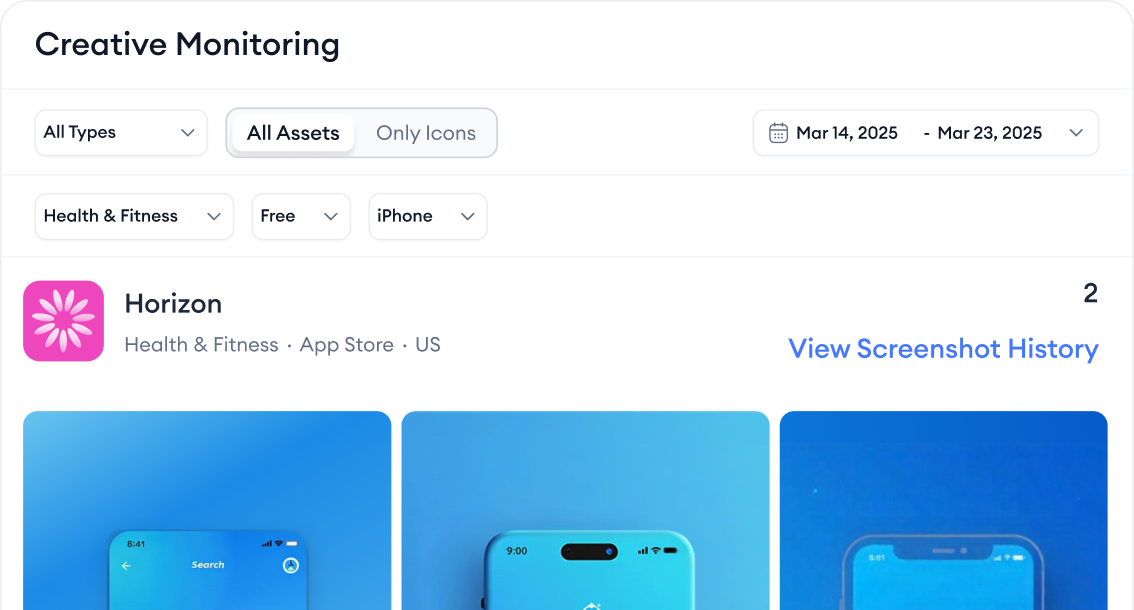
ASO Intelligence helps app marketers and developers gain a competitive edge in a sea of similar offerings. These tools provide insights into competitor strategies, allowing for unique positioning and differentiation.
MobileAction ASO Intelligence enables app owners and marketers to grow organically with its unmatched Basic and Advanced tools.
Keyword Suite
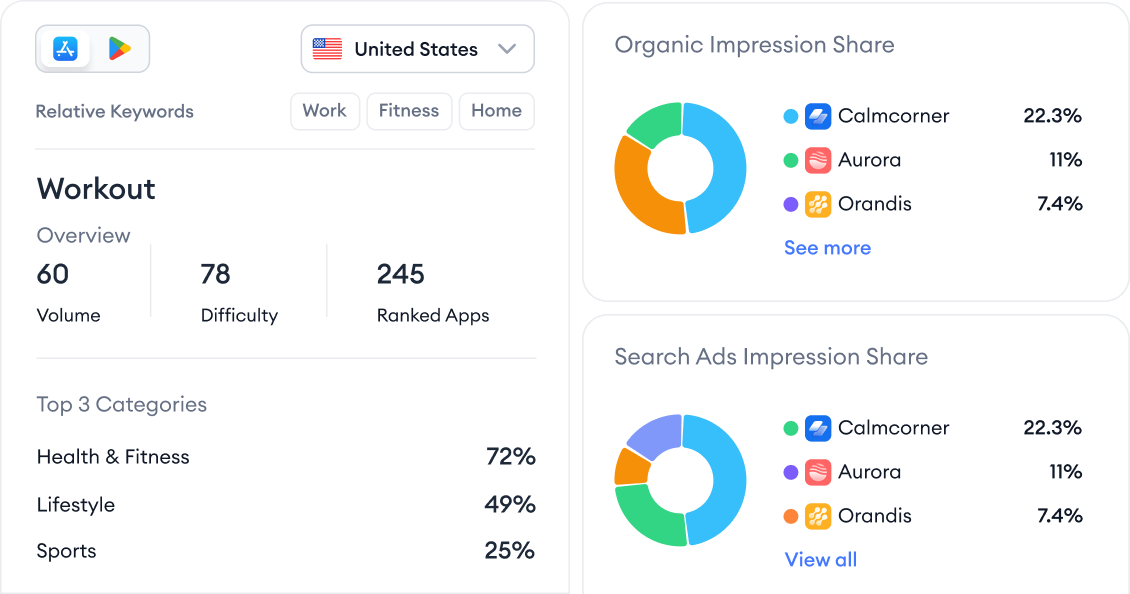
This is a comprehensive and multifunctional suite made up of several keyword management tools such as Keyword Tracking, Keyword Optimization, Keyword Gap, Keyword Position Map, Keyword Suggestion, Keyword Spy, Keyword Research, Keyword Explorer, Keyword Trends, and Keyword Translator.
It empowers app developers and marketers to streamline their keyword management efforts.
With Keyword Suite, users can track and optimize keywords, discover gaps, study competitors, explore trends, and translate or generate keywords for 22 languages.
This all-in-one solution ensures that your keyword strategy gives your app maximum discoverability in the app stores.
Advanced features of MobileAction ASO Intelligence
ASO Report
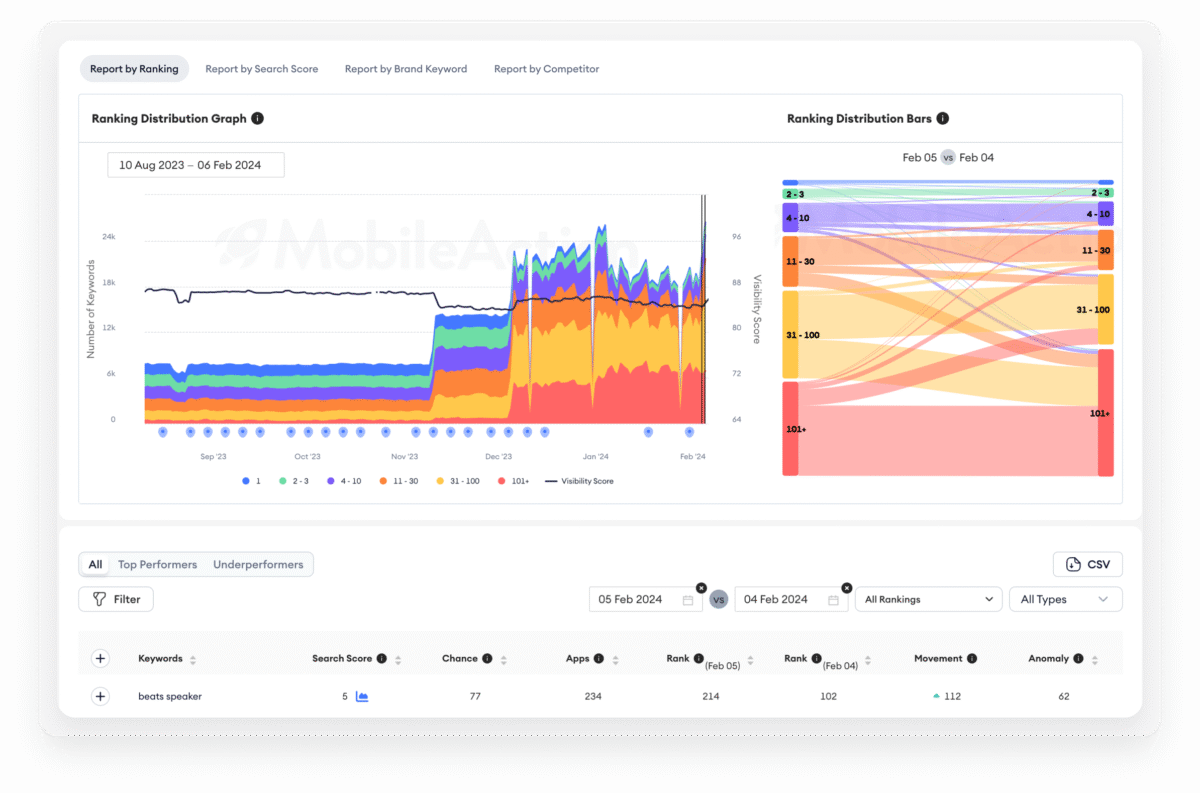
This tool provides a comprehensive overview of any app’s performance. It showcases how many keywords an app ranks for, the weekly changes in ranking distribution, and historical rankings by keyword.
Users can compare two dates by ranking, sort reports by brand keywords or volumes, and filter through various metrics.
Visibility Report
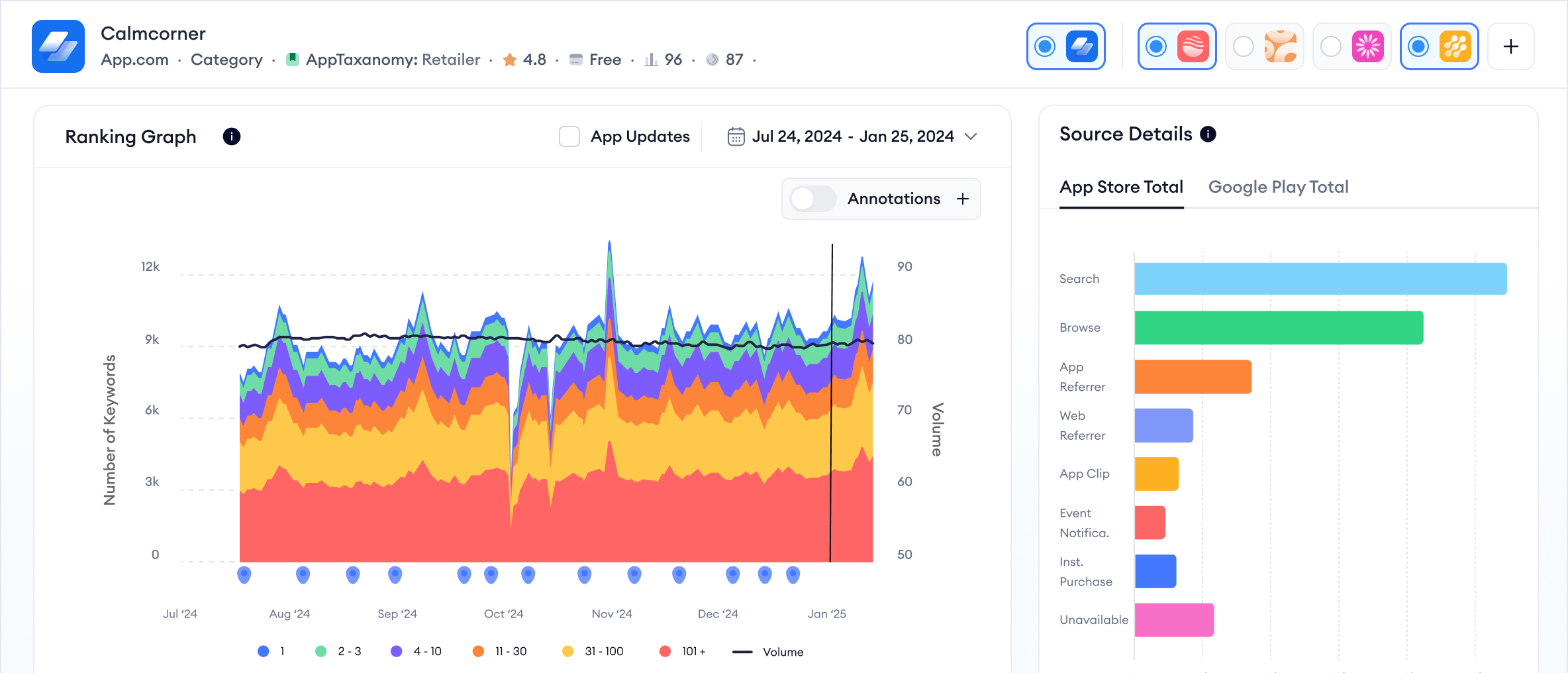
A crucial tool for understanding the visibility trends of your apps and competitors. The Visibility Snapshot offers a breakdown of the visibility score of your app by country.
Users can compare the day-by-day visibilities of two apps, understand localization performances, and view country-based visibility performances.
Additionally, the top visible apps feature allows users to view the most visible apps in each store, providing insights into their visibility scores, category rankings, and overall standings.
Keyword Intelligence
This feature shows keywords that your app ranks for and estimates the percentage of downloads you get from these keywords. It’s designed to give insights into potential keywords that might drive downloads.
The Organic Download History tab showcases keywords that contribute significantly to organic downloads.
By checking weekly changes, you can refine your ASO keyword strategies.
App Update Timeline
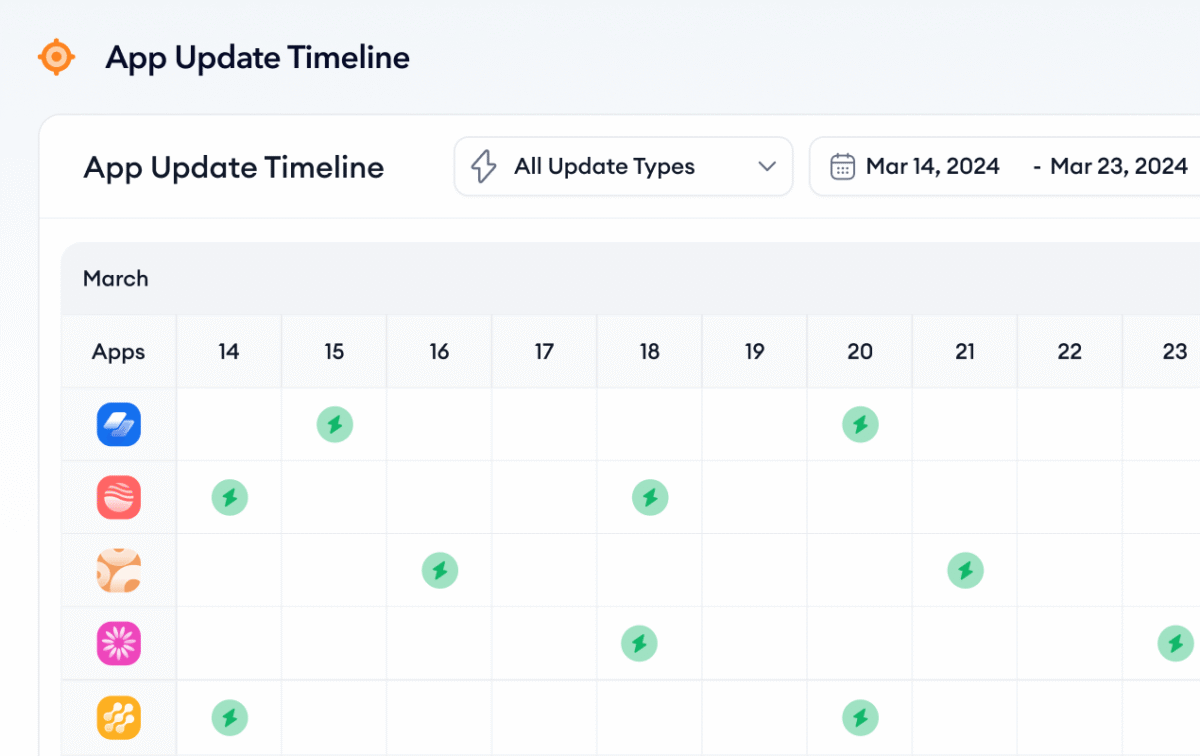
A feature that allows users to track their app’s update history. It provides a comparative view of each update, highlighting changes. You can also analyze competitors and see their update history, which can offer insights into their update strategies.
Best ASO resources 2025
- ASO Handbook 2024: Navigating the Future of App Store Optimization
- A comprehensive guide to App Store Optimization (ASO)
- The definitive guide for Mobile User Acquisition
- App Store ASO: Skyrocket your iOS app in Apple charts
- Google Play ASO: Organic growth strategy guide for Android apps
The bottom line of ASO vs SEO
In conclusion, while ASO vs SEO both aim to increase visibility and conversions, they differ primarily in their targeting – ASO optimizes apps for discovery within app stores, whereas SEO focuses on ranking websites in search engines.
Some best practices like keyword research, title/description optimization, and user experience apply to both.
Whether you have an app, website, or both, leveraging the optimal combination of ASO vs SEO strategies is key to driving qualified traffic from organic search.
The right tools can help streamline your optimization efforts. Schedule a demo with one of our optimization experts to get started with an ASO or SEO assessment customized for your specific needs. We’ll review your current setup, and opportunities for improvement and provide a strategic roadmap and plan!
Frequently asked questions
Is ASO more important than SEO for app companies?
Neither is universally “more important.” If your bottleneck is store conversion, prioritize ASO. If your bottleneck is demand creation, prioritize SEO.
Can SEO increase app installs directly?
Yes, when SEO pages route users to strong app-store listings with clear message match and deep-link continuity.
What is the simplest shared north-star metric?
Use a blended metric: qualified organic users (users from web + store who activate and retain), not just clicks or installs.

Your mobile app growth partner with intelligence, automation and expertise.
Resources that you'll love




Grow your app on the App Store and Google Play Store with our solutions now