








Custom product pages have moved beyond being a purely paid acquisition feature. Since WWDC 2025, Apple has expanded their role in the App Store discovery, creating a clear point where custom product pages meet organic search and reflect user intent at the keyword level.
As a result, custom product pages now contribute directly to localization, intent relevance, and conversion optimization across both paid and organic traffic.
In this blog, we’ll explain how to use custom product pages to adapt messaging across regions, respond to seasonal demand, align pages with Apple Ads campaigns, and continuously improve performance through testing and measurement.
What are custom product pages?
Custom product pages are additional versions of your App Store product page. Each custom product page has its own unique URL and can feature different screenshots, app previews, promotional text, and deep links.
You can create up to 70 custom product pages per app and update them without releasing a new app version. This allows you to test and optimize App Store messaging independently from any app updates.
Custom product pages don’t replace your default product page; they extend it. The default product page remains the primary organic entry point, while custom product pages support more targeted traffic from referrals and Apple Ads.
For a deeper breakdown, see our detailed guide titled: “From beginner to expert: Guide to App Store custom product pages”.
6 ways to use custom product pages for global expansion
Using custom product pages for global expansion starts with recognizing that markets differ in why users install your app. The approaches below outline how they’re commonly used to support global growth.
1) Translate and localize custom product pages by country
In many markets, localization starts with language. Users expect to see the App Store product pages in their native language, but effective localization goes beyond direct translation.
Custom product pages allow you to create country-specific versions of your product page where the language, tone, and messaging are adapted together. Headlines, screenshot captions, and promotional text should be rewritten to sound natural in the local language, not translated word-for-word.
Here, KAYAK localizes its custom product pages by translating the English version into French and adapting copy and screenshots for the local audience.
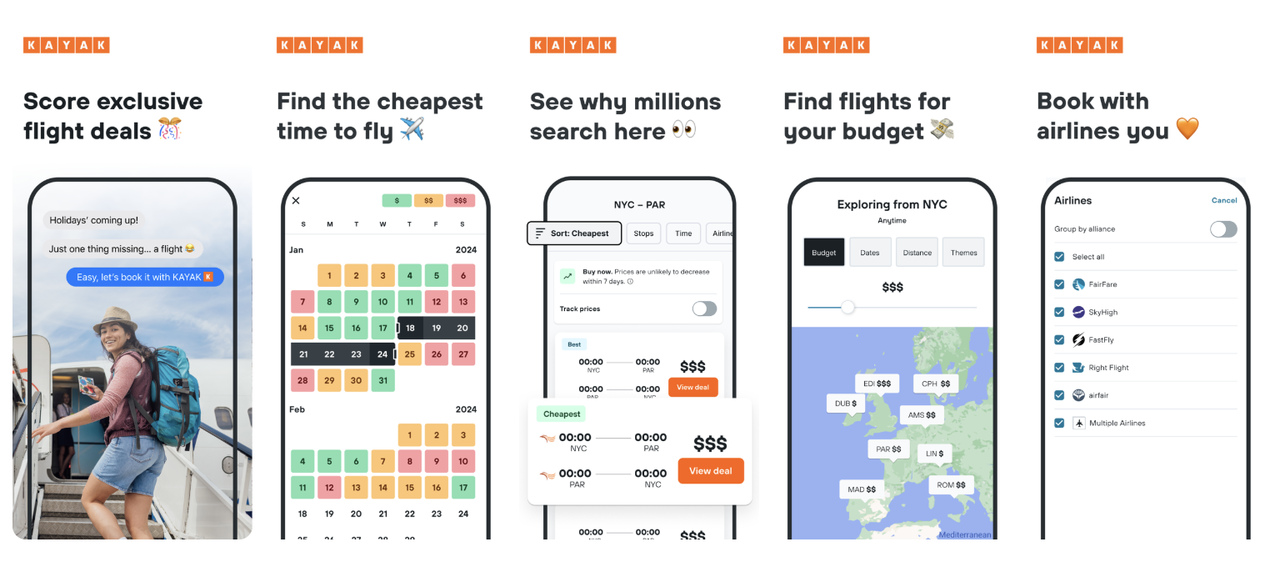
Custom product page for “English” language by KAYAK (Source: MobileAction’s CPP Intelligence)
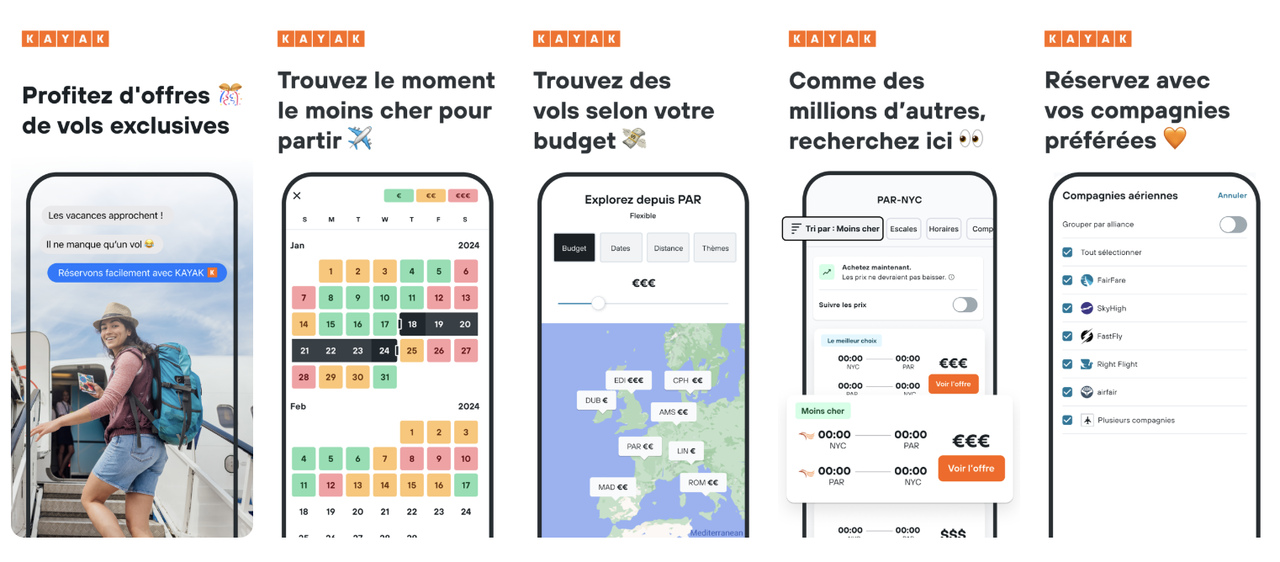
Custom product page for “French” language by KAYAK (Source: MobileAction’s CPP Intelligence)
The goal is clarity and familiarity. When users land in their own language, as the message feels native rather than translated, they are more likely to tap and install the app.
2) Localize the value proposition by region (not just the language)
For global expansion, custom product pages should be localized by market, not simply translated. You need to create a custom product page for each market that clearly shows why local users should download the app, using language and visuals that feel natural to them.
This requires more than translating the same text into different languages. The messaging should be rewritten to reflect how users in each market naturally describe their needs, what they value most, and how they decide to download an app. This is consistent with effective app localization, where relevance and clarity take priority over literal translation.
In the examples below, Headspace localizes its custom product pages by adapting the value proposition to regional user needs. The US page focuses on meditation benefits. In Ireland, the messaging shifts toward practical sound-based features like noise, focus. In Australia, the positioning becomes more use-case driven, highlighting sleep and relaxation. While the product itself stays the same, each page emphasizes the benefits that are most relevant to how users in that market discover and evaluate the app.
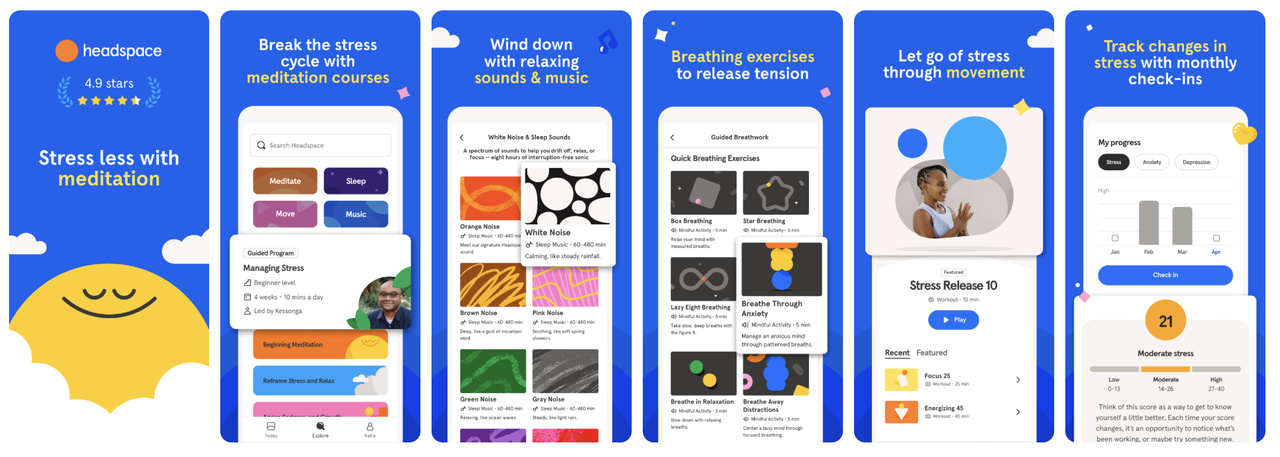
Custom product page for “United States” by Headspace (Source: MobileAction’s CPP Intelligence).
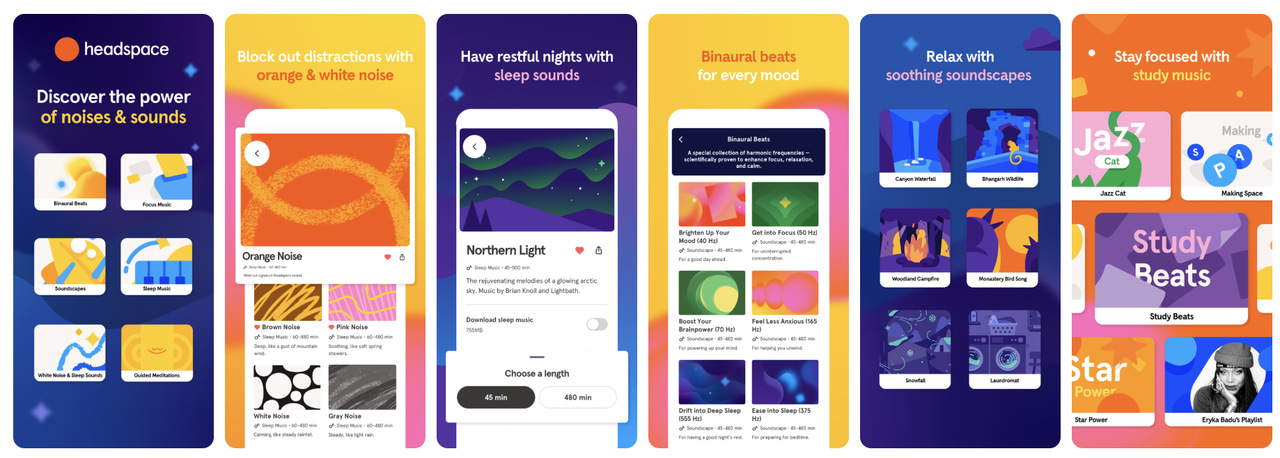
Custom product page for “Ireland” by Headspace (Source: MobileAction’s CPP Intelligence).
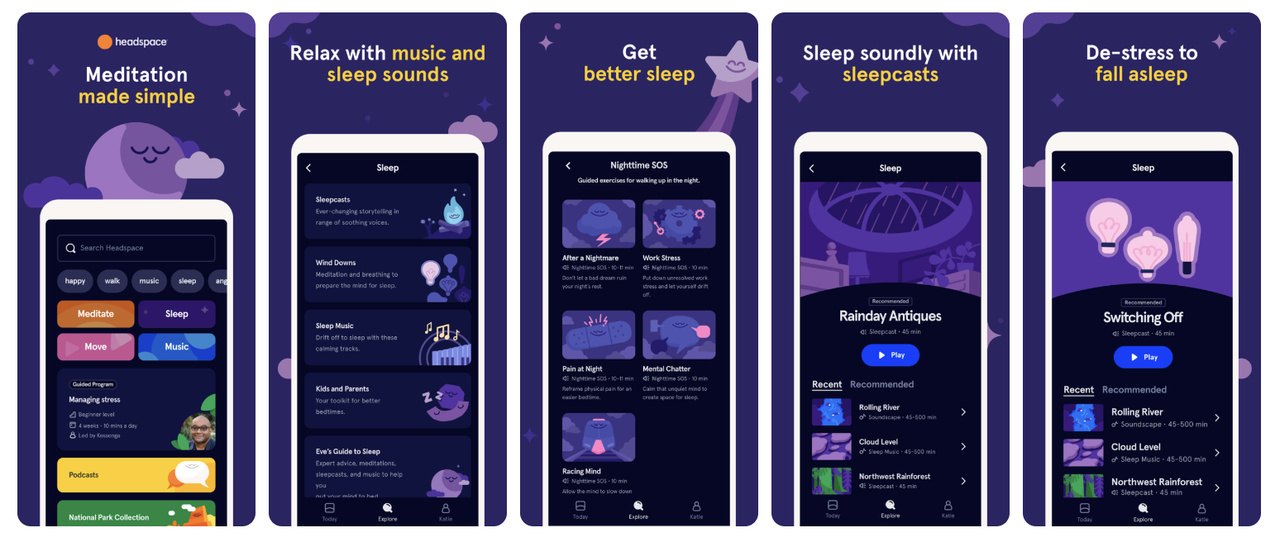
Custom product page for “Australia” by Headspace (Source: MobileAction’s CPP Intelligence).
The goal is simple, the message clarity and relevance. When the value proposition feels local, the custom product page converts better, especially when traffic comes from high-intent sources like the App Store search and the keyword-themed ad campaigns.
3) Support seasonal and cultural moments at a regional level
Seasonality is rarely global. Holidays, events, and cultural moments vary by region, and they influence both search behavior and conversion expectations.
Custom product pages let you activate seasonal messaging without changing your default product page. You can create region-specific custom product pages that highlight:
- Local holidays and celebrations
- Sports seasons or major tournaments
- Shopping periods or budgeting cycles
- Culturally relevant habits or routines
A clear example of this approach comes from Zalando. During the Black Friday period, Zalando did not rely on a single seasonal message rolled out globally. Instead, they created dedicated seasonal custom product pages and localized them for each country.
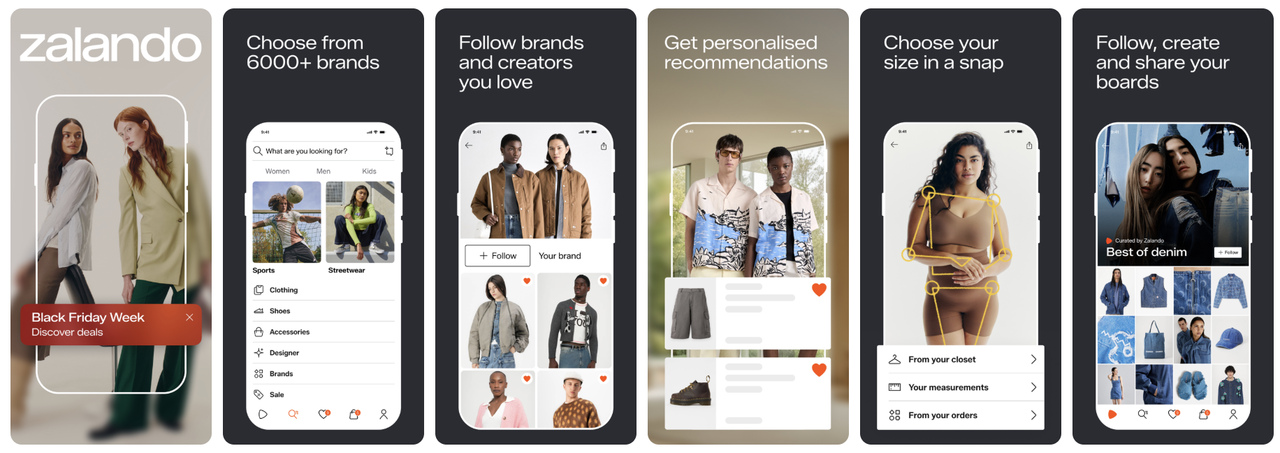
Custom product page for “UK” by Zalando (Source: MobileAction’s Organic CPP Results).
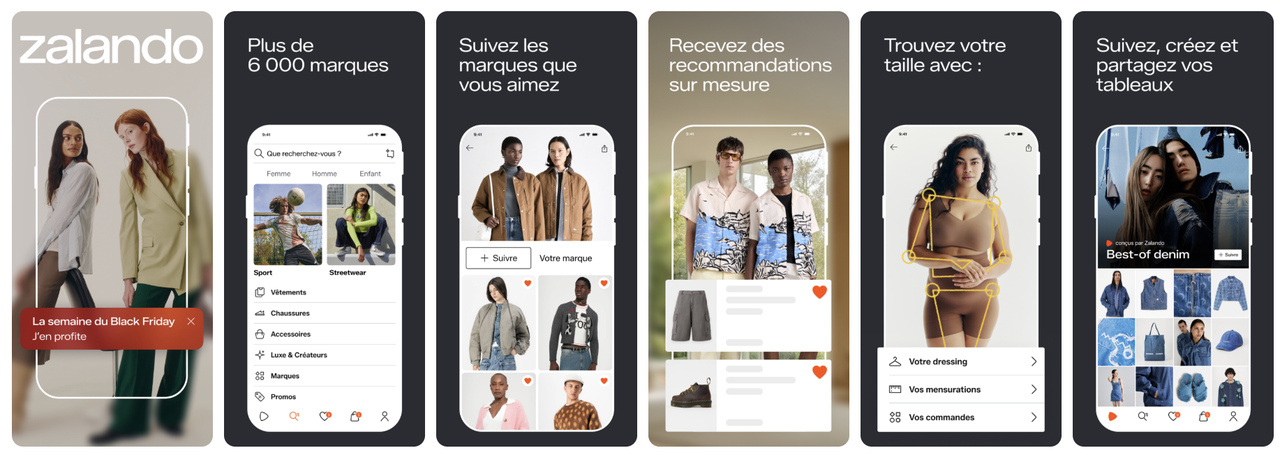
Custom product page for “France” by Zalando (Source: MobileAction’s Organic CPP Results).
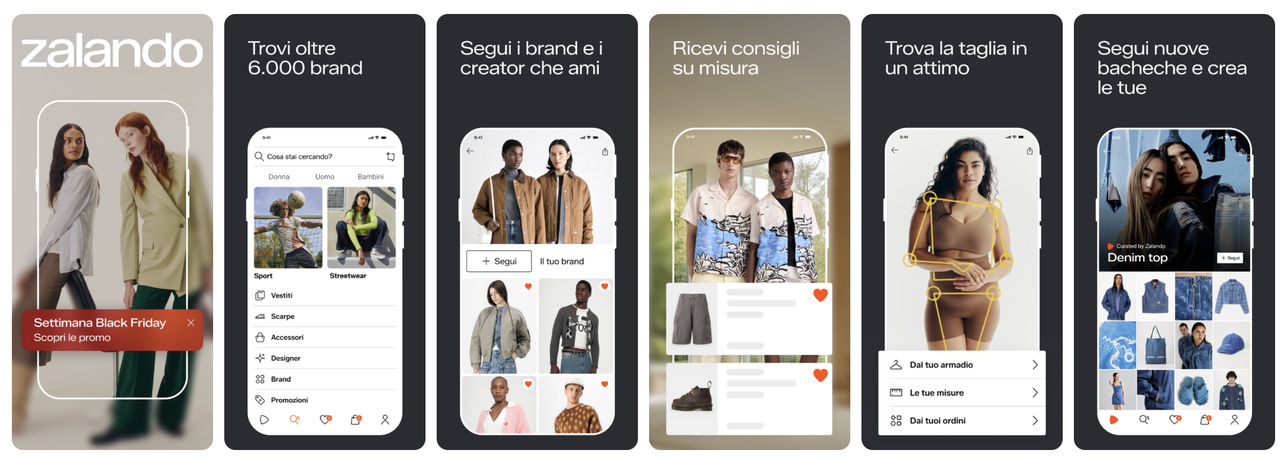
Custom product page for “Italy” by Zalando (Source: MobileAction’s Organic CPP Results).
4) Utilize custom product pages with Apple Ads
Custom product pages integrate directly with the Apple Ads, allowing you to control which one users see across different placements.
You can use custom product pages with search results ads, Search tab ads, and Today tab ads.
Each placement has a different user mindset.
Search results ads are intent-driven. Users are actively looking for a solution. Here, custom product pages perform best when they closely match keyword intent. Feature-focused custom product pages tied to specific queries often convert better than a generic experience.
Search tab and Today tab ads are more discovery-oriented. Users are browsing, not necessarily searching for your app. In these placements, clarity matters more than depth. Custom product pages should focus on a strong value proposition, a clear entry point, and minimal friction.
At a regional level, this allows you to:
- Run separate Apple Ads campaigns per market
- Match each campaign to a region-specific custom product page
- Test messaging and visuals without affecting global performance
- Scale spend toward custom product pages that convert best
As data accumulates, you can refine both creative and budget allocation based on actual conversion behavior, not assumptions.
5) Adapt trust and credibility by region
Rather than relying on a single global trust message for your app, you can use custom product pages to stand out the proof points that matter most to that particular region. This often means adjusting the order of the screenshots and the promotional text, so that trust is established quickly and clearly.
Depending on the market, effective trust signals may include:
- Data privacy and security assurances
- Regulatory or compliance-related messaging
- Local partnerships, certifications, or recognizable brands
- User adoption or feedback that feels locally relevant
In the example below, FOREX.com tailors its trust signals to reflect different regional expectations.
Custom product page in Canada leans heavily on institutional credibility, highlighting industry awards, platform reliability, and broad market access to establish legitimacy early. Trust is built through recognition and scale.
By contrast, the custom product page in the US shifts the focus toward performance-driven and risk-management messaging, emphasizing tools, alerts, and capital protection features that align with a more active, control-oriented trading mindset.

Custom product page for “Canada” by FOREX.com (Source: MobileAction’s Organic CPP Results).

Custom product page for “US” by FOREX.com (Source: MobileAction’s Organic CPP Results).
Users decide quickly whether they trust an app. When trust signals match local expectations and appear early, users are more likely to continue and download.
6) Route users to region-relevant in-app experiences using deep links
Global expansion does not end at installation. Users in different regions often need to see different content, features, or onboarding flows to understand the app’s value quickly. Custom product pages can include an optional deep link that directs users to a specific in-app destination after they install or open the app (on supported iOS versions).
This allows you to connect each custom product page to the most relevant starting point inside the app. The in-app experience users see is aligned with the message and promise of the custom product page they came from.
Common use cases include:
- Sending users to region-specific content or catalogs
- Opening a localized onboarding or tutorial flow
- Directing users to locally relevant offers or categories
The purpose of deep-linked custom product pages is to maintain continuity between discovery, install, and first use. When the custom product page and the in-app experience are aligned, activation rates improve, and global expansion becomes more scalable.
A/B testing custom product pages for global expansion
CPP A/B Testing is a SearchAds.com feature that enables controlled testing of Apple Ads custom product pages.
Localization does not guarantee impact. Even in the same language, user expectations and decision drivers vary by region. CPP A/B testing validates whether regional adaptations actually improve performance.
Why test custom product pages for global expansion?
- To compare localized messages and benefit framing
- To validate regional relevance beyond translation
- To reduce reliance on assumptions during global expansion
Manual custom product pages testing is hard to control at scale. Traffic imbalance, timing effects, and overlapping changes make results difficult to interpret. Structured testing isolates custom product pages as the main variable.
Results are evaluated using statistical confidence. A 90% confidence level indicates the observed difference is unlikely to be random and can be used for decision-making.
Switch vs. Parallel
- Switch: Variants rotate over time. Best for lower or unstable traffic.
- Parallel: Variants run simultaneously. Best when traffic volume is sufficient.
CPP A/B testing enables repeatable, data-backed localization, allowing you to gain insights from one market to inform others.
Frequently asked questions
How do you decide which regions need their own custom product pages?
Start by identifying regions where clear performance gaps exist, such as lower conversion rates, higher CPI, or weaker retention compared to global averages. These gaps often suggest that the default product page isn’t fully matching local user intent.
To understand why, zoom out to the market level. Using ASO Intelligence, review country-level visibility trends and compare how your app performs against competitors in each region. The Visibility Report helps highlight markets where discoverability or keyword coverage lags behind, even when overall demand exists.
Next, look at search behavior. Keyword-level analysis, through MobileAction’s ASO Keyword Tools, can reveal how users in each region describe the same need differently, which features they emphasize, or which intents dominate discovery. These differences often point to messaging gaps that can’t be solved through direct translation alone.
Should each region have one custom product page or multiple?
Most teams start with one regional custom product page and expand only if data supports it. Multiple pages make sense when a single market has distinct user segments, strong seasonality, or multiple mobile acquisition strategies that require different narratives.
Can regional custom product pages impact organic growth?
Yes. When a custom product page is mapped to region-specific search intent, it can appear in relevant search results instead of the default product page. This improves organic app conversion for queries where localized messaging is more relevant than a global narrative.

Content Marketing Specialist
Resources that you'll love

Grow your app on the App Store and Google Play Store with our solutions now