











Entertainment
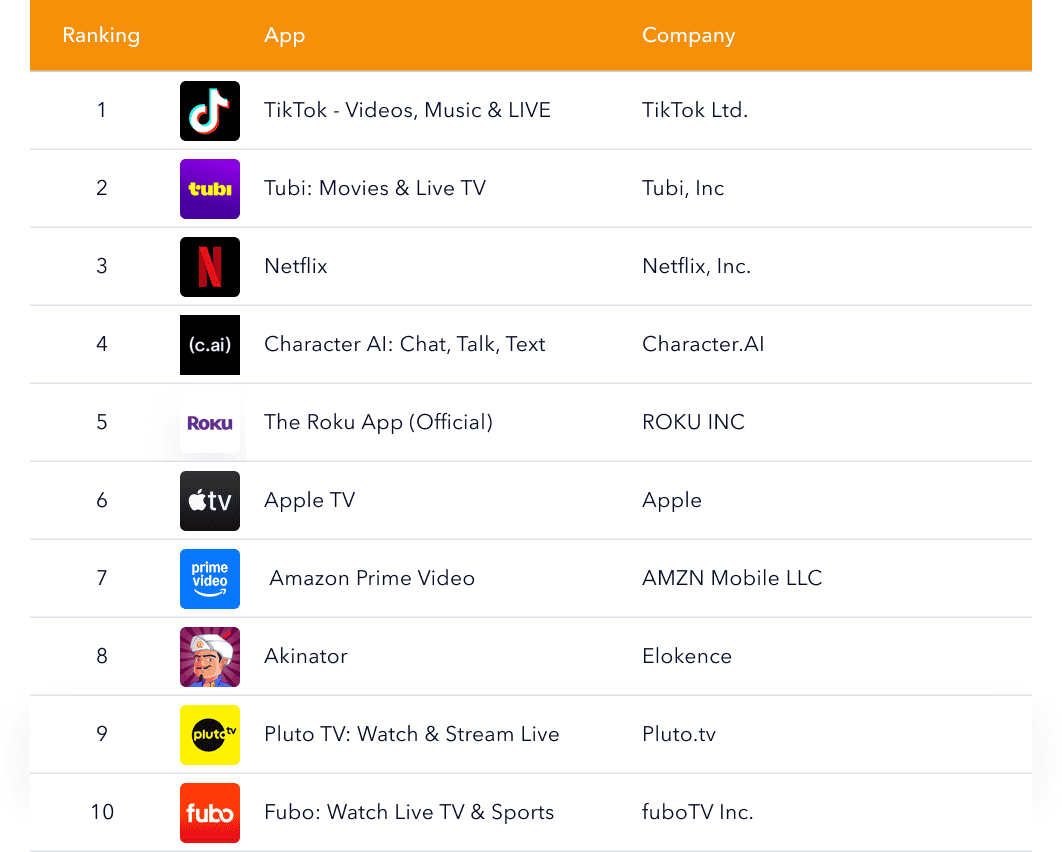
- TikTok is a video platform built around watching, creating, LIVE streaming, and in-app shopping. It performs well in search because its metadata focuses on broad, high-volume terms like “videos,” “watch,” “discover,” “LIVE,” and “shop,” which reflect the main actions inside the app.
- Tubi is a free streaming app offering movies, series, and always-on live TV channels. It performs well in search because its metadata clearly combines high-volume entertainment terms like “movies,” “live TV,” “sports,” “news,” and “watch,” while also emphasizing the “free” value proposition.
- Netflix is a subscription streaming platform centered on on-demand series and films, supported by strong personalization. Its search performance is driven largely by brand demand and a clear, well-understood product promise, which converts even on broad category searches. Its metadata typically stays broad, using category-leading terms such as “watch,” “TV,” “movies,” and “stream” to remain visible on the highest-volume entertainment keywords.
- Character AI is an interactive app where users chat or talk with AI characters, roleplay scenarios, and create their own bots. It performs well because “AI” has become a major discovery driver in Entertainment. Metadata supports visibility by leading with explicit intent phrases like “AI chat,” “talk,” “text,” and “chatbot,” which set expectations clearly in search results.
- The Roku App serves as a companion tool for Roku device users, offering mobile remote control, search, private listening, casting, and access to The Roku Channel. It performs well because it aligns closely with device-owner intent, particularly searches for a “remote” solution. Its metadata uses practical utility terms such as “remote,” “search,” “cast,” and “stream,” which directly match high-intent searches.
- Apple TV functions as a centralized streaming hub, combining Apple Originals, live sports subscriptions, rentals, purchases, and third-party services. Metadata benefits from clear, high-level terms like “TV,” “movies,” and “stream,” supported by recognizable service and sports cues.
- Amazon Prime Video is a subscription streaming app. It performs well by capturing both direct brand searches and broad entertainment discovery, supported by predictable content expectations. Its metadata stays discoverable through broad category terms such as “video,” “movies,” and “TV,” paired with value cues linked to Prime membership.
- Akinator is a casual guessing game where the app attempts to identify a character the user is thinking of through a series of questions. Metadata focuses on mechanic-driven language like “guess,” “character,” and genie-style framing, clearly signaling what the experience involves.
- Pluto TV is a free, ad-supported streaming service built around live channels and an on-demand library. It performs well because free access is a strong alternative to paid subscriptions, and the value proposition is clear upfront. Metadata remains broad and competitive through terms like “free,” “stream,” “movies,” and “TV,” keeping it visible across high-volume searches.
- Fubo is a live TV streaming service with a strong focus on watching sports in real time, supported by features like Cloud DVR. It performs well because “live sports” represents one of the highest-intent entertainment needs, and the app communicates that focus clearly. Its metadata emphasizes explicit intent terms such as “live TV,” “sports,” and “watch,” aligning closely with urgent, game-driven searches.
Food & Drink
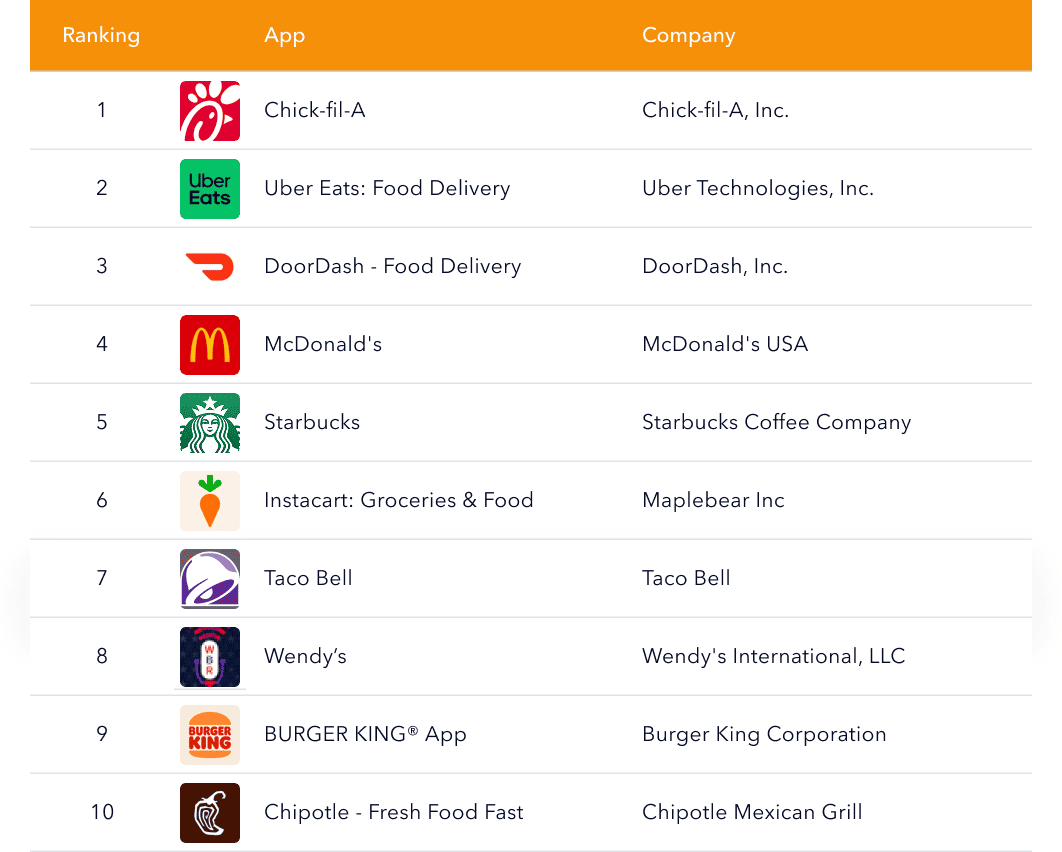
- The Chick-fil-A focuses on a few core actions: finding nearby restaurants, ordering ahead, earning points, and redeeming rewards. It performs well in search thanks to strong brand demand, supported by clear, task-focused metadata that highlights terms like “order ahead,” “points,” and “rewards,” making the app’s purpose easy to understand.
- Uber Eats is a delivery marketplace covering restaurant meals as well as grocery and convenience items in many regions. It performs well because it addresses multiple high-demand needs under a single brand, keeping it eligible for broad discovery. Its metadata relies on umbrella terms like “food,” “delivery,” and “groceries,” allowing it to rank across both meal-focused and utility-driven searches.
- DoorDash is an on-demand delivery app for restaurants, groceries, convenience items, and retail products. It performs well in search because its metadata highlights clear, high-intent terms like “delivery,” “restaurants,” “grocery,” and “same-day,” which match what users typically search when they need items brought to them quickly.
- The McDonald’s app centers on mobile ordering, pickup, or drive-thru, and in-app deals. It performs strongly due to heavy brand searches and high conversion around offers and repeat orders. Its metadata highlights action-oriented terms like “order,” “deals,” and “rewards,” which align closely with common value-driven searches.
- Starbucks is built around order ahead, store pickup, and loyalty rewards. It performs well because coffee is a frequent, habitual search intent, and the app clearly saves time while adding loyalty value. Metadata focuses on high-intent terms such as “order ahead,” “pickup,” and
- Instacart is a grocery delivery app that enables shopping across multiple stores with same-day fulfillment. It performs well because grocery delivery represents a recurring utility need. Its metadata emphasizes direct utility terms like “groceries,” “delivery,” and “shopping,” which closely mirror user intent and support strong conversion.
- Taco Bell’s app supports ordering, menu customization, rewards, and delivery in many markets. It performs well by combining strong brand demand with high-conversion behaviors such as personalization and savings. Metadata uses broad, intent-heavy terms like “fast food,” “delivery,” and “rewards,” making the core value immediately clear.
- Wendy’s offers mobile ordering, pickup, and exclusive in-app offers. Its performance reflects repeat, deal-driven behavior common in QSR usage. Metadata leans on clear action terms such as “order,” “offers,” and “rewards,” which align with high-intent searches and improve conversion.
- The BURGER KING app focuses on mobile ordering and app-exclusive deals, often used for quick pickup. It performs well due to strong brand searches and value-oriented intent. Metadata emphasizes straightforward keywords like “burger,” “deals,” and “order,” directly matching in-the-moment user needs.
- Chipotle is a fast-casual ordering app built around customization, pickup, and rewards. It performs well by converting users who want quick service with control over ingredients, supported by strong brand demand. Metadata combines broad action terms such as “order,” “pickup,” and “rewards” with clear food-category cues, keeping intent easy to understand in search.
Business
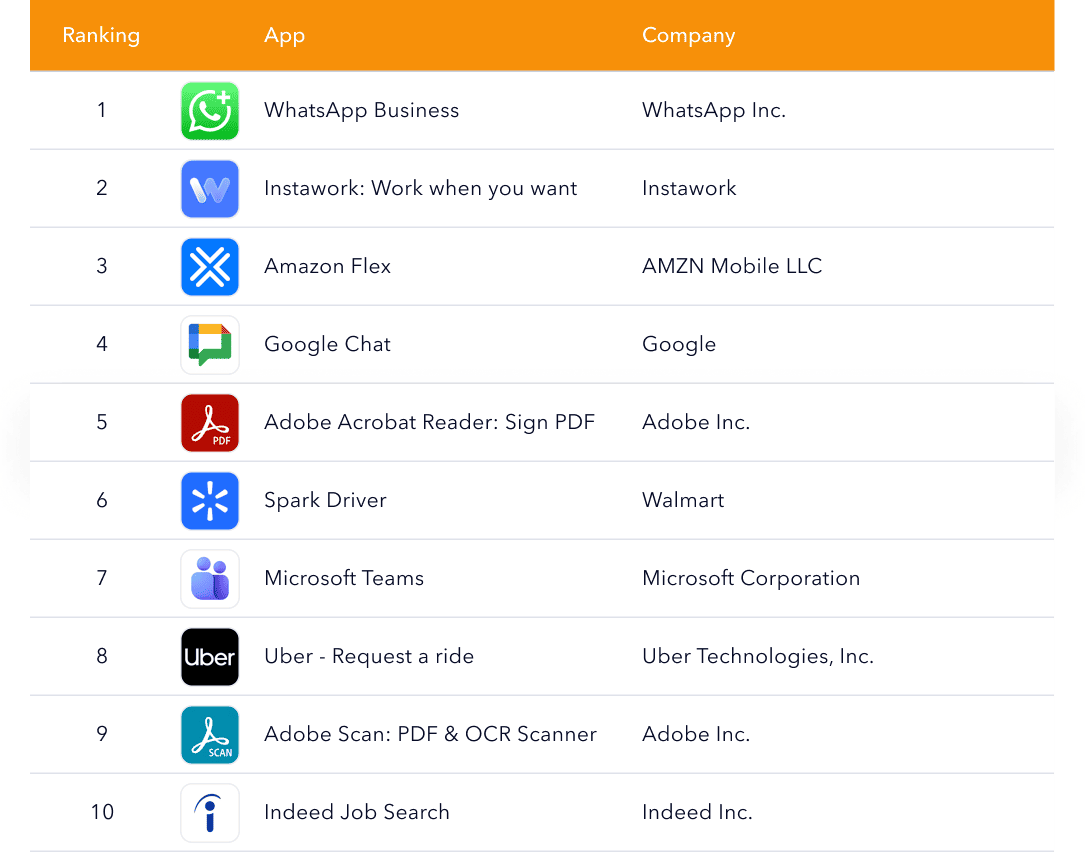
- WhatsApp Business is essentially for small-business customer communication, with a business profile and simple tools to keep conversations organized. It performs well because “business messaging” demand is huge and familiar; many users already trust the WhatsApp flow, so adding “Business” makes the purpose instantly clear and improves conversion on customer-chat searches. Its wording stays straightforward: WhatsApp + Business up front, then practical cues like business profile, quick replies, and light catalog-style selling language to reinforce what it’s for.
- Instawork targets people looking for flexible, short-term shifts, often across hourly roles like hospitality, warehouse, or event work, depending on the market. It ranks well because searches around “work,” “shifts,” and getting paid quickly tend to be high intent, users install when they’re actively trying to earn, not casually browsing.
- Amazon Flex is for delivery contractors who want to earn by delivering packages or groceries in scheduled blocks. It performs well because “delivery driver” and “earn money driving” queries are constant, and Amazon’s brand lowers friction, users trust the work type, and convert quickly.
- Google Chat is a workplace messaging app for team conversations and shared spaces, most commonly adopted through Google Workspace. Search visibility comes from a broad “work chat” intent, but installs are often ecosystem-driven: people download it because their company uses it, and they need access right away. The app serves team messaging, coordination around projects, and internal communication.
- Adobe Acrobat Reader is a mobile PDF utility for opening documents, filling forms, and signing files when you’re away from a computer. It performs well because “PDF” and “sign PDF” are urgent searches; users typically arrive with a document in hand and a deadline. Its metadata leads with exact utility phrasing like PDF reader and sign/fill & sign, which aligns tightly with how people search when they need to complete paperwork quickly.
- Spark Driver is Walmart’s delivery-driver app for accepting offers and delivering orders, commonly tied to grocery and retail deliveries. It ranks well because “delivery driver” and side-income intent are always present, and the Walmart name adds immediate context and trust for what kind of work it is. Users come for delivery gigs, flexible driving work, and same-day delivery fulfillment.
- Microsoft Teams covers the full collaboration bundle: work chat, meetings, calls, and file sharing in one app. Its metadata pairs broad capability terms (chat/meet/call) with strong enterprise trust signals, which helps it convert on productivity queries where reliability matters.
- Uber is the app for earning through Uber by driving passengers and/or delivering, depending on what’s available locally. It performs well because “Uber driver” is a direct, brand-led search with high intent, and the “drive & deliver” wording widens relevance to users comparing rideshare work with delivery work.
- Adobe Scan is used to turn paper into shareable PDFs and pull out readable text via OCR for searching or copying. It ranks well because “scanner,” “scan to PDF,” and “OCR” searches are extremely task-driven; people download it when they need to scan a receipt, form, or ID immediately. Stacking scan, PDF, and OCR in metadata keeps it closely aligned with utility searches and reduces mismatches.
- Indeed is a general job-hunting app that performs well because “job search” is always in demand and tends to spike during high-motivation moments, when users install it when they’re actively looking and want to apply quickly. Its metadata stays plain and literal, job search, apply, resume, which mirrors what users type when they need a job app right now.
"MobileAction’s ASO keyword research tools were instrumental in our rapid growth. Also, by integrating subscriber data from our mobile measurement partner into SearchAds.com at the keyword level, we gained the transparency we needed to refine our campaigns. Over the course of 3 months, we improved ROAS by 69%. I can’t imagine running our UA campaigns without this critical data—it would be like flying blind."

Dan Walsh
VP of Marketing @Tightrope Interactive