













Photo & Video
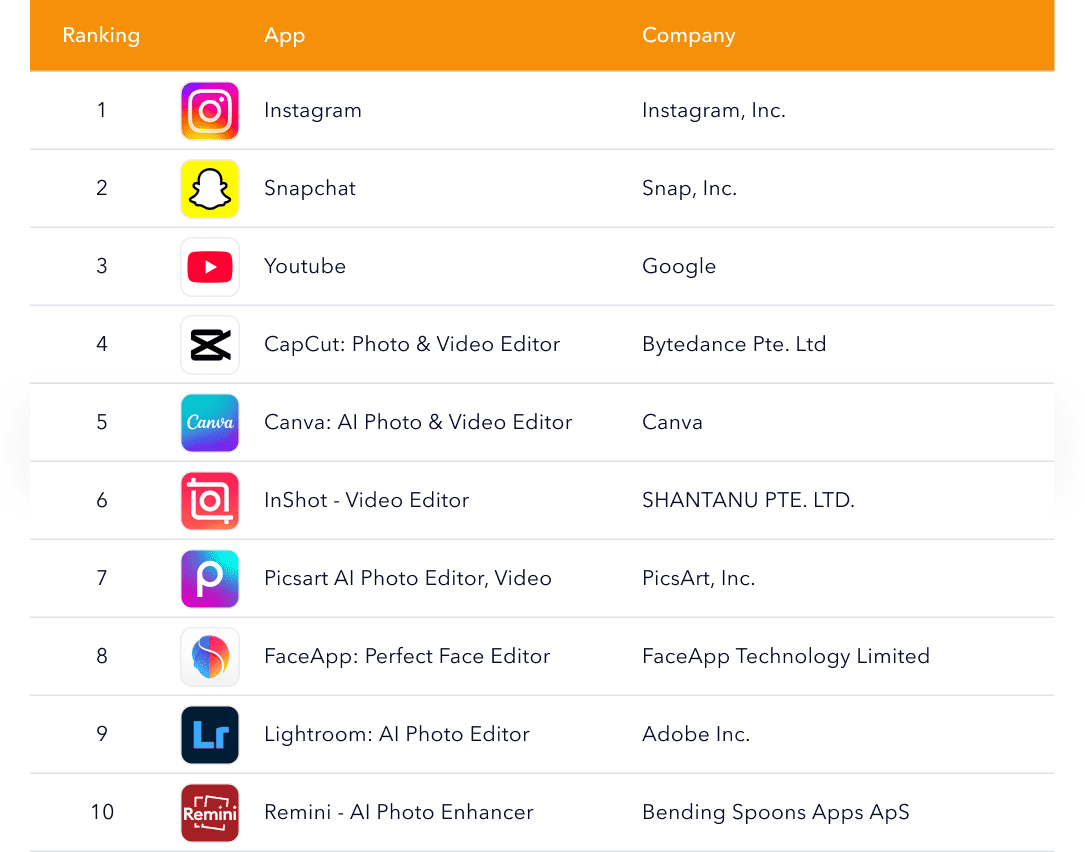
- Instagram is a social app built around sharing photos and videos through posts, Stories, and Reels, with discovery driven by creators and short clips. Typical use is social posting, quick short-form creation, and finding creators to follow.
- Snapchat is more about the camera-to-chat loop: take a photo or short video, apply Lenses or Filters, then send it privately or in small groups. It performs well because that habit is repeatable and distinct, and the brand itself pulls steady demand. The metadata leans on high-signal feature words like “lenses”, “filters, and “chat.”
- YouTube covers the broadest video intent on the store, watching, subscribing, and uploading across almost every content type. It performs well because “video” searches are massive and generic, and YouTube converts hard on both brand-led queries and simple discovery terms.
- CapCut is a mobile editor designed for short-form output. It ranks well because “video editor” demand is high, and CapCut signals the exact toolkit creators look for when making social-ready clips and template-driven edits. Its metadata stacks broad terms like video editor, effects, and templates, then reinforces capability keywords (captions, background removal) that match what users search for when they want modern “creator-style” tools.
- Canva is a template-first creation app. It performs well because the “design” and “create” intent is wide, and templates convert users who don’t want to start from a blank canvas. The listing balances broad creator keywords like “design,” “photo editor,” and “video,” with AI-assisted wording to stay competitive in “AI editor” searches without narrowing its appeal.
- InShot is built for fast social edits: trimming, adding text and music, using stickers and effects. It performs well because users often search with “edit video” intent and choose apps that clearly show the actions they can do in a few taps.
- Picsart AI is for photo editing, collages, and stylized effects that work well for social graphics. It ranks well because it can match multiple high-volume searches at once, photo editor, collage maker, and effects, so it stays eligible across a wide range of queries.
- FaceApp is a portrait-focused editor that applies face adjustments and realistic-looking filters. It performs well because the “face editor” and “selfie” intent is specific and task-based; people install it when they want to fix or enhance one photo quickly. Its metadata stays narrowly aligned to that niche with face-editing language and “realistic” result cues, which helps it stand out from general photo editors.
- Lightroom is a professional photo and video editor. It performs well because it attracts users searching for a serious editor rather than playful effects, and the Adobe brand reinforces that expectation. The listing combines broad terms like photo editor and video editor with AI positioning, keeping it discoverable as “AI” becomes a common qualifier in editing searches.
- Remini is a one-tap photo enhancer for blurry images. It performs well because “enhance photo” and “unblur” searches are extremely direct and usually convert quickly when the app promises a fast fix.
Graphics & Design
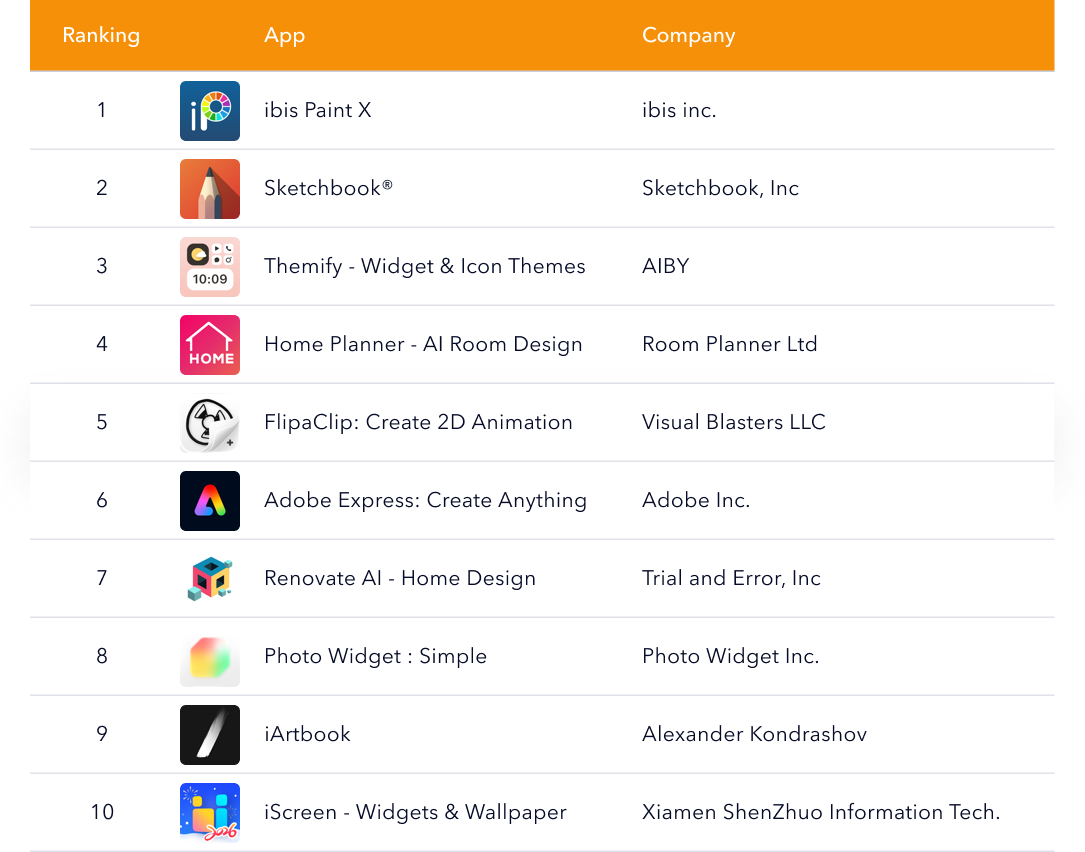
- ibis Paint X is a mobile drawing app. It performs well because it aligns with evergreen creative queries such as “draw,” “sketch,” and “digital art,” while clearly signaling the tools users expect. Its metadata supports visibility by using literal, high-demand terms like “draw,” “paint,” “brush,” and “layers,” which describe the workflow clearly and convert well.
- Sketchbook focuses on fast sketching and drawing with a clean interface and natural-feeling tools. It ranks well because “sketch” is a strong, high-intent keyword, and the app name directly reflects the task users want to complete. Its metadata stays simple and tool-focused, relying on terms like “sketch,” “draw,” and “brushes,” which improves match quality for users searching for an easy-to-use drawing app.
- Themify is a customization app that lets users redesign their home screens using widgets, icon packs, and themes. Its metadata stacks core customization keywords such as “widget,” “icon,” and “theme,” keeping the benefit clear and competitive in a crowded space.
- Home Planner – AI Room Design helps users plan room layouts and visualize furniture placement with AI-assisted suggestions. It performs well because searches like “room planner” and “home design” are tied to real, high-intent projects, and AI signals faster results. Its metadata combines broad project terms like “home,” “room,” and “planner” with AI framing, which expands discovery and supports conversion.
- FlipaClip is designed for frame-by-frame 2D animation, offering drawing tools, layers, and simple editing. It ranks well because it targets a very clear creation intent, and the title reflects exactly what users search for when they want to animate. Its metadata emphasizes literal workflow terms such as “animate,” “frames,” and “cartoon,” helping it match creator-focused searches closely.
- Adobe Express is a design tool for quickly creating social posts, flyers, videos, and other visual assets using templates. It performs well because it matches broad creation demand around “design” and “content,” while benefiting from Adobe brand trust. Its metadata relies on umbrella terms like “create,” “design,” and “templates,” keeping it eligible across a wide range of design-related searches.
- Renovate AI focuses on generating renovation ideas and visual mockups for interiors using AI. It performs well because the “AI room design” space is growing, and users want fast visual inspiration without complex tools. Its metadata pairs project-driven terms like “renovate,” “home design,” and “room” with AI framing, improving relevance for users specifically seeking AI-powered design help.
- Photo Widget : Simple allows users to place photos directly on their home screen as clean, customizable widgets. It performs well because “photo widget” is a highly direct, high-intent query, and the app name matches that search exactly. Its metadata stays literal with terms like “photo” and “widget,” while emphasizing simplicity to improve conversion.
- iArtbook is a digital drawing and painting app built for creating art on iPad and iPhone. It performs well because it aligns with broad discovery searches such as “drawing app” and “paint,” often used by users exploring alternatives to paid tools. Its metadata uses generic creative terms like “draw,” “paint,” and “sketch,” keeping it visible across high-volume art searches.
- iScreen is a customization app focused on widgets, wallpapers, and home screen layouts. It performs well because “widgets” and “wallpaper” remain high-volume personalization searches, and users often browse multiple apps in this category. Its metadata stacks broad personalization keywords such as “widgets,” “wallpaper,” and “themes,” making the use case immediately clear in search results.
Productivity
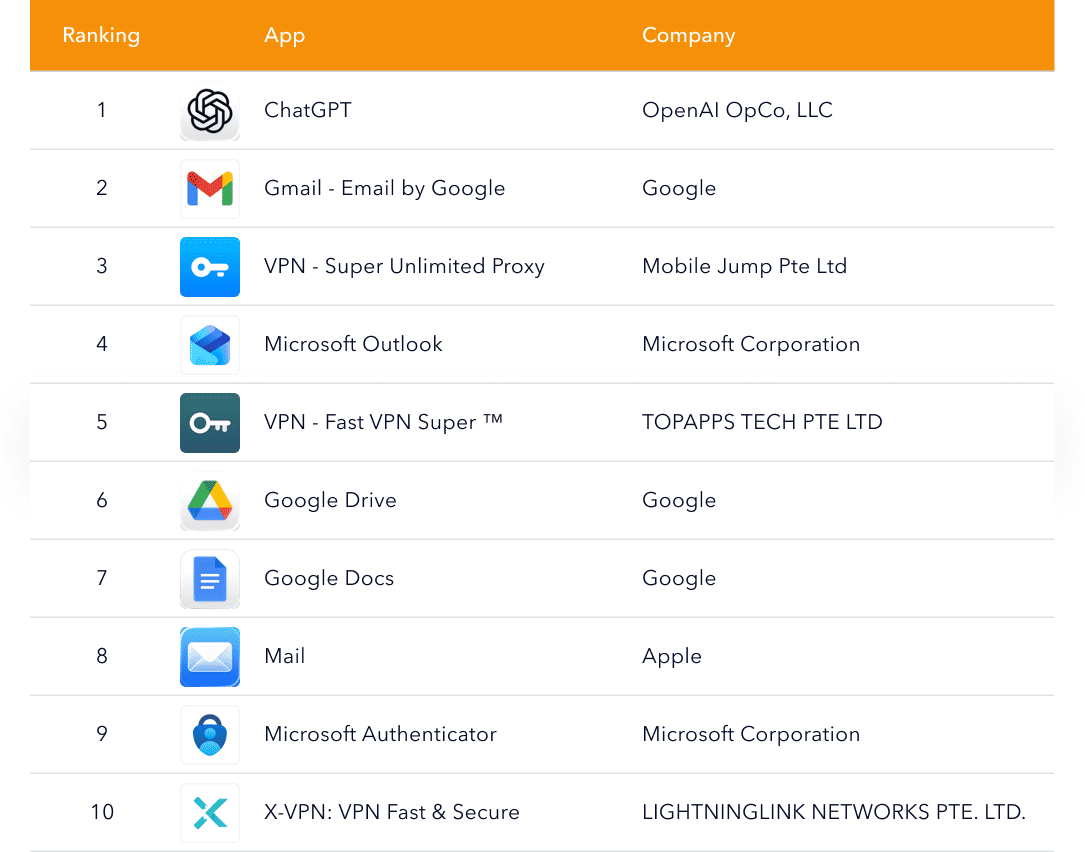
- ChatGPT is an AI assistant that performs strongly in search because “AI” has become a mainstream Productivity query, and the app’s scope is broad enough to match many everyday tasks without being confusing. Its metadata supports visibility by leaning on high-demand terms like “AI,” “assistant,” and “chat,” which clearly describe the core interaction.
- Gmail is an email app that ranks well in search because email remains a constant daily need, and “Gmail” itself is a highly converting brand-led search. The app captures email access, inbox management, and communication-related productivity intents.
- VPN – Super Unlimited Proxy is positioned as a straightforward privacy tool for securing connections on public Wi-Fi and mobile networks. It performs well in search because its metadata leads with the high-volume keyword “VPN” in the title, then reinforces core intents in the subtitle with phrases like “WiFi Security” and “Privacy VPN.” The description continues this positioning with terms such as “free VPN,” “secure connection,” “encryption,” and “no logs,” which align closely with common user searches around privacy, security, and unrestricted access.
- Microsoft Outlook combines email, calendar, and contacts in a single productivity app. It ranks well because “email” and “calendar” are core work-related intents, and Outlook benefits from widespread workplace adoption. Its metadata supports visibility by pairing “email” and “calendar” language with organization and security cues that align with professional productivity searches.
- VPN – Fast VPN Super focuses on speed and privacy, with its main value communicated directly in the name. It performs well because VPN searches are highly literal, and users often type terms like “vpn” or “fast vpn” when deciding quickly. Its metadata stacks short, high-volume keywords such as “VPN,” “fast,” and “super,” which are easy to match in search.
- Google Drive is a cloud storage app designed for saving files, backing up content, and sharing access across devices. It performs well because terms like “cloud,” “storage,” and “backup” represent broad, evergreen needs, especially for users already in the Google ecosystem. Its metadata relies on clear utility terms such as “store,” “backup,” “access,” and “share,” which map directly to user expectations.
- Google Docs is a document editor that supports writing, editing, and real-time collaboration. It ranks well because “documents” and “document editor” searches are common for both work and school, and collaboration is a clear conversion driver. Its metadata stays literal, using terms like “create,” “edit,” “collaborate,” and “documents,” which improves match quality for writing-related searches.
- Mail is Apple’s built-in email app for reading, sending, and organizing messages across accounts. It performs well because many users look for a simple default email option, and “mail” remains one of the most basic Productivity searches. Its metadata relies on the universal keyword “Mail” and reinforces it with core actions like “read,” “send,” and “organize,” keeping intent clear.
- Microsoft Authenticator is a security app designed for multi-factor authentication and secure sign-in. It ranks well because searches like “authenticator” and “2FA” are highly intentional and tied to account protection. Its metadata uses direct security language such as “Authenticator,” “secure sign-in,” and “multi-factor,” closely matching what users search for when setting up protection.
- X-VPN focuses on fast, private browsing and network protection. It performs well in search because the title includes the most common VPN decision terms, “VPN,” “fast,” and “secure”, which align with the highest-volume query patterns. Its metadata reinforces visibility by repeating trust-focused terms like “fast” and “secure” alongside the core keyword “VPN.”