









Developer Tools
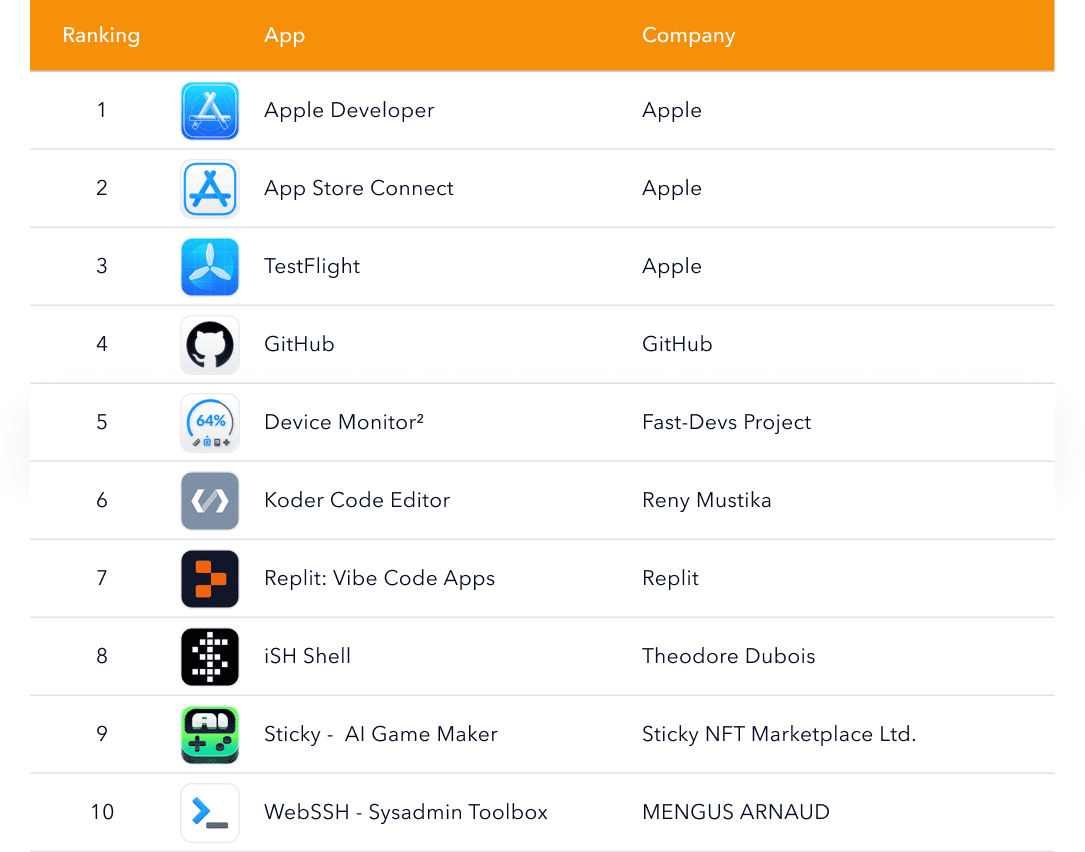
- Apple Developer serves as a reference hub for people building on Apple platforms, pulling together news, framework updates, and WWDC sessions in one place. It performs well largely through brand-driven searches and a very clear intent: developers checking what’s new or catching up on platform changes. Typical usage includes watching conference videos, following announcements, and learning about new APIs.
- App Store Connect functions as a mobile extension of the publishing workflow, letting teams check build status, manage TestFlight activity, track performance, and respond to reviews without opening a laptop. It ranks well because installs usually happen at high-intent moments, release days, review checks, or when something needs attention quickly.
- TestFlight exists for one specific step in the iOS workflow: installing and testing pre-release builds. Search performance is driven almost entirely by brand recognition and immediate need; people download it because they’ve been invited to test something. The app supports beta access, collecting feedback, and validating builds before launch.
- GitHub on mobile is less about writing code and more about staying connected to work in progress; checking issues, reviewing pull requests, and following discussions. It performs well because “GitHub” itself is a high-demand query, and the promise of managing collaboration from anywhere is easy to grasp.
- Device Monitor is a system-information tool that surfaces device stats and sensor access details in a simple dashboard. It performs well because “device monitor” searches are very direct; users want to see what’s happening on their device right now, and it fits neatly into a troubleshooting and diagnostics niche.
- Koder Code Editor is designed for writing and editing code directly on iPhone or iPad, with an emphasis on speed and a clean interface. It ranks well because “code editor” is a straightforward, high-intent query for developers who want to make quick changes away from a desktop. Typical usage includes small edits, reviewing files, and light coding sessions.
- Replit approaches development from a different angle, focusing on building and shipping projects directly from a phone, often with prompt-based or AI-assisted workflows. It performs well as interest in “build apps” and “AI coding” continues to grow, especially among learners and rapid prototypers.
- iSH Shell brings a Linux-style shell environment to iOS, allowing developers to run command-line tools and scripts locally. It performs well because searches like “shell” or “Linux on iOS” are very specific and usually come from experienced users who know exactly what they want. Its store description is intentionally literal, describing itself as a Linux-like shell, which filters for the right audience and improves match quality.
- Sticky targets creative users who want to make games without learning to code, using AI and no-code tooling to simplify the process. It ranks well because the “make a game” intent is easy to understand, and “AI game maker” adds a curiosity hook that encourages taps.
- WebSSH is built for remote server access, offering SSH and SFTP alongside other connection options and basic file operations. It performs well because “SSH” searches are highly technical and urgent; people install it when they need to connect to a server immediately.
Medical
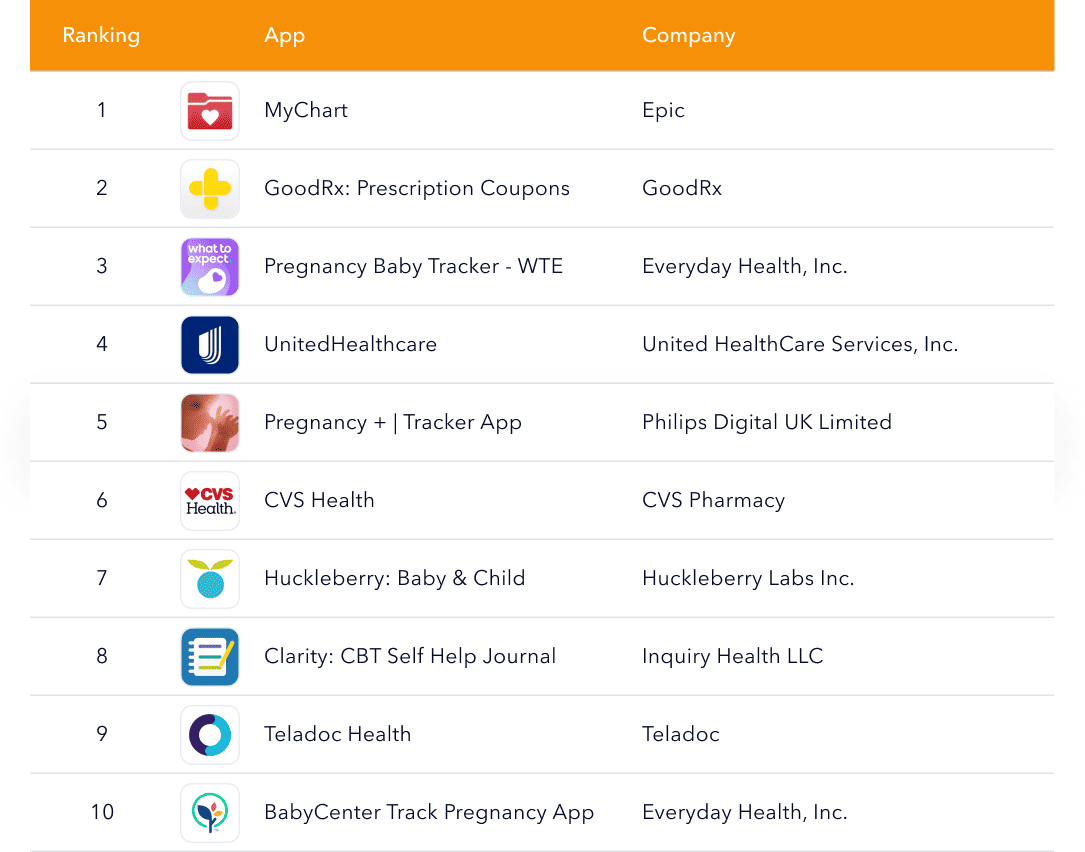
- MyChart works as a patient portal for everyday care management. It ranks well because installs often happen at a high-intent moment tied to a real healthcare event (a visit, a lab result, an appointment reminder). Its wording stays very literal: “health records,” “test results,” “appointments,” which matches exactly what users search when they’re trying to manage care.
- GoodRx is built for lowering medication costs by comparing prices and applying coupons at pharmacies. That clarity translates into strong search performance because “prescription coupons” and “drug prices” are urgent, high-conversion queries, and users typically install right when they need savings.
- Pregnancy Baby Tracker – WTE is a week-by-week pregnancy companion. It mainly serves tracking and guidance needs; following progress by week, planning around a due date, and getting day-to-day pregnancy information.
- UnitedHealthcare is a member utility for insurance basics. Its visibility is driven less by browsing and more by brand-led, task-based installs; people look for it when they need something specific and time-sensitive, like proof of coverage or a provider search.
- Pregnancy+ | Tracker App is another pregnancy tracker. The main intents are still tracking progress, getting daily guidance, and understanding development over time. Its metadata repeats the core terms and due date framing, so it matches the way users search when they want a straightforward pregnancy app.
- CVS Health supports recurring pharmacy tasks: managing prescriptions, requesting refills, tracking pickup, and accessing CVS-linked services and rewards. Search performance stays strong because pharmacy needs are frequent and often urgent, and “CVS” itself is a high-conversion brand query when someone just wants to handle a refill quickly.
- Huckleberry: Baby & Child is a baby care tracker focused on logging sleep and feeding, then helping parents make sense of routines and patterns. It ranks well because new parents search with very specific problems such as “baby sleep,” “schedule,” “feeding log”, and those needs are daily and high frequency, which supports strong retention.
- Clarity: CBT Self-Help Journal is a mental health journaling app that applies CBT-style tools to track moods, thoughts, and coping patterns. It performs well because self-guided support has grown as a category behavior, and “CBT” is a highly specific, high-intent keyword that improves match quality; users searching it tend to know what they want.
- Teladoc Health is a telehealth app for virtual doctor visits and other remote care services. It shows up strongly because “telehealth,” “virtual care,” and “doctor visit” searches are usually urgent.
- BabyCenter Track Pregnancy App is a due date and pregnancy tracking app. It performs well because it targets broad, evergreen pregnancy searches while building a daily habit through ongoing guidance and trusted content.
Reference
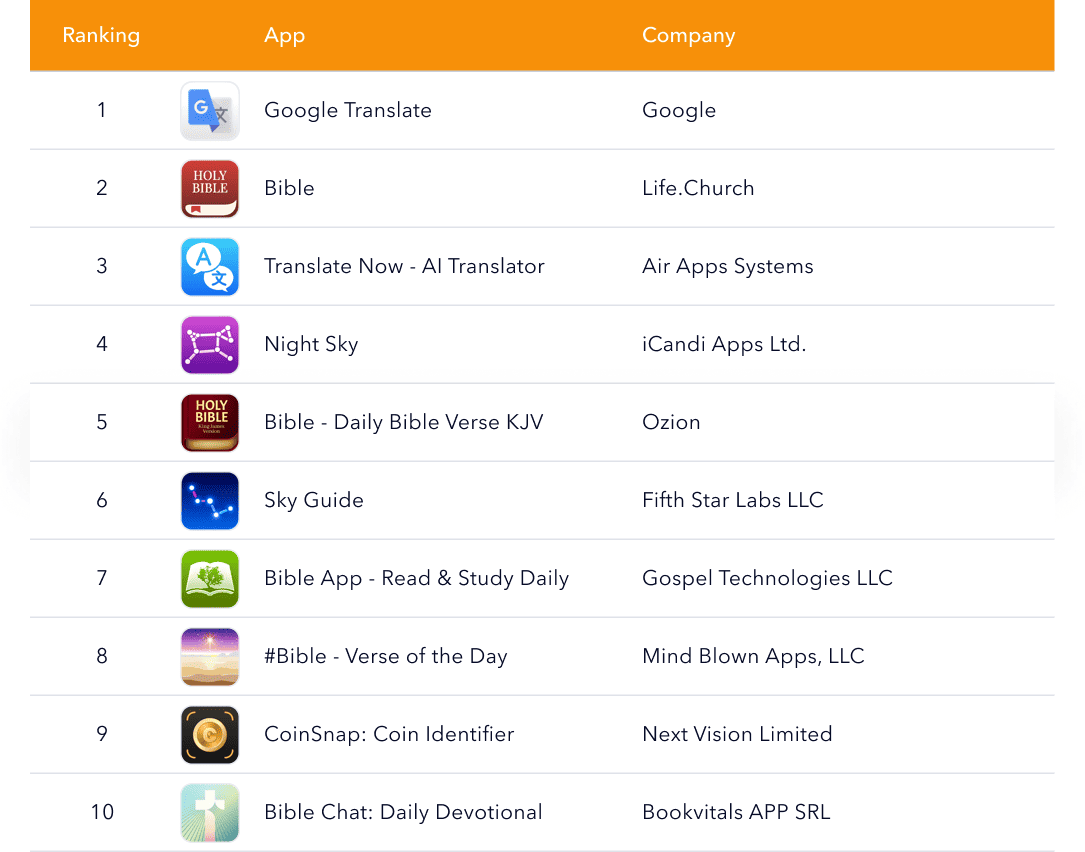
- Google Translate is a translation app for text, voice, and camera-based translations, with offline support. It performs well because “translate” searches are universal and urgent; people download when they need an answer immediately, often while traveling or messaging. Its store language stays very literal, translate, translator, voice, camera, offline, which mirrors exactly how users phrase the task.
- Bible (Life.Church) is a general Bible reading and study app that supports regular use through reading plans, audio, and features that make daily engagement easier. It ranks well because “Bible” is an evergreen, high-volume keyword, and habit-driven apps in this space build strong retention and review momentum over time.
- Translate Now is another multi-input translator, handling text, voice, and photo translation with a travel- and everyday-communication angle. It performs well by competing on broad “translator” demand while using quick relevance cues like “AI” to signal modern, fast assistance in a crowded category.
- Night Sky is an app that identifies stars, planets, and constellations when you point your phone at the sky. It performs well because the user’s need is very clear (“what is that in the sky?”) and the category rewards apps that feel visual and immediate. It captures stargazing, sky identification, and learning-by-exploring space content.
- Bible – Daily Bible Verse KJV is a KJV-focused Bible app built around quick daily reading, daily verse delivery, and offline access. It ranks well because searches like “KJV” and “daily Bible verse” are specific and high-intent; users often know the version and routine they want before they install.
- Sky Guide is also a stargazing reference tool, using sensors and AR-style overlays to label what’s above you, from constellations to planets and satellites. It performs well because identifying stars’ intent is common among beginners and casual learners. Users come for star identification, learning constellations, and exploring the night sky in a lightweight way.
- Bible App – Read & Study Daily frames itself around routine and depth: reading plans, devotionals, and offline Bible access for regular study. It performs well because it still benefits from the massive “Bible” keyword demand, but the added “study” and “daily” qualifiers improve match quality for users who want structure rather than a basic reader. The core intents are Bible reading, daily study plans, and offline scripture access.
- #Bible – Verse of the Day is a lightweight daily verse app designed for quick inspiration, often with reminders and sharing-friendly presentations. It performs well because “verse of the day” is a direct, routine-driven query that people install when they want something short and consistent rather than long study sessions. It mainly captures daily inspiration, verse reminders, and shareable faith content.
- CoinSnap: Coin Identifier solves a very specific reference question: take a photo of a coin and identify it, often with tools to organize a collection or learn more about what you have. It performs well because the “coin identifier” intent is narrow but highly conversion-driven; users usually arrive with a coin in hand and want an answer fast.
- Bible Chat: Daily Devotional is positioned around daily devotional routines, combining Bible reading with prayer-oriented content and community-style elements. It performs well because it targets evergreen Bible keywords while adding the “daily devotional” framing that naturally supports repeat use.