






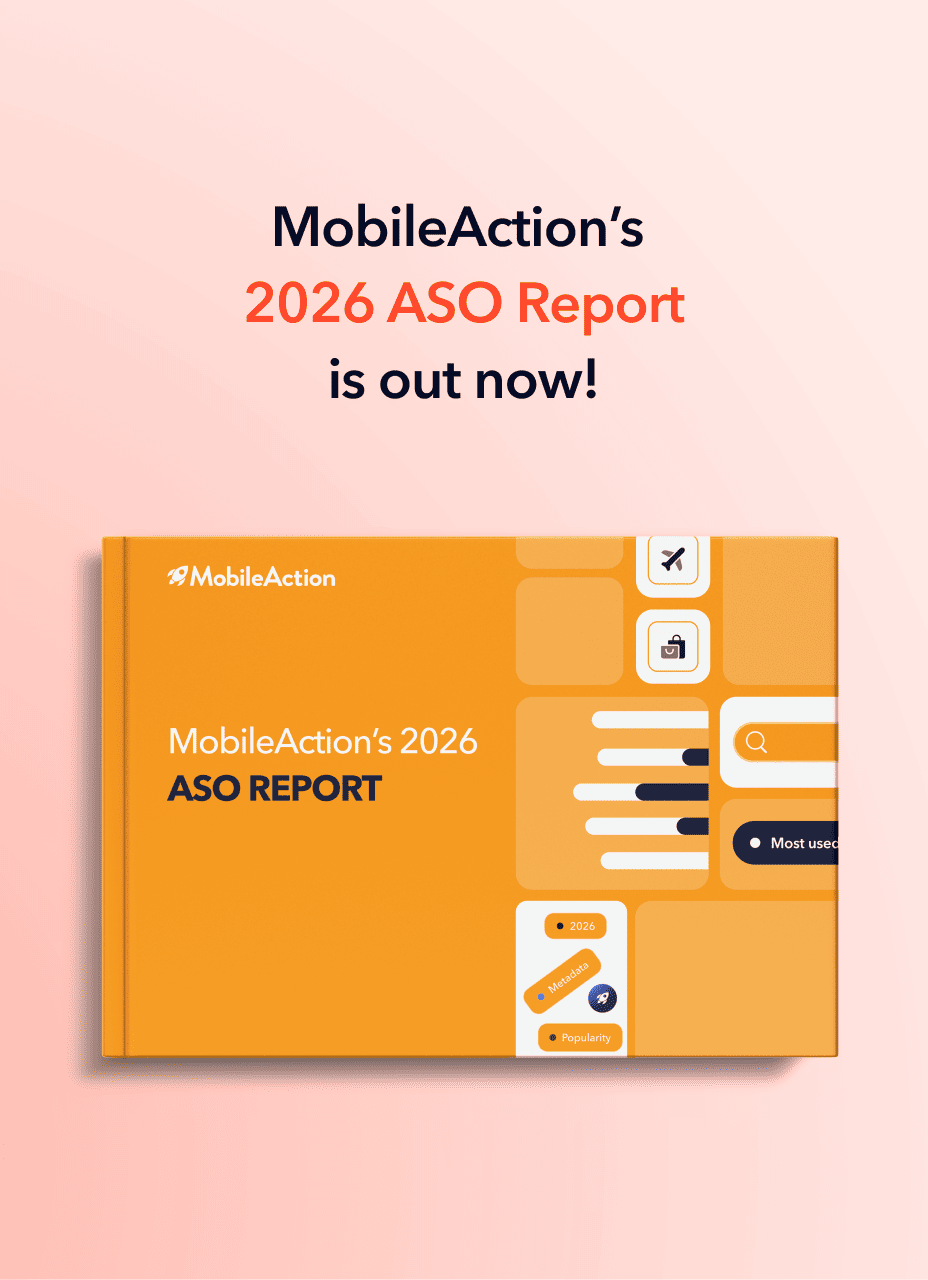



Looking to boost your app's visibility and acquire more users? Our 2025 ASO Report is your ultimate guide to navigating the evolving app store landscape. Packed with data-driven insights, keyword trends, and top-ranking app strategies, this report will equip you with the knowledge to optimize your app's presence and achieve organic growth.
Custom product pages raise conversion rates by an average of 2.5 percentage points. At WWDC 2026, Apple announced creative assets, dedicated images and videos that can appear in product page headers, in organic search results, and in Apple Ads campaigns on the Today tab and in search results. These assets can be submitted and managed in App Store Connect through Asset Library, a new centralized place for managing your App Store visual assets. Apple has said these features will begin rolling out in fall 2026, which puts the preparation window right before the holiday season.
For developers and advertisers, this is the biggest expansion of creatives since custom product pages launched. The teams that prepare over the next few months will meet the holiday season with an advantage. In this article, we will cover what was announced, how it changes daily ASO and Apple Ads work, and where to start.
What was announced at WWDC 2026
Three announcements matter most for marketing teams:
- Creative assets. A new asset type alongside screenshots and app previews. These dedicated images and videos can appear at the top of your product page, inside search results, on custom product pages, and in Apple Ads campaigns.
- Asset Library. A centralized hub in App Store Connect where teams upload, manage, and pre-approve creative assets. Assets are submitted independently of app releases, so creative updates no longer wait for a build to clear review.
- Personalized Collections. A recommendation layer that surfaces apps across the Apps, Games, and Search tabs based on a user’s interests, downloads, and app activity. Each recommendation includes an App Note, a short explanation of why the app was suggested.
All three of these announcements point in the same direction. The App Store keeps getting better at showing the right app, with the right message, to the right person. Your job is to make sure your app arrives at that moment with creative that fits.
What creative assets are, and where users will see them
Creative assets are the App Store visuals, separate from the screenshots and app previews you already manage. Apple uses the term for the dedicated images and videos that can now appear in new placements across the App Store, and two of those placements deserve close attention.
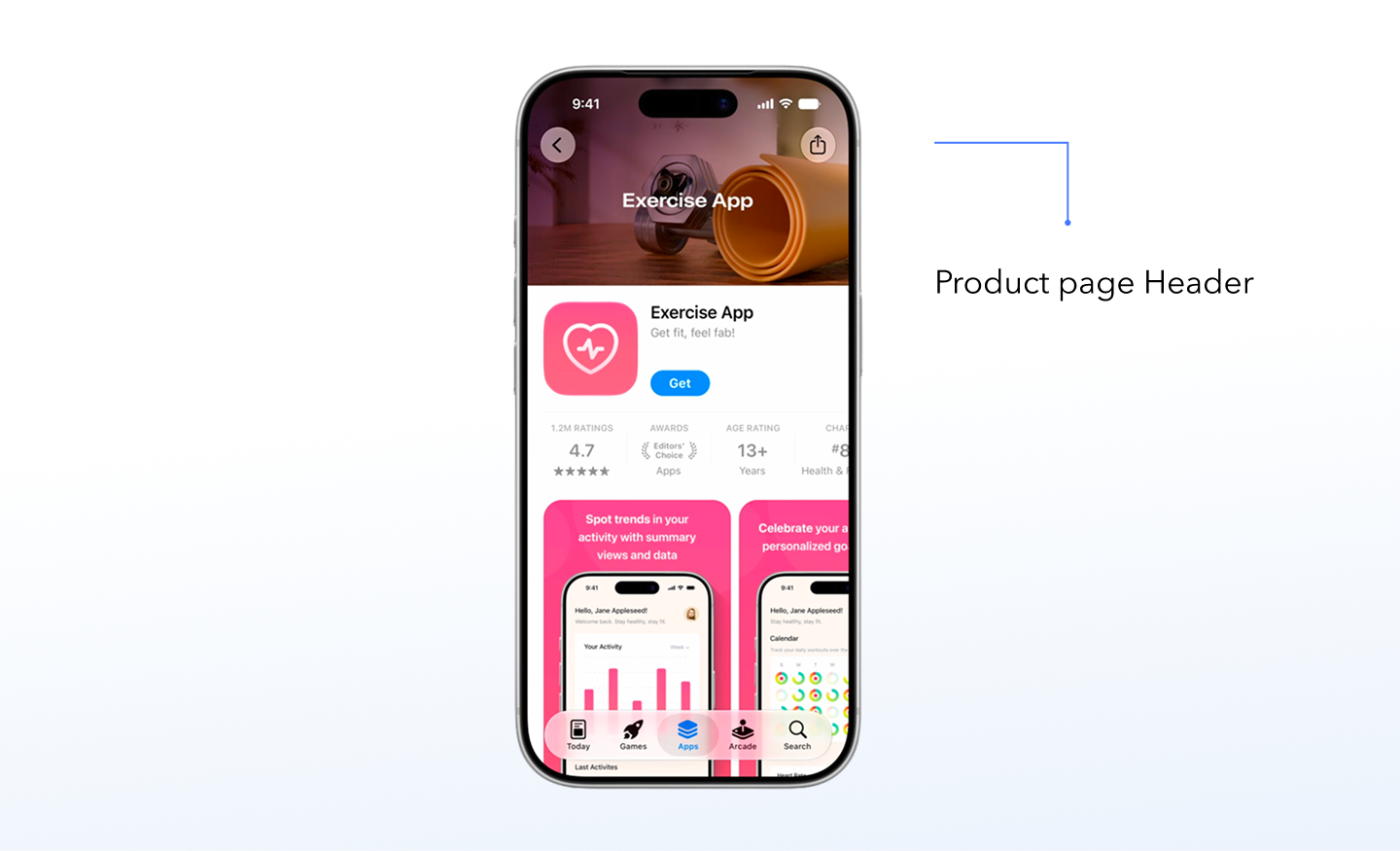
The first is the product page header, which sits above your icon and screenshots and can be a static image or a video. Think of it the way you think about the hero section of your best landing page: brand-level creative with room for lifestyle imagery, color, and motion, rather than another UI capture.
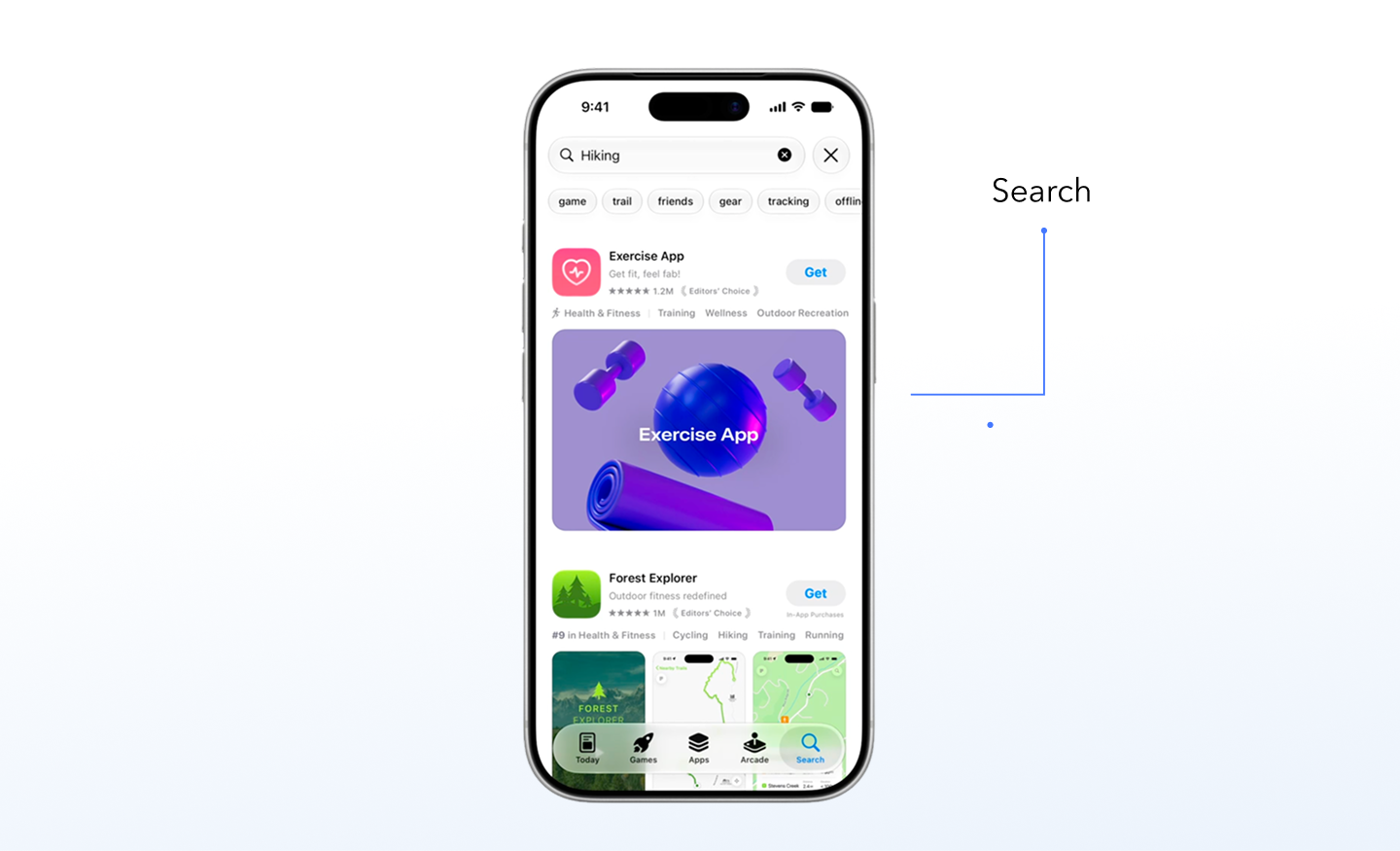
The second is search results, where a dedicated image or video can represent your app instead of the default screenshot strip. Users in search are in intent mode, so this asset has one job: communicate your core value fast enough to earn the tap within the first half second.
For advertisers, the same asset also serves search results campaigns and ads on the Today tab. One asset, several surfaces, one consistent message.
Both placements can be validated through product page optimization before a broad rollout, which means you can test header and search creative the way you already test screenshots. With the new placements arriving this fall and detailed guidance from Apple expected soon, the preparation window is now.
What the Asset Library means for your workflow
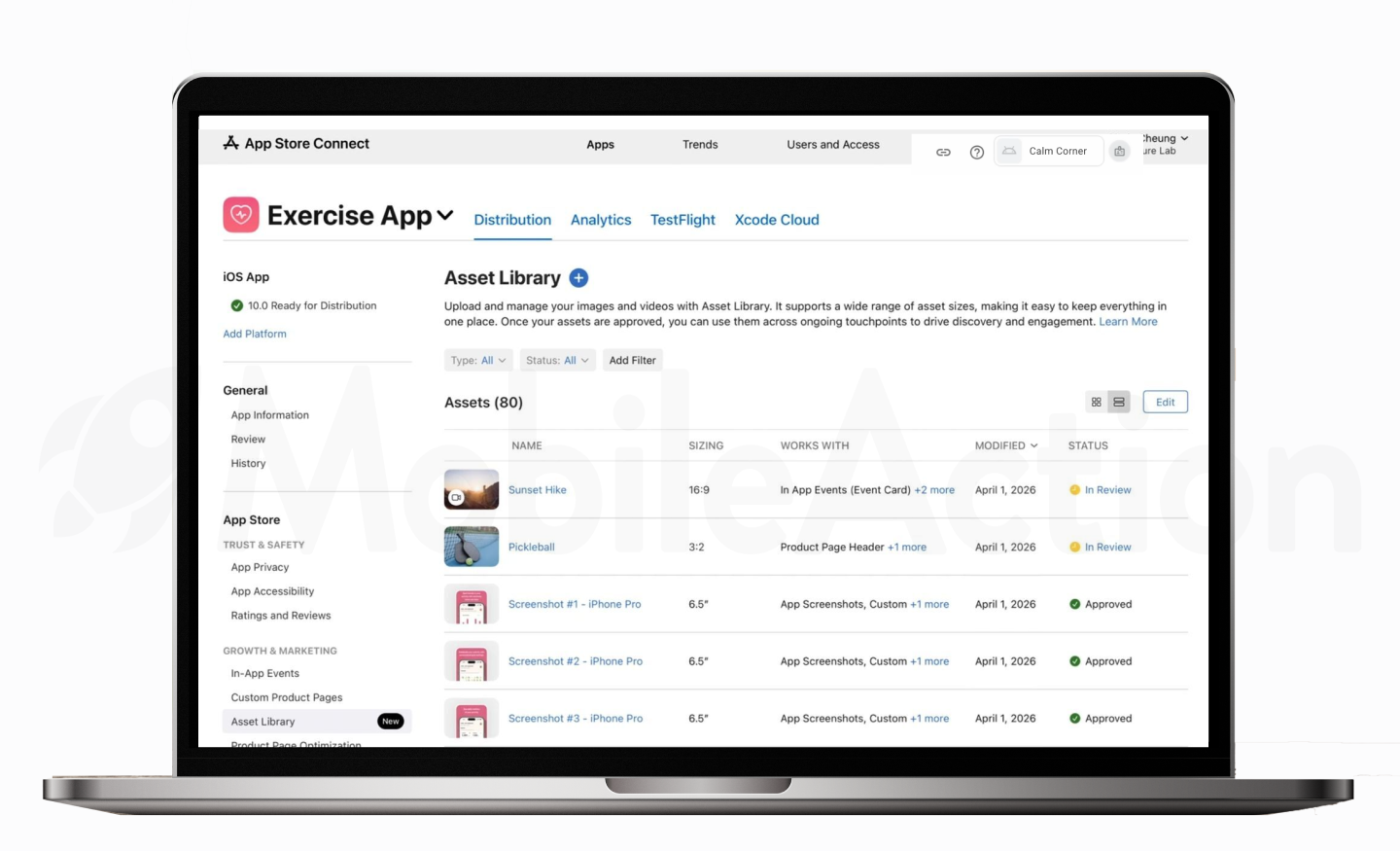
In our experience, this addresses a common pain point: creative updates have often been tied to new app build releases, meaning a seasonal campaign launched on a Friday could sit stale on your product page while an app update was still in review.
The Asset Library changes the mechanics:
- One hub for everything. Screenshots, app previews, and the new creative assets live together in App Store Connect, reusable across your default page, custom product pages, and in-app events.
- Pre-approval. Assets can go through review before you need them. A seasonal campaign becomes a scheduling decision because the creative is already cleared and waiting.
- Live updates. Approved assets go live without an app update, so your store presence can follow your marketing calendar instead of your release calendar.
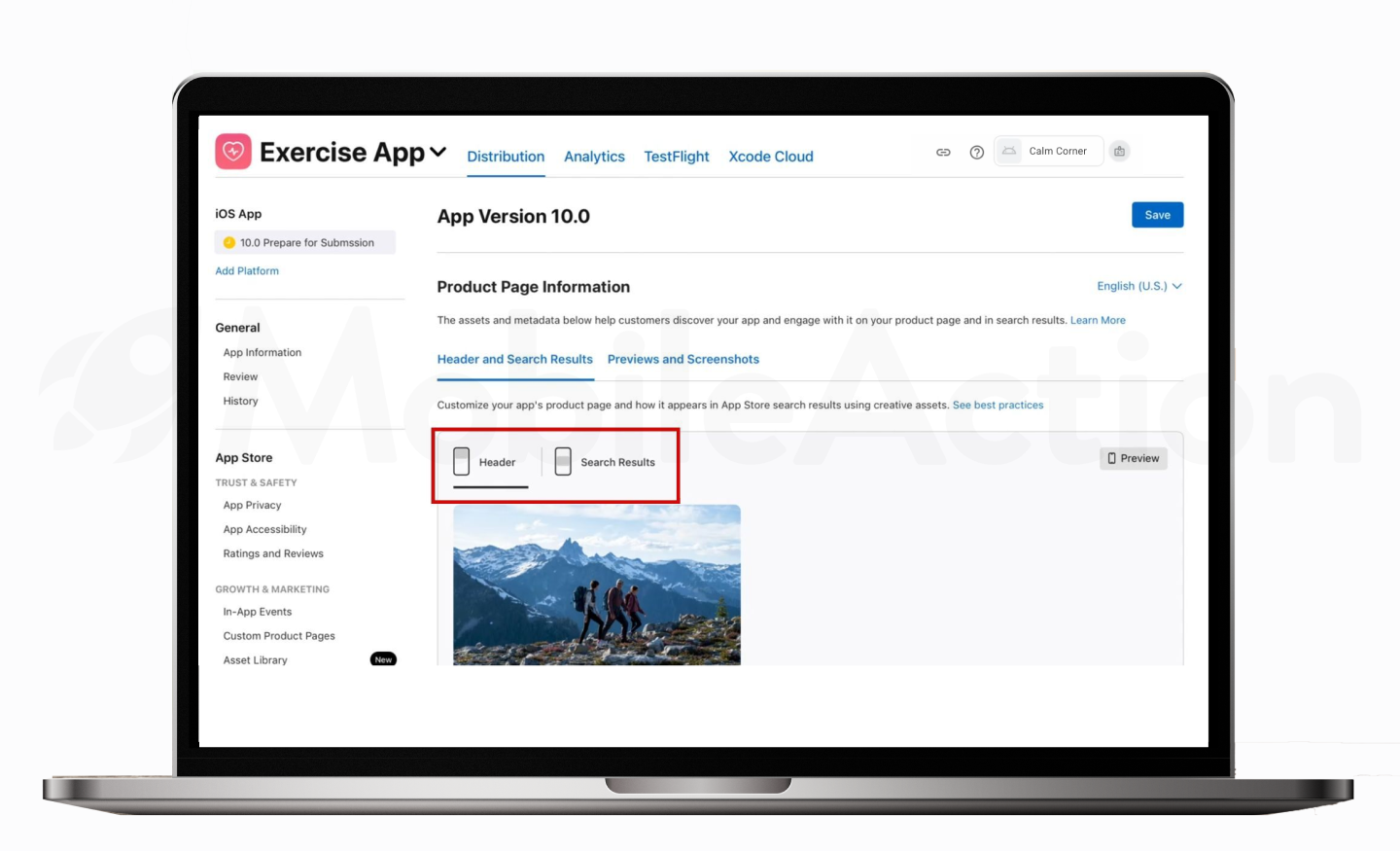
The practical result: the App Store now supports campaign-speed creative operations. Teams that build a library of pre-approved seasonal and audience-specific assets will refresh their store presence in hours. Teams that treat store creative as a once-per-release task will fall behind the moment a competitor starts testing weekly.
What advertisers need to know for Apple Ads
The creative expansion lands alongside two meaningful updates on the paid side. Apple Ads launched an additional placement in search results in March 2026, giving advertisers more opportunities to reach users at the moment of intent. And custom product pages, long familiar to advertisers as landing pages for search results campaigns, can now appear in organic search results as well.
Three implications stand out for user acquisition teams:
- Ad creative and store creative are converging. The same assets now serve ads in search results, product page headers, and organic discovery. Users experience your ad and your product page as one journey, so the message has to hold from tap to install.
- Custom product pages work harder. Each page can now serve a keyword theme or audience segment across paid and organic surfaces at once. The mapping between pages, keywords, and ad groups becomes a core piece of account structure. MobileAction’s Organic CPP Results in ASO Intelligence already shows how custom product pages perform in organic search, so you can see this shift in your own data as it happens.
- Creative relevance decides more of the outcome. More placements bring more opportunity, and the advertisers who match message to intent will capture a disproportionate share of it.
The conclusion: running ASO and Apple Ads as separate functions no longer matches how the App Store works. The audience insight that shapes your ad should shape the product page it leads to, and the creative that wins in paid should inform what you test organically.
How to get ready: five steps for the next 90 days
You do not need to wait for full rollout to prepare. The teams that benefit first will have assets, processes, and measurement in place on day one.
- Audit your current store presence. Open your product page the way a first-time visitor does, on a phone. Review the screenshots, previews, copy, and custom product pages, and note which assets no longer match your positioning. This audit becomes your production brief for the new formats.
- Build a creative template system. Header images and search result videos are new formats with their own specs. Design one strong layout per format, then produce audience variations by changing the message rather than starting over. This is how a small team keeps pace with a large one.
- Map custom product pages to keyword themes. Decide which audiences, features, and seasonal moments deserve their own page, then assign each page to the search results campaigns and ad groups where that intent appears.
- Test messages in paid before investing in production. Ad variations built from custom product pages return conversion data within days. Read tap-through and conversion rates, then put design hours behind the messages that win. MobileAction CMP connects this test data to downstream performance, so you see which creative wins on conversion, not only on taps.
- Measure past the install. Track activation, trial starts, and retention by source and by product page. Personalized Collections reward apps that keep users engaged, so retention now supports your visibility as well as your revenue.
To sum up
The pattern behind every WWDC 2026 announcement is the same: the App Store keeps getting better at matching apps to the people most likely to value them, and creative is now the language of that match. The preparation window matters more than any single feature. Teams that audit their store presence, build their asset pipeline, and connect their organic and paid creative before the holiday season will compete for Q4 traffic with tools their competitors are still reading about.
With MobileAction, you have the creative intelligence, the CPP data, and the Apple Ads infrastructure to act on everything these updates put on the table.
If you want to see how your app’s store presence measures up before these changes take hold, book a demo today, and our experts will walk through it with your own data!

Content Marketing Manager
Resources that you'll love

Grow your app on the App Store and Google Play Store with our solutions now