






Looking to boost your app's visibility and acquire more users? Our 2025 ASO Report is your ultimate guide to navigating the evolving app store landscape. Packed with data-driven insights, keyword trends, and top-ranking app strategies, this report will equip you with the knowledge to optimize your app's presence and achieve organic growth.
App developers and marketers often struggle with a fundamental blind spot, knowing how many downloads an app really has. Without access to app download estimates, you’re essentially flying blind in a hyper-competitive market.
The major app stores don’t publicly display exact download counts, leaving you guessing which competitors are surging and which app categories are booming. In this blog, we will show you how to see how many downloads an app has using reliable app store download estimates, and more importantly, how to leverage that app download data to build a smarter App Store Optimization (ASO) strategy.
We’ll explore how download numbers reveal true market demand, competitor momentum, and category trends (ever wondered how many apps are downloaded a day worldwide?), and why those app download statistics should guide your ASO decisions. By the end, you’ll understand how to integrate download insights into your workflow.

What are app download estimates?
App download estimates are projected figures that indicate how many times a mobile app has been downloaded from app stores. Because App Store and Google Play do not publicly share exact download numbers for most apps, marketers rely on third-party platforms to generate these estimates.
These platforms use app store download estimates algorithms that combine data signals, such as app store rankings, historical trends, and machine learning models, to approximate download counts. In essence, an app download estimate gives you a data-backed peek at an app’s download performance when the real numbers are hidden from view.
It’s important to note that download estimates are not perfectly exact figures, but they’re generally accurate enough to inform strategic decisions. The key is that these estimates provide directional insights; they reveal trends and relative differences that you can confidently act on. Without them, you’d have no choice but to guess an app’s popularity or rely solely on chart rankings (which can be misleading).
Why app download estimates matter for ASO
Understanding app store download estimates isn’t just trivia; it’s critical for effective ASO and mobile marketing. Here are several reasons why app download estimates matter and how they translate into real-world strategy:
-
Benchmarking and market visibility
Download estimates let you benchmark your app’s performance against competitors and track overall market trends. By seeing estimated download counts, you can identify which apps are gaining traction fast and which are lagging. For instance, you might spot a new competitor with surging downloads (even if their rank is still low), a sign of a disruptive entrant. This helps you detect market shifts early and adapt your strategy. You can compare whether app download statistics in your category are growing or declining, and adjust your growth expectations accordingly.
-
Smarter ASO decisions
Having app download data takes the guesswork out of App Store Optimization. Instead of optimizing blindly for rankings alone, you can prioritize efforts based on where the real user demand is. For example, if your competitor ranks #5 for a keyword but is still getting twice your downloads, it indicates that keyword (or that competitor’s execution) is driving high conversion. You might double down on that keyword with better creatives or additional paid user acquisition. Conversely, if you rank highly for a term but download estimates show the overall volume for that term is low, you know to re-focus on higher-yield keywords. In short, app download estimates help you allocate ASO resources to areas that will actually move the needle in downloads.
-
Competitive intelligence
App download estimates are a cornerstone of competitor analysis. They reveal the truth about your competitors’ scale and growth. Two apps might both appear in the top 10 of a category, but download estimates could show one is a giant with 5x the downloads of the other. That insight is crucial for crafting your response: if a rival app’s download numbers are much higher, you may need to address gaps in your user acquisition or find niche audiences they’re overlooking.
Estimates over time also uncover competitor growth patterns; for example, you might see that a competitor’s downloads spiked 50% last month. Was it due to a feature update, a holiday seasonal trend, or a big ad campaign? Knowing this helps you anticipate their next moves and respond intelligently. Remember, rankings alone can be deceiving; an app that doesn’t rank top in any one country might still accumulate massive downloads globally.
-
Evaluating market opportunities
If you’re exploring a new app idea or deciding which feature/category to invest in, download estimates provide a reality check on market demand. For example, if you want to build a meditation app, you’d research app download statistics for the top meditation apps. If the top 10 meditation apps collectively have, say, 5 million downloads per month, that’s a healthy market; if they only have 200,000, the niche might be smaller than it appears. Likewise, download data helps validate if surges in interest are seasonal or sustained. Many publishers ask, “how many apps are downloaded a day in this category or country?” to gauge opportunity size. Knowing that, for instance, Productivity apps in the U.S. get X hundred thousand downloads per day on average might guide how aggressively you launch or market your app in that segment.
-
Data-backed investment and UA decisions
Beyond ASO, app download data informs broader business decisions. Investors and business teams use download estimates to evaluate apps for partnership or acquisition. It’s a proxy for an app’s user base and momentum. If you’re deciding whether to pour budget into a user acquisition campaign, you’d want to know the ceiling: how big is the pool of potential new users this month? If the total downloads in your category are, for example, 2 million this month (and you currently have 100k), there’s room to aggressively chase more share..
In summary, download estimates matter because they provide the missing context behind app store performance. With them, you can move from simply tracking rankings to truly understanding results. Rankings tell you where an app stands in the store; download estimates tell you how much that standing is translating into actual users. Both are needed for a complete picture, but it’s the download data that ultimately validates whether your ASO efforts are translating into growth.
Using app download data to build a smarter ASO Strategy
Collecting app download estimates is only the first step. The unique value comes from applying that data to make smarter decisions in your ASO and marketing strategy. Most content about download numbers treats them as isolated stats, but here we’ll integrate them into a practical ASO workflow. Think of this as a how-to guide for transforming raw app download data into actionable insights.
Below, we outline a step-by-step approach to use download estimates within your ASO strategy:
1. Understand market size and category momentum
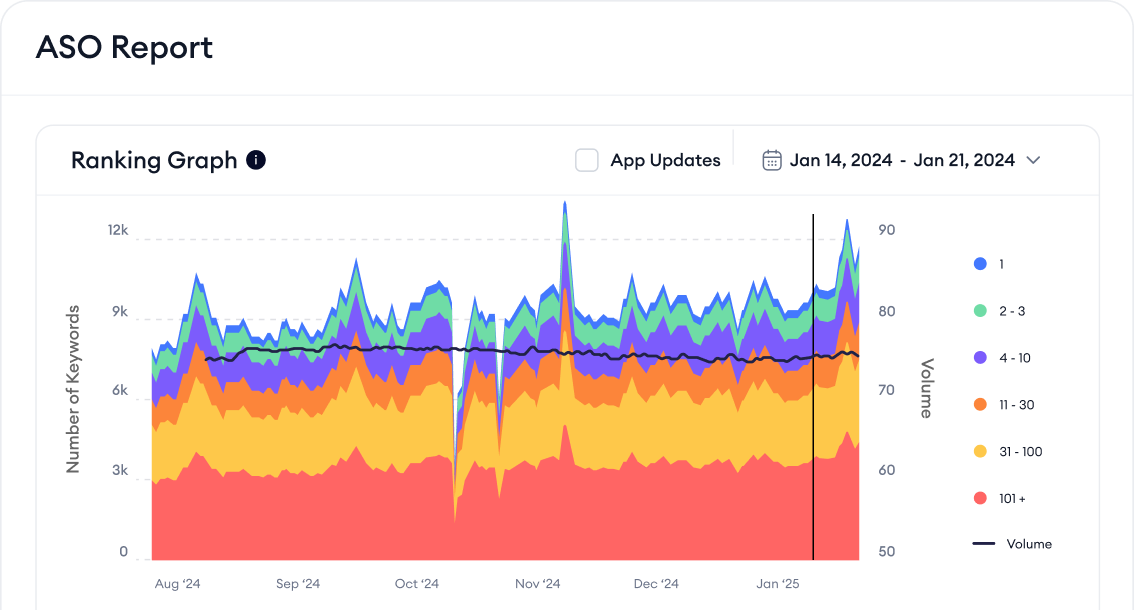
Start by understanding the big picture: how many downloads are happening in your app’s category or market? This is where you answer questions like how many apps are downloaded a day in your space. For instance, if you learn that on average nearly 819 million apps are downloaded daily worldwide in 2025, you know the overall app economy is huge but you’ll want to narrow that to your category. Using MobileAction’s Market Intelligence Store Analysis feature, you can filter by category and country to see total download estimates for that segment (e.g., how many downloads did “Health & Fitness” apps in the US get this month?). If your category’s downloads are rising month over month, it signals a growing opportunity, a category momentum you should capitalize on. If they’re flat or shrinking, you’ll need to compete more strategically for a limited pool of downloads.
2. Validate user demand and ideas
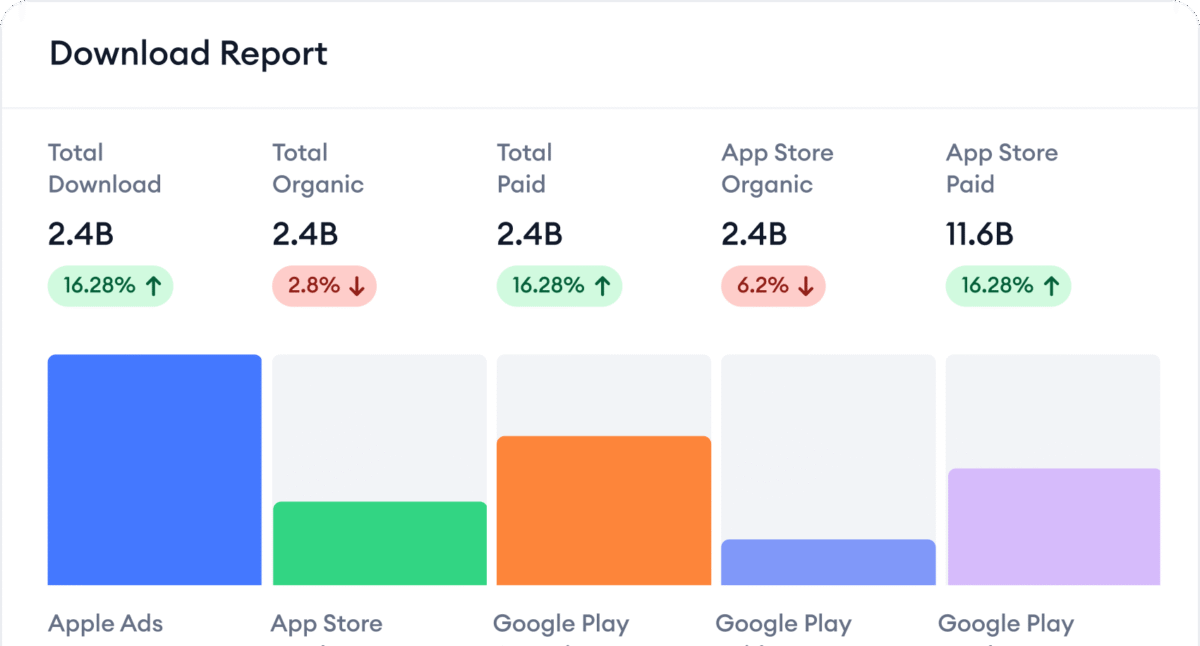
If you’re at the stage of brainstorming a new app or feature, use download estimates to validate the idea. Let’s say you have an idea for a subscription meditation app feature. By checking app download data for the top meditation apps, you can gauge user interest. If Calm and Headspace (top apps in that genre) show a steady increase in downloads month over month, it indicates strong and growing demand. You can even see how many downloads an app has after a major feature update by looking at its historical trends. Essentially, download stats act as a proxy for market research: they show what users are voting for with their downloads. Use this data early in your ASO planning to focus on app ideas that the market is signaling as wanted.
3. Benchmark against competitors
One of the smartest uses of app store download estimates is to benchmark your app against competitors. After all, ASO is relative; your performance is good or bad largely in comparison to others in your space. Start by identifying your key competitors (apps targeting similar keywords or user needs). For each competitor, look up their download estimates for the past month or quarter. How do those figures compare to your downloads? If you discover that a rival app has double your downloads yet ranks similarly for many keywords, it might reveal gaps in conversion or off-store marketing. Alternatively, if you have more downloads but are ranking lower, perhaps your visibility (keyword spread or featuring) is weaker, and you rely on other channels.
4. Identify seasonal and regional trends
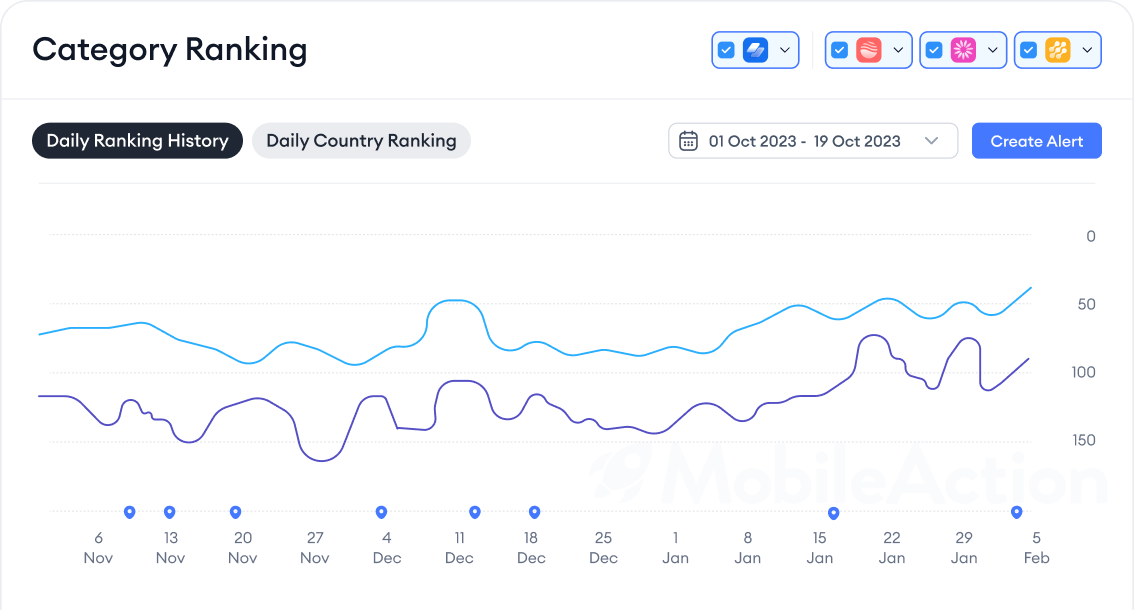
App download statistics often reveal patterns tied to seasons, events, or regions, which should inform your ASO timing and targeting. For instance, you might notice that overall downloads in the “Shopping” category spike in November (around Black Friday) or that how many apps are downloaded a day can double during holiday surges. If you have this data, you can plan ASO updates and campaigns to coincide with those high-demand periods.
Using MobileAction, you can track country-level download trends and even see which apps are leading in different regions. If data shows emerging markets with growing downloads, that’s a signal to get in early. Conversely, if a region’s downloads are shrinking, you might de-prioritize it. Aligning your ASO strategy with these download trends ensures you’re targeting users when and where they are most active.
5. Measure download share and true competition
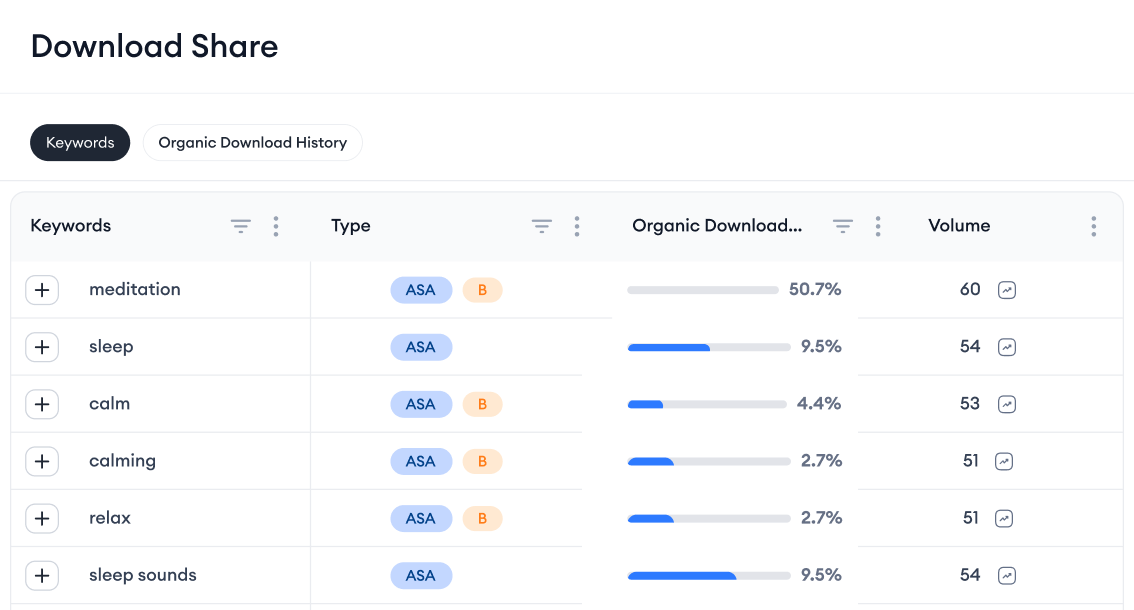
Download share is a game-changing metric to put individual app numbers in context. It refers to the percentage of total downloads in a given group that each app accounts for. Instead of just knowing, for example, that your app got 50,000 downloads last month, download share tells you what slice of the pie that is out of your market or category. Say the top 5 apps in your category had a combined 500,000 downloads last month; if you earned 50k of those, your download share is 10%. That might be good or bad depending on your goals, but it frames your performance in market terms.
6. Connect visibility to conversion
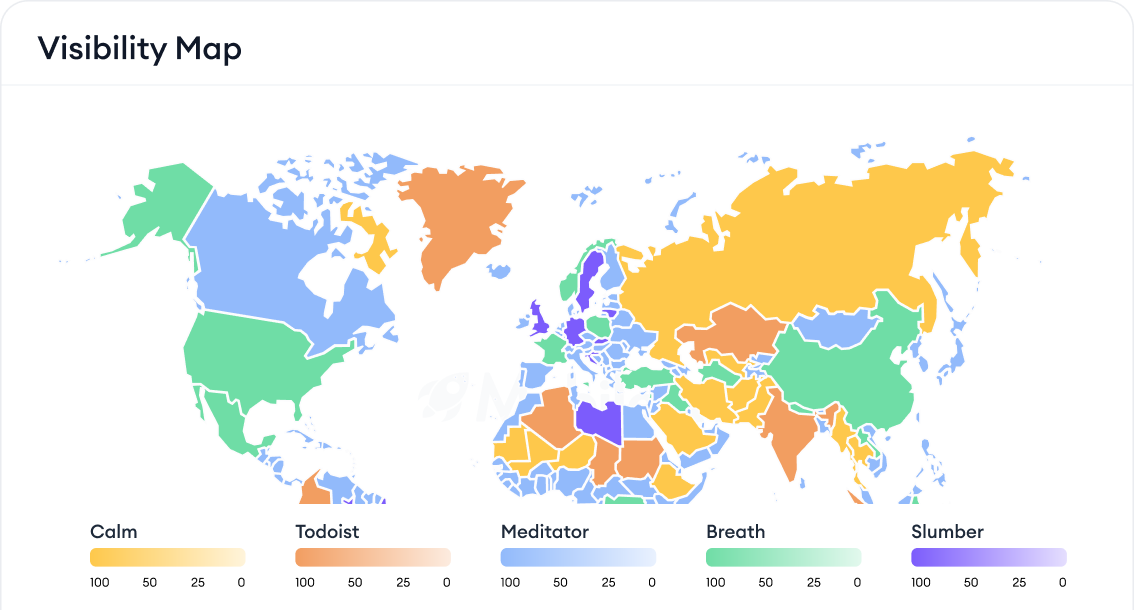
A smarter ASO approach means not treating rankings as the only success metric. Visibility is vital, but how it translates into downloads is what matters for your bottom line. By comparing visibility data with download estimates, you can spot conversion inefficiencies. For example, if your app is ranking in the top 5 for a high-volume keyword but download estimates show that a competitor ranking below you is still getting more downloads from that keyword, you might have a conversion issue. MobileAction’s Visibility Report and ASO Report help on the visibility side by showing how you and competitors rank across all your keywords and countries. Combining that with download data completes the picture: you can correlate spikes or drops in downloads with specific changes in visibility.
Turn download insights into ASO action
App download estimates turn unknowns into actionable insights; they let you peer behind the curtain of app store rankings to see the real user acquisition happening every day. By understanding how to see how many downloads an app has (and applying that data to your strategy), you move away from guesswork and gain a data-driven edge. We’ve seen that app store download estimates can validate market demand, reveal competitor strategies, highlight category trends like how many apps are downloaded a day, and quantify your download share in the market..
Mobile marketers who integrate download data into their ASO workflow are better equipped to answer strategic questions: Should we localize for Japan next? Which competitor is our biggest threat this quarter? What features or keywords are actually driving growth in our category? All of these can be informed by looking at the numbers.
As a next step, consider applying these insights with the right tools. MobileAction’s ASO Intelligence and Market Intelligence suite offers an integrated way to gather and act on download data, from the ASO Report and Visibility Report that compare your app to competitors, to Download Share and Top Charts features that highlight where your opportunities lie With clean, reliable download estimates at your fingertips, you can confidently make decisions to outsmart competitors and capture more users. Instead of operating on hunches, you’ll be steering your ASO strategy with a data-informed compass.
Ready to put this into action? Start by checking the download estimates for your app and your top 2-3 competitors using MobileAction. Start your free trial today and see what the numbers say, and let that guide your next move.
Frequently asked questions
How do I check how many downloads an app has?
To check how many downloads an app has (especially if it’s not your own app), you’ll need to use a third-party market intelligence tool. App stores themselves don’t show exact download counts to the publicFor example, you can enter the app’s name in MobileAction’s Market Intelligence, and it will display the estimated download numbers for that app over a selected time period, often broken down by country and platform.
What is a good app download rate?
“Good” app download rate can mean a couple of things depending on context. If we interpret it as how many downloads an app should be getting in a given time (daily, monthly) to be considered successful, it really varies by category and the app’s stage. For a brand new app, getting even a few hundred downloads in the first days can be a good start if it’s organic and shows initial interest. For established apps, thousands of downloads per day might be normal. A better approach is to benchmark against competitors and category averages. Using download estimates, determine the typical downloads for apps of similar size or in the top ranks of your category.
Can download estimates predict an app’s revenue or success?
Download estimates are a strong indicator, but not a full predictor of success. High downloads show an app is effectively acquiring users, which is the first hurdle to success. Generally, an app with millions of downloads stands a better chance at high revenue than one with only a few thousand. However, revenue also depends on monetization model (ads, in-app purchases, subscriptions) and user retention/engagement. It’s possible for an app with fewer downloads but a subscription model to earn more than a free app with many downloads but low engagement. That said, many market intelligence tools also provide revenue estimates alongside download estimates to give a fuller picture.
How accurate are app download estimates from third-party tools?
Third-party download estimates are estimates, so they will never be 100% exact compared to the proprietary data that developers have in their dashboards. MobileAction, in particular, emphasizes having clean and actionable data, meaning they focus on consistency and usefulness of trends more than the exact single-number precision.
How often should I track app download estimates?
This depends on how fast-moving your app’s market is and your workflow. For most, checking key competitors’ download estimates on a monthly basis is sufficient to spot meaningful trends (since ASO and organic growth are somewhat gradual). A monthly ASO report that includes download trends can show seasonality and the impact of any big changes.

Content Marketing Specialist
Resources that you'll love



Grow your app on the App Store and Google Play Store with our solutions now