





Looking to boost your app's visibility and acquire more users? Our 2025 ASO Report is your ultimate guide to navigating the evolving app store landscape. Packed with data-driven insights, keyword trends, and top-ranking app strategies, this report will equip you with the knowledge to optimize your app's presence and achieve organic growth.
Mobile apps live in a fast-moving ecosystem. App Store Optimization (ASO) is not only about keywords and visuals; it’s also about keeping your app fresh with regular updates.
In this blog post, we’ll explore why apps need to be updated so frequently and how update frequency ties into ASO success. We will show you how you can benefit from understanding how app updates influence visibility, user trust, and growth.
TL;DR
- App updates are growth drivers, not just maintenance. Each new version signals freshness to app stores and users, improving visibility and trust.
- Both Apple and Google reward actively maintained apps with better rankings and potential feature placements.
- Update too rarely, and your app risks being downranked; update too often without value, and users may feel fatigue.
- Updating early for new iOS/Android releases keeps your app compatible and visible.
- Frequent, meaningful updates show commitment, increase trust, and keep users engaged.
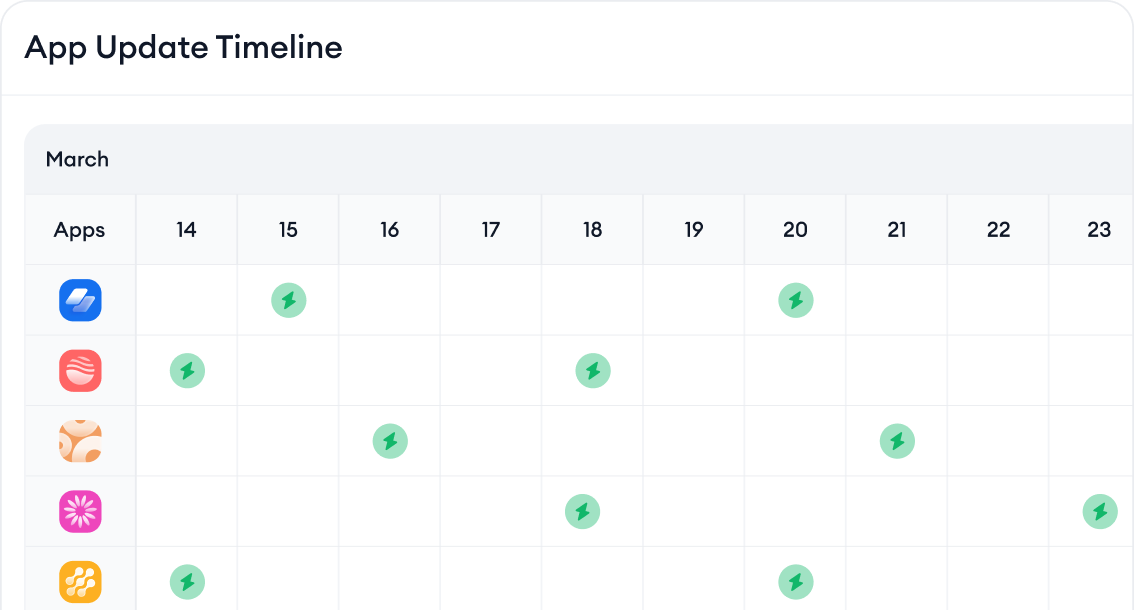
- MobileAction’s App Update Timeline reveal competitor patterns and help you time your releases strategically.

What is an app update?
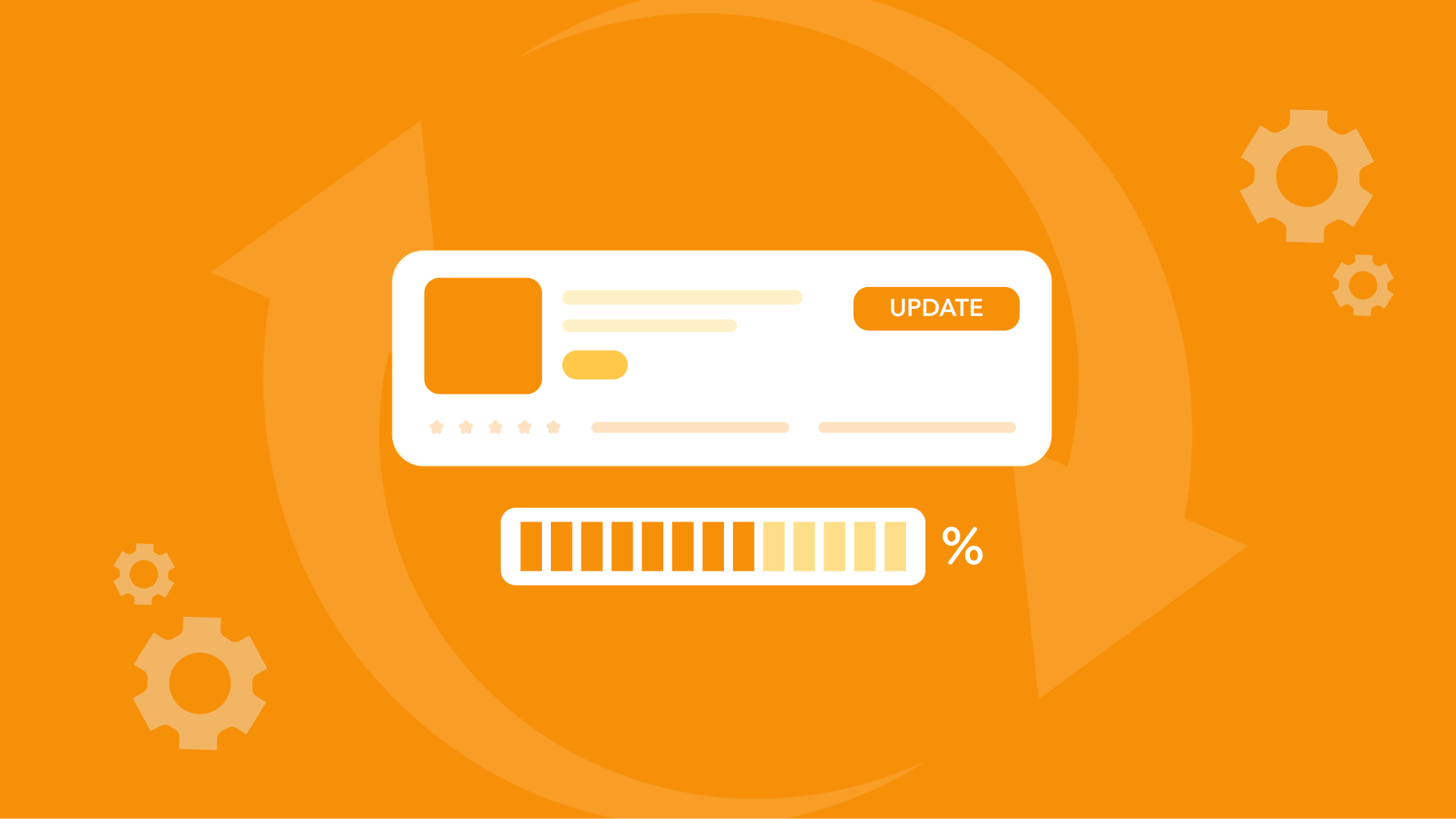
To answer why apps need to be updated, we need to understand what an app update is? An app update is a new release (or version) of your mobile application submitted to the app stores. Updates typically include changes such as new features, improvements to existing functionality, bug fixes, performance optimizations, or adaptations to new operating system requirements.
In practical terms, when you push an update, users will download a revised version of your app (often identified by a version number increment).
These updates are distributed through the App Store or Google Play Store and appear in the “What’s New” section of your app listing. Each update gives developers an opportunity to enhance the app’s quality and provide a better experience for users.
Why do apps need to be updated? Fundamentally, to ensure the app remains relevant, functional, and competitive. Next, we’ll explore the specific reasons and how they connect with ASO.
Why regular app updates matter for ASO and visibility
Regularly updating your app isn’t just good software practice, it’s a key factor in ASO and discoverability. Both Apple and Google have signaled a preference for “fresh” and actively maintained apps.
In fact, Apple has an App Store Improvements policy of “removing apps that no longer function as intended, don’t follow current guidelines, or are outdated.” Apps that haven’t been updated for a significant amount of time risk being taken down after a 30-day notice.
Similarly, Google Play has begun limiting the visibility of apps that don’t target a recent Android API level (within ~2 years of the latest OS). These policies highlight why apps need to be updated for iOS and Android platforms: to comply with evolving standards and avoid ranking penalties or removal.
Updating frequently can also boost your search rankings and visibility in the stores. It is a well-known practice that releasing an update on the App Store can temporarily boost your app’s ranking or “visibility score”.
Bottom line: App updates aren’t just “maintenance;” they’re a growth driver. By keeping your app fresh, you improve its chances of being discovered (or featured), maintain compatibility with new devices/OS changes, and send a strong signal to users (and the app stores) that your app is relevant. In ASO terms, why apps need to be updated comes down to staying visible and competitive in the ever-changing app marketplace.
Understanding the link between update frequency and App Store ranking
The answer to the question of why do apps need to be updated so often can directly impact your app’s ranking and success. This doesn’t mean you should release meaningless updates every day, but it does mean there’s a balance to strike.
On one side, consistent updates signal “relevance” to App Store and Play Store algorithms. As noted, Apple may even give a short-term ranking boost upon each update, which some developers leverage to spike visibility and downloads.
Google’s approach also rewards quality updates: Google Play’s ranking algorithm factors in app quality signals like crash rates and user ratings. If your updates improve stability (fewer crashes) and satisfy users (better reviews), your search ranking is likely to rise over time.
In contrast, apps that stagnate without updates can gradually drop in rankings as competitors release new versions and as they accumulate outdated code or UI.
On the other side, there is such a thing as over-updating. Pushing updates too frequently without meaningful improvements can annoy users. If users feel like they’re constantly downloading updates that offer nothing new or, worse, introduce new bugs, you could see backlash..
Competitive insight: Monitoring your competitors’ update habits can shed light on this balance. Using MobileAction’s App Update Timeline, you can literally see how frequently a competitor app releases updates and what happens to their rankings afterward. For example, analyzing a competitor’s update history can reveal patterns, say they do major updates before holidays or a flurry of patches after OS releases, and whether those updates coincided with ranking jumps or improved user reviews.
Now that we see updates are not merely technical housekeeping but a factor in App Store ranking and ASO, let’s answer the big question directly.
Why do apps need to be updated so often?

Frequent updates might seem perplexing. Why do apps need to be updated so often, anyway? There are several driving forces that require apps to update regularly, especially in the iOS and Android environments. Below, we break down the main reasons:
Adapting to OS and policy changes
One major reason apps need continual updates is to stay compatible with operating system changes and new app store policies. Apple and Google constantly update iOS and Android with new features, deprecations, and requirements.
Staying on top of OS changes through timely updates prevents your app from breaking, losing compatibility, or being downranked for technical issues. It also shows the app stores that your app “plays nice” with the newest features. For instance, when Apple releases a new iOS, they love to see apps adopt its features. Apps that quickly update to support new iOS features or new devices can gain favor, possibly even getting promotional spots for being early adopters.
Staying aligned with evolving user expectations
User expectations in the mobile world are always rising. What delighted users last year might feel stale today. This drives the “new feature loop”; users expect continuous improvement, and delivering those improvements via updates keeps your audience engaged.
If you’re wondering why do apps need to be updated so often from a feature perspective, it’s because competitive pressure and user feedback demand it. For example, if a competing app in your category rolls out a clever new feature and users love it, you may need to update your app with something similar (or better) to stay relevant.
There’s also a psychological aspect: an actively updated app feels alive and cared for, whereas an app with no updates in ages feels abandoned. For indie developers and brands building trust, showing a history of frequent meaningful updates can set you apart. It communicates reliability (“this developer fixes issues and improves the app often”) which is crucial for long-term retention.
In sum, apps need to update often to meet evolving user needs and tastes. It keeps the experience fresh and prevents your product from becoming obsolete in a fast-moving market.
Fixing bugs and optimizing performance
Not all updates are about new features; a huge reason for frequent updates is to fix bugs, improve stability, and optimize performance. Even with rigorous testing, issues can slip into production, a crash on certain devices, a memory leak, a slow screen, etc.
There is a strong correlation between app stability and user satisfaction. Google reported that roughly half of all 1-star reviews on Google Play mentioned app stability or crashes. Users are quick to leave negative ratings if an app is buggy. Those ratings in turn drag down your app’s overall star score, which can hurt ASO (both Apple and Google consider ratings in their algorithms, and a lower star rating definitely hurts conversion on your store page).
Now that we’ve covered the why behind frequent updates (OS changes, user expectations, bug fixes), let’s see how updates tangibly influence your ASO metrics and what you should monitor.
How app updates influence ASO metrics
When you release an update, it’s not only the app’s functionality that changes, a ripple effect can occur across your ASO KPIs. Here are the main metrics and areas to watch, and how they can move before vs. after an update:
-
Keyword rankings movement
Each app update is an opportunity to optimize your metadata (title, subtitle, keywords, description). Even if you don’t change keywords, the mere act of updating can affect your search rankings slightly due to the “freshness boost” on some app stores. To keep your ASO keyword research alive.
MobileAction’s ASO Intelligence allows teams to correlate keyword performance with update timelines. You can overlay updates on keyword rank charts to see which updates and which metadata changes had positive or negative ASO effects.
-
Conversion rate optimization
Updates can also influence your conversion rate. Why? Often, an update is accompanied by refreshed screenshots, app icons, or an updated description highlighting new features.
All these can impact how enticing your listing is. For instance, if you use an update to roll out new screenshots that better showcase your app’s value, you might see conversion rise.
Pro tip: It’s important to measure your before vs. after install rates when you change creative assets or messaging with an update.
-
User sentiment (ratings & reviews)
We’ve discussed how updates can affect your ratings. After an update, do you see a surge of new ratings or reviews? Are they more positive or negative compared to before? Often, a big update will prompt happy users to finally rate your app 5 stars or update their old 3-star review to say “they listened and fixed the issue, 5 stars!”
Those improvements will lift your average rating over time. On the flip side, if an update introduces a new bug or unpopular UI change, you might get a flood of 1-star reviews. Monitoring this closely is crucial. Ratings directly impact ASO, so you want to ensure your updates drive ratings up, not down.
-
Reinstall rate and retention lift
A less obvious metric is re-engagement. Major updates (especially those announcing significant new features or content) can act as a marketing push that brings lapsed users back. Some users who had uninstalled or gone inactive may hear about the update (via an email, a notification, or word of mouth) and decide to reinstall or launch the app again. It’s valuable to track metrics like daily active users (DAU) or installs in the period following an update.
Track your retention metrics for cohorts before and after updates; a well-received update that improves the experience should lead to better retention (users sticking around longer in the new version). If you notice a positive retention lift, that’s a sign your update added value. If retention drops (people update, then churn), it may indicate the update missed the mark or introduced issues.
All these metrics underscore a key point: app updates influence nearly every stage of the ASO funnel, from discovery (keyword ranks) to conversion (store listing appeal) to post-install engagement (ratings, usage).
By correlating metrics with update timing, you turn anecdotal observations into data-driven insights. Maybe you’ll find that updates coinciding with certain seasonal keywords gave you a big lift, informing you to do that every year. Or you might find that small bug-fix updates don’t move the needle much on downloads, but major feature updates do, guiding your roadmap priorities.
The key is to approach updates not blindly, but strategically: plan, execute, measure, and learn. Next, let’s talk about timing those updates for maximum impact.
How often should you update your app?
Updating often is important, but when you update can be just as crucial. Strategic timing of releases can set you apart from competitors. Let’s explore how timing plays a role and how you can optimize it:
Analyze the category leaders
One way to determine the optimal timing and frequency for updates is to study the patterns of category leaders. Every app niche has its own rhythms. For example, some top games push updates every two weeks like clockwork, whereas top finance apps might update monthly.
Using App Update Timeline to benchmark competitors can reveal these patterns. You can see when and how often the leaders in your category release new versions. Do they bunch updates right before major holidays? Do they avoid weekends? How many updates did they ship in the last quarter versus you?
Plan around iOS releases & App Store events
Another key aspect of timing is aligning with external platform events, notably, Apple/Google OS releases and App Store special events. Planning your updates around these can amplify their impact.
As we told you before, when a new iOS or Android version launches, it’s wise to have an update ready supporting the new OS or leveraging its features. This helps you capture users who immediately upgrade their OS and are looking for apps that take advantage of new capabilities.
Sometimes Apple will even promote apps that use new iOS features (for example, when widgets were introduced, apps with cool widgets got spotlighted). If you can time an update to land right when users are searching “apps for [new iOS feature]”, you gain a discoverability edge.
Avoiding update fatigue
While we encourage regular updates, it’s worth reiterating the importance of quality over quantity. Update fatigue is real, both for your users and your development team. Pushing out updates too frequently, especially if they’re rushed or low-value, can backfire. How do you avoid this? Focus on meaningful changes per release, not just hitting an arbitrary count of releases.
To avoid update fatigue: don’t update just for the sake of it. Update with purpose. Maintain a consistent but humane schedule. Ensure each update is thoroughly tested and delivers something worthwhile (be it new features, necessary fixes, or performance gains).
By doing so, you’ll keep users on your side. They’ll come to see your updates as welcome improvements, not nuisances. When quality remains high, you can update relatively often without issue; your “frequent updates” will be viewed positively by both algorithms and users.
Final thoughts on app updates as part of your ASO strategy
In conclusion, app updates are an integral part of ASO strategy, not an afterthought. We began with the question of why apps need to be updated so often, and we’ve seen that updates influence everything from app store visibility to user retention and brand trust.
Regular updates keep your app visible, by leveraging algorithmic boosts and satisfying the app stores’ preference for up-to-date apps. They enhance retention, by continuously engaging users with improvements and preventing churn due to bugs or stagnation. They improve user sentiment, by addressing feedback and showing that you care, thereby boosting ratings and reviews which feed back into ASO success.
MobileAction’s App Update Timeline can be a valuable ally in this process. It turns what could be guesswork into a data-driven approach. Rather than updating blindly and hoping for the best, you can use insights (competitor timelines, keyword tracking, ranking histories) to plan updates that are timed and tailored for maximum impact. MobileAction essentially helps you answer: when should I update, how often, and with what changes to outsmart the competition. It takes the trial-and-error out of the equation by providing real competitor data and performance tracking.
If you haven’t already, consider exploring MobileAction’s App Update Timeline and other ASO Intelligence features to gain those insights. Sign up today and see what your competitors are doing to stay ahead of them.

Content Marketing Manager
Resources that you'll love

Grow your app on the App Store and Google Play Store with our solutions now