







Top-ranked apps by ASO visibility in 2025: A category-wise analysis
Ranking in the top 10 of an App Store category in 2025 shows that an app is easy to find in search and clearly matches what users are looking for. These apps perform well not just because they are popular, but because their ASO is well aligned with user search behavior.
In this section, we look at the most visible apps across categories using 2025 MobileAction data. We explain why these apps rank highly, how they describe themselves in metadata, which search intents they cover, and how clearly they communicate their value.
Across categories,top-ranked apps in 2025 tend to:
- Use broad,high-traffic keywords to stay visible in many searches.
- Clearly explain what the app does and who it is for at first glance.
- Match current category trends, such as AI support, subscriptions, or multi-purpose use cases.
By understanding how these apps position themselves in search, developers and marketers can better see what works in ASO today and adjust their own App Store strategies to improve visibility and performance.
Games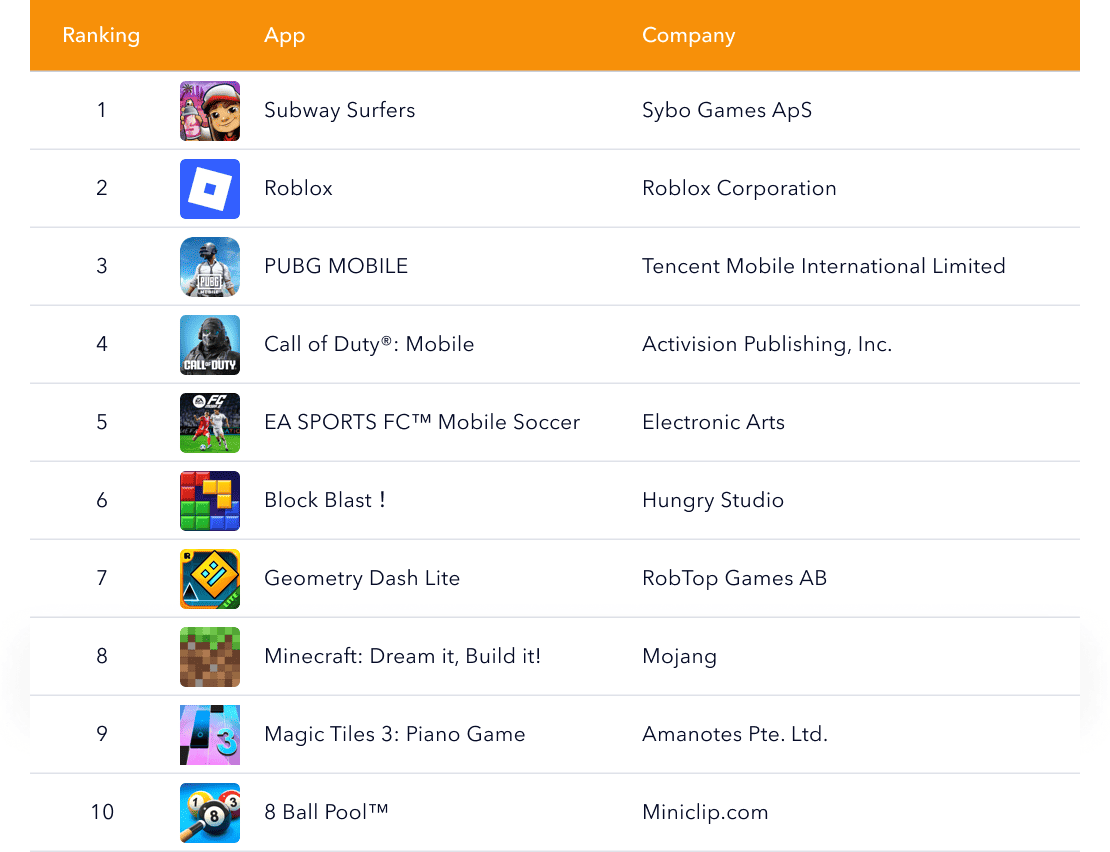
- Subway Surfers is an endless runner where you dodge trains, collect coins, and try to last as long as possible. It performs well in search because the concept is simple and familiar to users looking for terms like “endless runner,” “running game,” or “arcade.” Its metadata uses clear gameplay language about running, dodging, and fast action, which helps both search relevance and quick install decisions.
- Roblox is a platform where users play and create millions of experiences. It ranks across many searches because its metadata focuses on broad actions like “play,” “create,” “explore,” and “multiplayer,” which reflect what users can actually do inside the app. This open-ended positioning helps it appear for many different gaming and social queries.
- PUBG MOBILE is a multiplayer battle royale shooter where players compete in large-scale survival matches across different maps and modes. It performs well in search because its metadata focuses on clear, high-intent terms like “battle royale,” “shooting,” “survival,” and “multiplayer,” which match what users expect from a competitive online shooter.
- Call of Duty: Mobile is a multiplayer FPS with classic team modes, battle royale matches, and seasonal content. It captures competitive shooter intent, team-based play, and large-scale survival modes. Its metadata highlights clear terms like “FPS,” “multiplayer,” and “battle royale,” along with specific modes, which makes the experience easy for both the store and users to understand at a glance.
- EA SPORTS FC Mobile is a soccer game focused on matches, team building, and competitive modes. It benefits from steady, year-round demand for terms like “soccer game,” “mobile soccer,” “PVP,” and “ultimate team,” which tend to be high intent and easy to match to the product.
- Block Blast! is a block puzzle game where you place shapes, clear lines, and manage space to keep the board playable. App Store positioning is packed with puzzle intent language like “strategic puzzle gameplay,” “daily puzzles,” and “offline fun,” which aligns with common “block puzzle” discovery searches.
- Geometry Dash Lite is a rhythm-based platformer known for short attempts, fast restarts, and great difficulty. It performs well because it’s positioned around clear challenge keywords, for example: “rhythm-based,” “platformer,” “challenge,” which attract users looking for skill-based gameplay.
- Minecraft is a sandbox game where players build, explore, craft, and survive in an open world. It performs well in search because its positioning maps to multiple huge intent clusters (for example: “building,” “crafting,” “survival,” “open world”), plus strong brand searches.
- Magic Tiles 3 is a music rhythm game where players tap black tiles in time with songs across different genres. It performs well in search because its metadata uses clear, activity-based terms like “piano game,” “music,” “songs,” and “tap tiles,” which directly reflect the core gameplay.
- 8 Ball Pool is an online multiplayer pool game. It ranks well because its metadata uses clear, sport-specific terms like “8 ball,” “pool,” “3D,” “PvP,” and “multiplayer,” which match exactly what users search when looking for a billiards game.

Education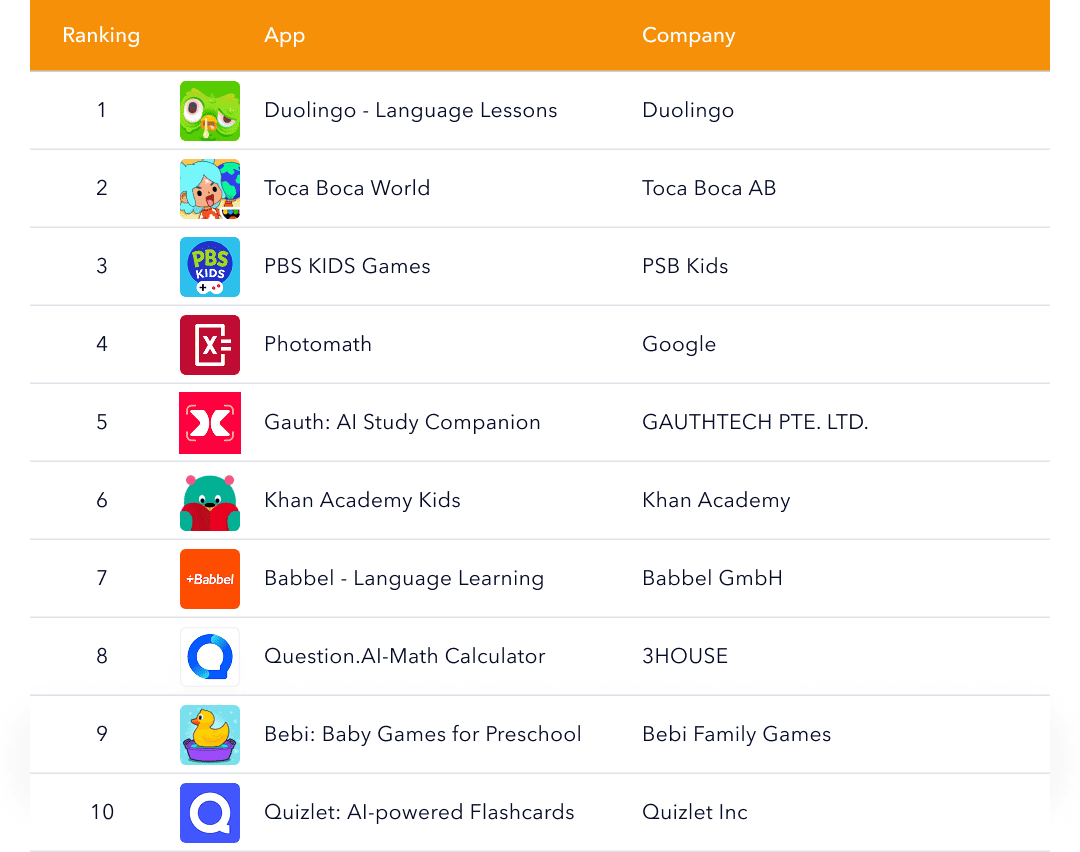
- Duolingo offers short, game-like lessons for languages, along with math, music, and chess. It ranks well because its metadata uses clear subject terms like “language lessons,” “math,” “music,” and “chess,” which match common learning searches and make the app’s scope easy to understand at a glance.
- Toca Boca World is a kids’ play world where users design characters, build locations, and create their own stories. It ranks well because its metadata focuses on clear ideas like “play,” “design,” “roleplay,” “explore,” and “safe,” which match what parents look for when searching for creative, child-friendly apps.
- PBS KIDS Games is a collection of educational mini-games for young children based on PBS characters. It ranks well because its metadata uses clear terms like “educational games,” “kids,” “safe,” and subjects such as math and reading, matching common parent searches for child-friendly learning apps.
- Photomath lets users scan math problems and get step-by-step explanations across topics from basic arithmetic to calculus. It ranks well because its metadata focuses on clear actions and outcomes like “scan,” “solve,” and “step-by-step explanations,” which match common searches from students looking for direct math help.
- Gauth positions itself as an AI-powered study assistant that supports multiple school subjects. It performs well because interest in AI-based homework help has grown rapidly, and the app clearly emphasizes speed and structured explanations. In metadata, broad AI and study-related terms are combined with outcome-focused wording.
- Khan Academy Kids offers structured, play-based learning activities for early readers and learners. Its visibility benefits from strong parent demand for trusted, curriculum-aligned apps for young children. Metadata uses familiar education keywords alongside “play-based” framing, which helps it appear in common searches while clearly communicating its approach.
- Babbel focuses on helping users build practical language skills for real-life conversations. Its metadata blends broad language-learning terms with clear emphasis on speaking and confidence, making the intended outcome easy to understand in search results.
- Question.AI presents itself as an AI-driven question-answering app, with a strong emphasis on math support in its title. It benefits from the popularity of both AI-related searches and math assistance queries. Its metadata relies heavily on broad keywords to maximize reach, while clarity depends on consistently reinforcing math and study use cases throughout the listing.
- Bebi bundles a wide range of preschool activities. It performs well because parents often search for all-in-one learning apps for toddlers and preschoolers. The app targets early development and independent play within a safe environment. Metadata stacks common early-learning terms with trust signals like “safety” and “ad-free use”, supporting both discoverability and parent confidence.
- Quizlet is built around flashcards and study tools that support memorization. Its strong search performance comes from consistent demand for flashcards and exam prep, as well as direct brand searches. In metadata, broad study-related terms are paired with personalization and practice framing, allowing them to stay relevant across different learning goals.
Finance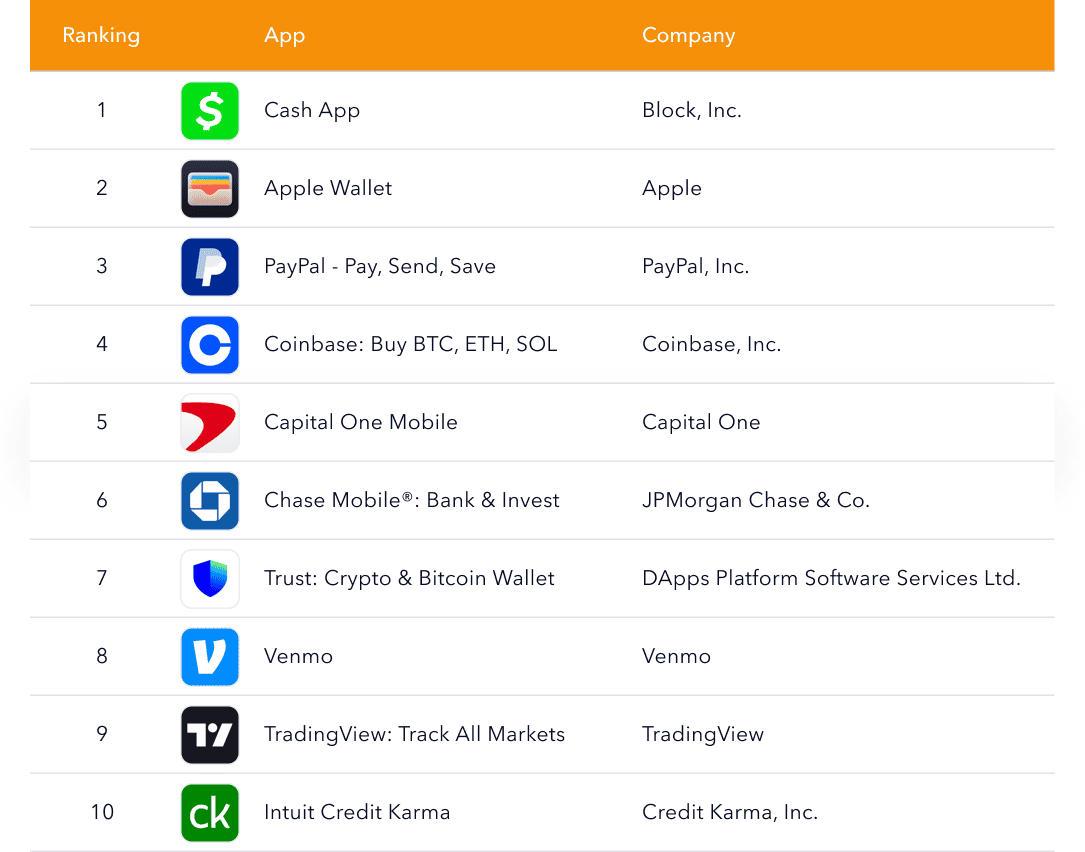
- Cash App brings together sending and receiving money with everyday spending, saving, and basic investing tools. It performs well in search because it aligns with broad finance behavior, such as “pay” and “send money,” while also appealing to users who want light investing features in the same app. Its metadata emphasizes clear action terms like “pay,” “send,” “spend,” “save,” and “invest,” which are easy to recognize and convert quickly.
- Apple Wallet is a built-in app for storing payment cards, tickets, passes, and keys, tightly integrated with Apple Pay. It performs strongly because “wallet” is a universal finance intent, and the app clearly represents a secure, everyday utility that users return to often. Its metadata stays literal with terms such as “wallet,” “cards,” “tickets,” and “Apple Pay,” closely matching how users search for digital storage and payments.
- PayPal is a payments app used for online and in-store purchases, sending money, and accessing savings or offering features. It performs well because it matches both “pay” and “send money” behavior, while benefiting from strong trust signals tied to secure checkout. Its metadata pairs trust-focused framing with direct actions like “pay,” “send,” and “save,” helping it stay visible across high-volume finance searches.
- Coinbase is a crypto app designed for buying, selling, and managing cryptocurrencies. It performs well because it targets very explicit, high-intent searches such as “buy bitcoin” and “buy crypto,” with the title reflecting exact user wording. Its metadata leads with direct intent terms like “buy,” “crypto,” and coin names, improving match quality for users ready to transact.
- Capital One Mobile is a banking app for managing accounts, checking balances, and handling everyday banking tasks. It performs well because “mobile banking” is a constant utility need, and many users search directly for their bank by name. Its metadata relies on straightforward terms like “bank,” “account,” “credit,” and money management language that reflects common finance tasks.
- Chase Mobile combines core banking features with investing and wealth tools in a single app. It performs well because it serves both daily banking needs and higher-value “invest” intent, covering common actions users want to complete quickly. Its metadata uses broad, high-intent keywords such as “bank,” “invest,” “deposit,” and “credit score,” expanding coverage while keeping the purpose clear.
- Trust Wallet is a self-custody crypto wallet for storing digital assets and connecting to Web3 services. It performs well because searches like “crypto wallet” and “bitcoin wallet” are highly intentional, and users want clarity immediately when choosing a wallet. Its metadata leans on exact-match terms such as “crypto,” “bitcoin,” and “wallet,” aligning closely with user search behavior.
- Venmo is a peer-to-peer payments app used for paying friends, splitting costs, and sending money quickly. It performs well because it matches a very common, repetitive action, sending money to people you know, and the positioning is instantly recognizable. Its metadata stays focused on high-volume terms like “pay,” “send,” “split,” and “pay friends,” making intent clear at first glance.
- TradingView is a market tracking app built around charts, watchlists, and alerts for stocks, crypto, and other assets. It performs well because it targets high-intent users searching for tools to “track markets” rather than basic finance information. Its metadata highlights tool-specific keywords such as “charts,” “alerts,” and “watchlists,” which closely match how active traders search.
- Credit Karma is a credit-focused app for checking credit scores, monitoring reports, and exploring financial offers. It performs well because “credit score” is a frequent, high-intent finance query, and the value is immediate for users. Its metadata uses direct, high-volume terms like “credit score,” “credit report,” and “monitor,” clearly communicating the core job-to-be-done in search results.