







Sports
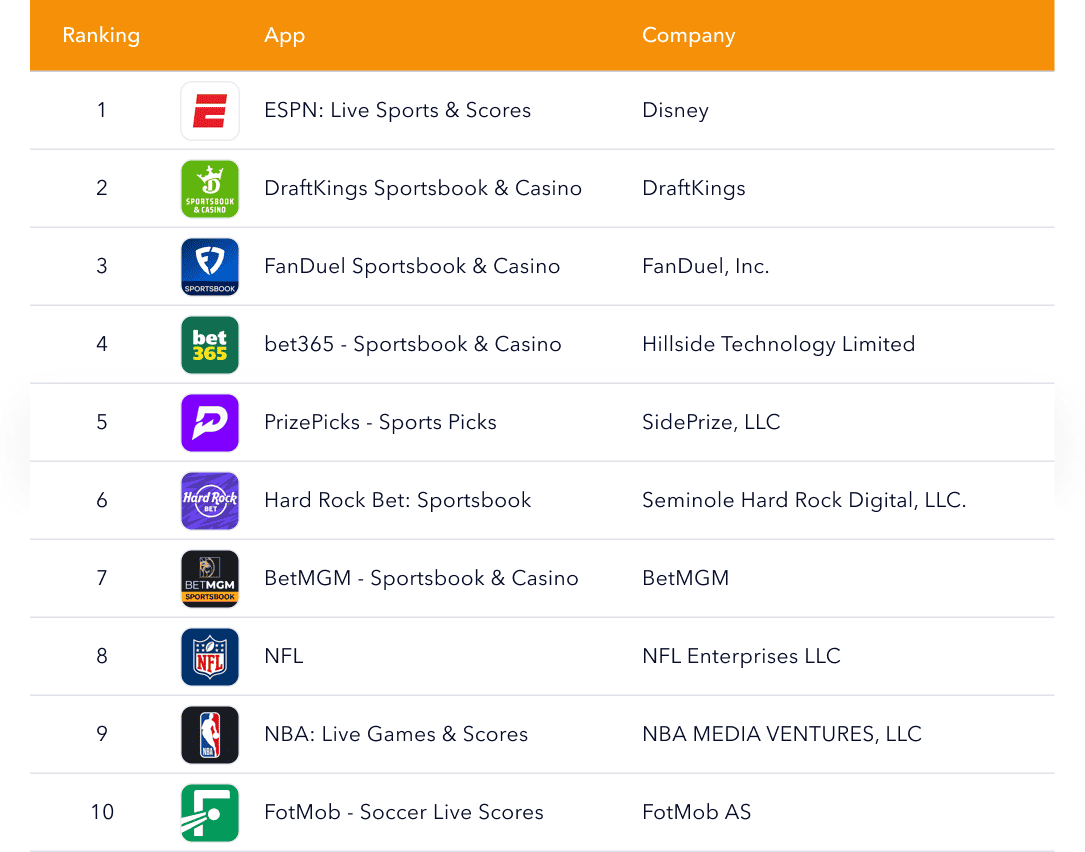
- ESPN works like a general sports dashboard: scores first, then news, highlights, and streaming content in the same place. It ranks well because “sports” and “scores” searches are broad and constant, and ESPN stays relevant across leagues instead of being tied to one fandom.
- DraftKings is a real-money betting app where users place wagers across multiple sports, including in-game options where available. It performs strongly because “sportsbook” is a very direct, high-intent search; most users typing it are already looking to bet, not explore. The core behaviors are standard sports betting, live betting, and common bet types like parlays and props. Its wording stays close to that decision moment with sportsbook, casino, and live betting language that matches what people search.
- FanDuel sits in the same high-intent betting space, offering wagers across major sports with live/in-game formats and multi-bet options where available. Search performance benefits from the same sportsbook keyword cluster, plus strong brand demand that drives quick installs when users want a known operator. It primarily serves sports betting, live betting during games, and parlay/prop style bets.
- bet365 is positioned around broad betting coverage, including pre-game and live markets, depending on the region. Users generally come for multi-sport wagering, live odds, and a large menu of markets. Emphasizing sportsbook, live, and odds/markets phrasing makes the use case easy to identify quickly.
- PrizePicks is built around player performance picks rather than a traditional sportsbook flow (rules and availability vary by location). It performs well because “sports picks” and “player picks” are specific searches with clear intent, and the format reads as simpler and faster for users who don’t want a full betting interface.
- Hard Rock Bet is a sportsbook app that leans on a familiar entertainment brand to signal trust while offering core betting features, including live options and parlays where available. Keeping the language literal, bet, and sportsbook, helps it show up for users who know exactly what they want.
- BetMGM offers real-money sports betting with common formats like live bets, props, and parlays, depending on location. It ranks well because it aligns tightly with high-conversion “sportsbook” intent and uses familiar category terms that users already trust and understand. The metadata tends to stack sportsbook, casino, and live bets style phrasing, which mirrors common search wording.
- NFL is the official league app for football fans. It performs well largely through brand-led searches (“NFL”) and predictable spikes during the season, when fans are actively checking updates around games. The key needs are live scores, in-game tracking, and quick access to highlights and league coverage. Using clear terms like scores, live stats, and highlights fits the way fans search in the moment.
- NBA is the NBA’s official app. It performs well because league apps naturally convert on brand and utility searches, especially during the season when users want fast updates tied to real games. Its positioning combines broad utility words like scores and highlights with the strongest possible brand cue: NBA.
- FotMob is a soccer-first scores and stats app built for speed during matches, with alerts, updates, and team/league tracking. It performs well because “soccer live scores” is a high-frequency utility query, and users care most about reliability and fast notifications when games are on. The core behaviors are checking live scores, setting match alerts, and following stats and news around soccer.
Social Networking
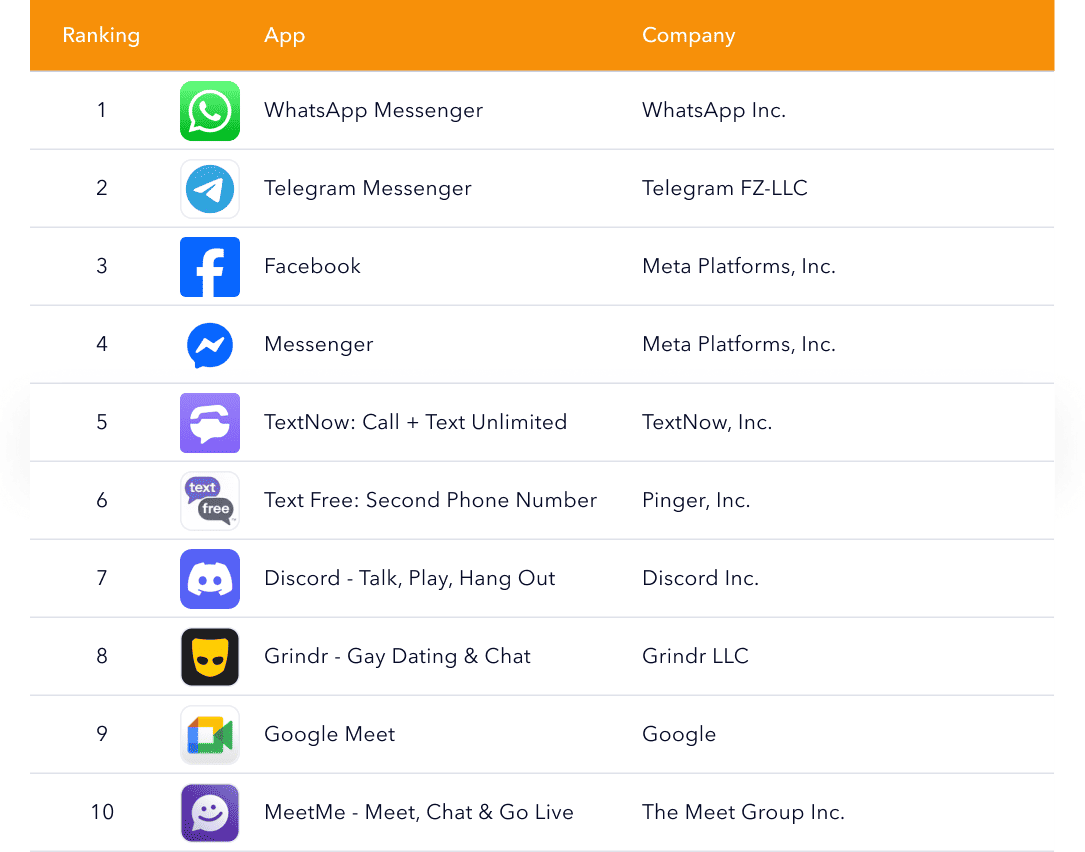
- WhatsApp performs strongly in search due to heavy brand demand, while its metadata reinforces core intents with clear terms like “messaging,” “calls,” and “private.” This simple, trust-focused positioning makes the app’s purpose easy to understand at a glance.
- Telegram performs well in search because its metadata centers on core messaging terms while emphasizing trust signals like “secure,” “private,” and “safe.” The subtitle “Fast. Secure. Powerful.” and description language around security and privacy align with users searching for more protected messaging options, making the app’s value clear at a glance.
- Facebook is a social network that performs well in search due to massive brand demand and continued relevance for broad discovery queries like “social,” “groups,” “community,” and “videos.” Its metadata remains intentionally broad, emphasizing social and community features to stay eligible across a wide range of social searches.
- Messenger is a dedicated chat app for sending messages and making voice or video calls, often connected to Facebook contacts. It performs well because user intent is extremely direct; people search for “messenger,” “chat,” “video call,” or “message” when they need to communicate immediately. Its metadata relies on clear action terms like “message,” “call,” and “video,” closely matching urgent, task-driven searches.
- TextNow provides calling and texting through a dedicated phone number, commonly used as a low-cost or secondary line. It performs well in search by targeting strong utility-driven queries such as “free call,” “free text,” “second number,” and “phone number.” Its metadata places the core promise directly in the title with “call,” “text,” and “unlimited,” which closely mirrors how users phrase their searches.
- Text Free offers a second phone number for texting and calling, often used for privacy or separating personal and work communication. It performs well because “second phone number” is a very explicit, high-intent query, and users often compare options quickly. Its metadata leans heavily on exact-match terms like “second phone number” and “text free,” improving both relevance and conversion.
- Discord is a community chat app built around servers, channels, voice rooms, and group messaging, widely used by gaming and interest-based communities. It performs well because it matches broad social intent like “chat” and “communities,” while also covering specific needs such as voice chat and group coordination.
- Grindr is a location-based dating and chat app designed for gay, bi, trans, and queer people to meet nearby and connect through messaging. It performs well because it targets very clear discovery intent around “gay dating,” “LGBTQ dating,” and “chat.”
- Google Meet is a video calling and meeting app. It performs well because it aligns with evergreen task-based searches like “video call,” “meeting,” and “conference,” and benefits from strong ecosystem usage when users are invited to calls. Its metadata uses literal terms such as “meetings,” “video,” and “join,” matching exactly how users search when they need a call app.
- MeetMe is a social discovery app where users meet new people, chat, and engage with live interaction features. It performs well because broad discovery intent, “meet people,” “chat,” and “go live”, remains high-volume in Social Networking. Its metadata stacks broad intent keywords like “meet,” “chat,” and “live,” keeping it eligible across multiple discovery-focused searches while clearly communicating the use case.
Health & Fitness
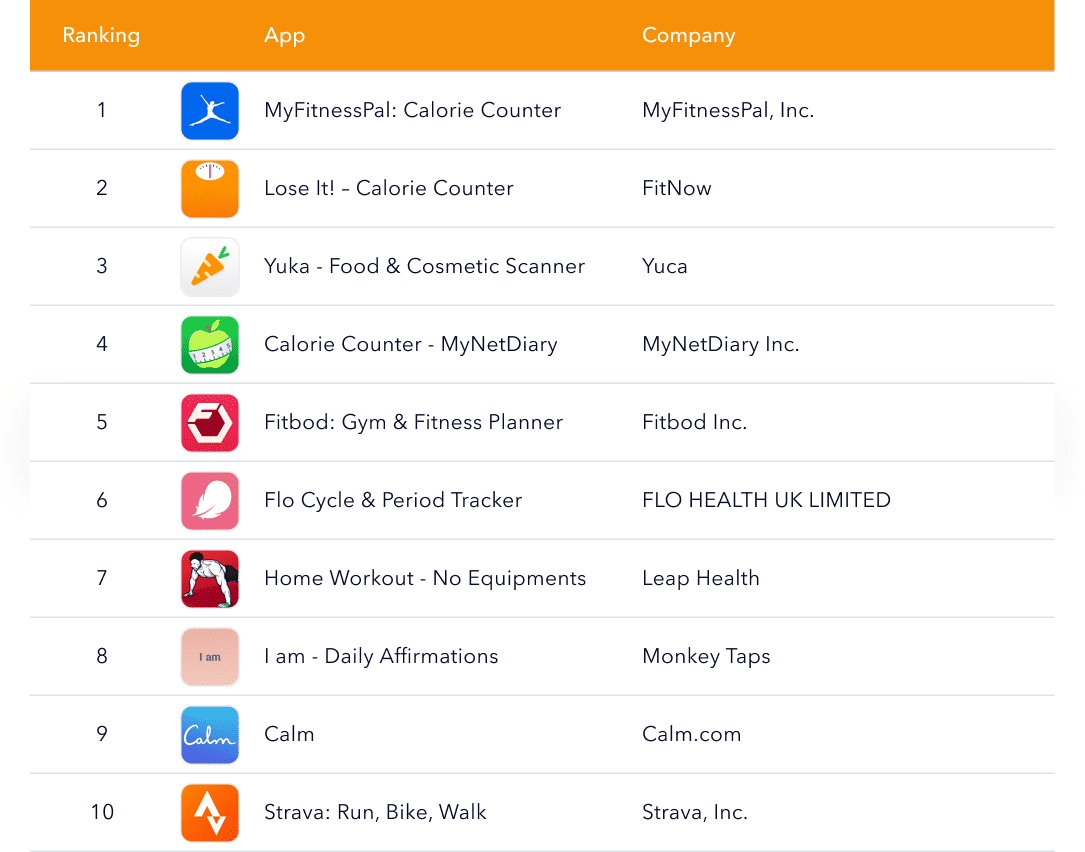
- MyFitnessPal focuses on daily nutrition logging, food entries, and calories. It stays highly visible because “calorie counter” and “food tracker” searches are constant in Health & Fitness, and the app answers that intent with a clear, familiar workflow that converts well. The way it frames the product in metadata is straightforward and utility-first: “calorie counting” and “food tracking” up front, with goal language like weight loss and macro tracking to make the use case obvious in search results.
- Lose It! is built for people who want a simple calorie budget and an easy way to see progress day to day. It shows up well in search because it sits in the same “calorie counter” demand as MyFitnessPal, but leans harder into a weight-loss plan mindset that appeals to users who want direction, not just logging. Its metadata repeats the core discovery terms “calorie counter,” “food tracker,” while pairing them with outcomes like losing weight and tracking goals.
- Yuka is a barcode scanner that shows a simple health rating for food and cosmetic products. Its metadata uses direct terms like “food,” “cosmetic,” “scanner,” and “check,” which match quick, action-based searches. The subtitle, “Check What’s in Your Products,” makes the use case clear at a glance and helps the app capture both barcode-scanning and ingredient-checking intents.
- MyNetDiary is positioned as a full nutrition log. It performs well because the intent is evergreen and comparison-driven; people searching for a calorie tracker often filter by whether an app clearly supports macros and goal tracking too.
- Fitbod is a workout planner that generates strength-training routines based on goals, equipment, and recovery. Its metadata centers on clear, high-intent terms like “gym,” “fitness,” “planner,” “workouts,” and “AI personal trainer,” which match searches from users who want a structured program. The name and subtitle work together to signal both the core use case and the personalization angle, so the value of custom, generated workouts is easy to understand directly from the search results.
- Flo is a recurring-life-utility app: cycle tracking, symptom logging, and period/ovulation predictions that users return to regularly. “Period tracker” remains one of the most stable, high-volume searches in the category, and the ongoing need drives frequent opens and retention, which supports continued visibility. Its metadata stays literal, period, cycle, ovulation, tracker, matching the exact words people use when searching for this solution and reducing any ambiguity about what the app does.
- Home Workout targets low-friction fitness: bodyweight routines you can do at home without gear, which fits the “start today” mindset behind many Health & Fitness installs. It performs strongly because “home workout” and “no equipment” searches are both common and conversion-heavy, especially for beginners or anyone avoiding the gym. The metadata is benefit-first and direct, home workout, no equipment, daily plan, so users instantly understand the promise and the effort level before tapping through.
- I am is positioned around a simple mental wellness routine: daily affirmations delivered as prompts and reminders to support mood and motivation. It shows up well because “affirmations” is a clear, self-selected intent; users searching for it already know what they want and are likely to install if the experience feels easy to keep up with. Its metadata leans into literal wording, affirmations, daily reminders, and mental wellness, so the product is self-explanatory in search and matches the “small daily habit” expectation.
- Calm is a broad mindfulness and sleep app, combining guided meditation, breathing tools, and sleep-focused content for relaxation and stress support. It performs well because the demand behind “sleep” and “meditation” is frequent and ongoing, and the brand is closely associated with those outcomes, which strengthens conversion when users compare options. The metadata stays wide and familiar, sleep, meditate, relax, stress, so it can rank across multiple high-demand queries while staying clear about the core benefits.
- Strava centers on recording and analyzing runs and rides, with a social layer, clubs, segments, and challenges that keep users engaged beyond tracking. It ranks well because it matches very literal intent keywords like run, bike, GPS, and tracker, and the community angle supports retention that reinforces the brand over time. In metadata, it combines activity terms with cues that hint at the network effect (community, clubs, challenges), helping it show up across both solo tracking searches and motivation-driven fitness discovery.