







Travel
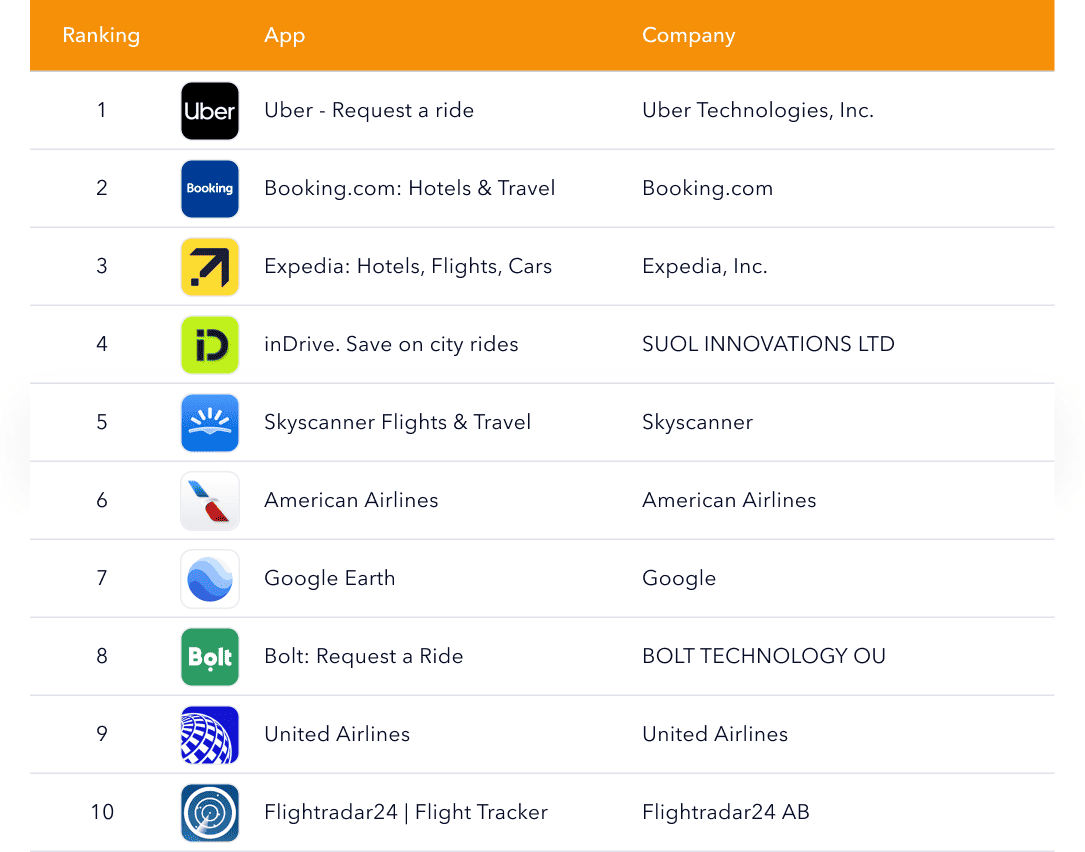
- Uber is used for immediate transportation, requesting a car, getting picked up, and handling the full trip and payment flow in one place. It performs well because ride intent is often urgent, and Uber also benefits from constant brand-led searches, especially in travel-heavy moments like airports.
- Booking.com is built around reserving stays, with hotels and other accommodations as the main job and additional trip elements available when needed. It ranks well because “hotel” and “book” searches are year-round and usually indicate readiness to reserve, not casual browsing.
- Expedia positions itself as the “whole trip” app; flights, hotels, car rentals, and packages managed in one place. It performs well in search because it can match multiple high-volume travel queries, and it catches users earlier in planning when they haven’t decided which part to book first.
- inDrive is a rides app framed as a practical taxi alternative for getting around town, with price/value messaging pushed to the front. It performs well because “rides” searches are broad and competitive, and cost framing can be a deciding factor when users are comparing options quickly. Pairing ride-share/taxi keywords with “save” makes the benefit easy to understand at a search results glance.
- Skyscanner is centered on flight search and comparison, finding options across airlines and surfacing cheaper tickets. It ranks well because “cheap flights” and “flight deals” are some of the most common travel searches, and comparison is exactly what users want in that moment.
- American Airlines is primarily a trip-management utility once you’re flying. Search performance is strong because installs often happen on travel day, when the intent is immediate and task-based, and brand-led queries convert fast. Its positioning stays focused on those practical actions, boarding pass, flight updates, and trip details, so it fits what travelers are looking for right before and during a flight.
- Google Earth sits in Travel more as an exploration tool than a booking or navigation app. It performs well because the “explore” intent is common when people are choosing where to go or trying to understand a place visually, and discovery is often driven by brand familiarity plus destination curiosity. Its metadata highlights the distinctive features, satellite, 3D, and Street View, so users immediately understand it’s for seeing places, not just getting directions.
- Bolt is another ride-hailing option that focuses on quick pickup and straightforward local transport, often with affordability positioned as a key reason to choose it. It performs well because the “request a ride” intent is frequent and simple, and clear messaging around pricing and availability can lift conversion when users are deciding between ride apps.
- United Airlines covers the full airline flow from booking through day-of-travel tasks. It ranks well because people usually install airline apps when they need control right now, on check-in day, during disruptions, or to track bags, and those brand-led searches convert strongly.
- Flightradar24 is used to see flights in real time. It performs well because “flight tracker” is a direct, problem-solving query with high conversion, users know exactly what they want, and can judge relevance instantly. Its metadata leads with exact-match language like flight tracker and real-time, which helps it surface for those urgent searches and win the tap.
Shopping
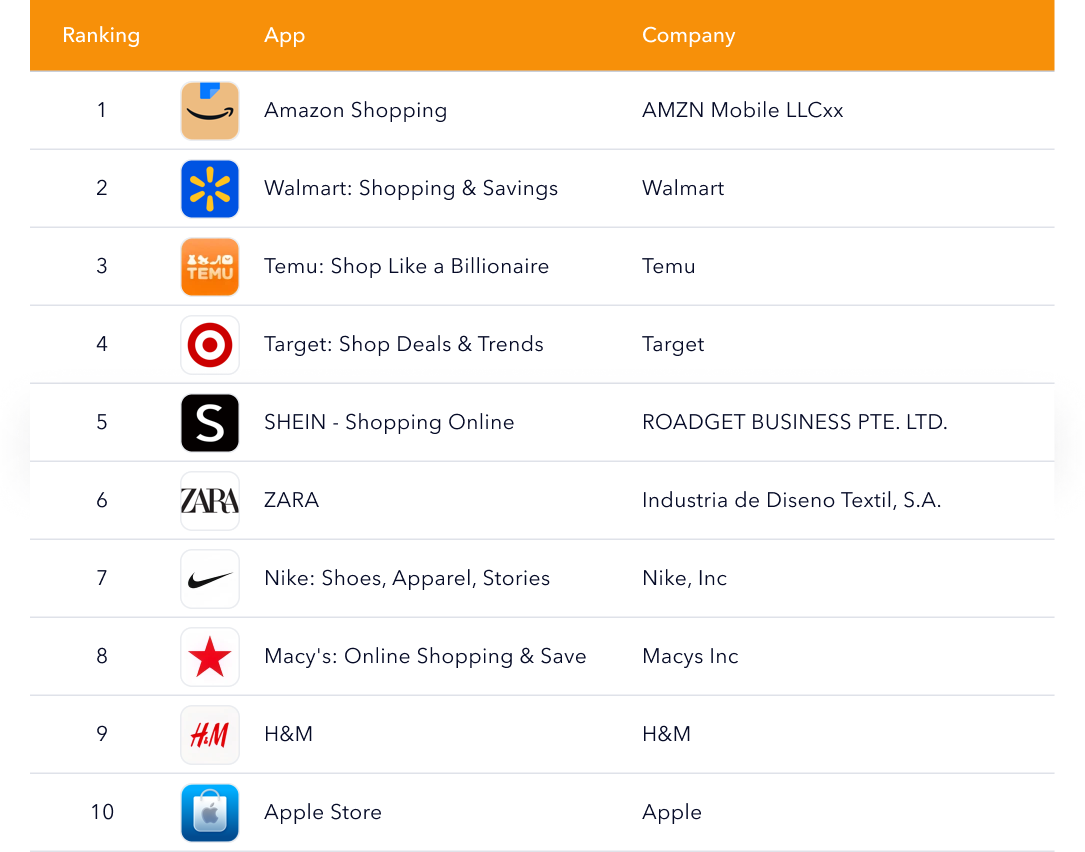
- Amazon Shopping covers the widest possible buying need: browse almost anything, order quickly, and handle returns in the same place. That breadth is exactly why it dominates generic searches like “shopping” and “deals,” where users aren’t sure what they want yet and default to the biggest marketplace they trust. It also naturally fits fast-delivery and comparison behavior, since people often use it to check prices and availability before committing.
- Walmart earns visibility by tying everyday errands to convenience, groceries, and essentials with pickup or delivery, then layering a clear savings message on top. Searches around groceries, weekly shopping, and household restocks are frequent, and “savings/deals” language helps conversion when users are choosing between similar retail apps.
- Temu is positioned around low prices across many categories, with heavy emphasis on browsing and deal discovery rather than planned purchasing. It performs well when users search with “cheap,” “deals,” or general shopping terms because its value-first framing gives a simple reason to tap.
- Target sits between utility shopping and curated discovery: essentials are there, but the app also leans into home, style, and seasonal moments that people browse for inspiration. That combination helps it show up for straightforward “shop” and “deals” queries while also matching searches where the intent is “what’s new” or “what’s trending,” especially around holidays and seasonal refreshes. The way it pairs deals language with “trends” expands it beyond pure restock shopping. Pickup and delivery options then support the practical side once users decide to buy.
- SHEIN is built for fast-fashion discovery,new drops, lots of variety, and pricing that encourages frequent browsing. It ranks well because “fashion shopping” demand is high and constant, and “cheap/discount” signals tend to convert when users are scanning options quickly. Metadata that blends shopping and fashion cues with value framing supports both discovery and quick decision-making.
- ZARA benefits from a different pattern: many users already know what they want and search the brand with purchase intent. When someone types “Zara” (or searches around new collections tied to the brand), the expectation is immediate access to new arrivals, browsing, and checkout, not a generic marketplace experience. That’s why simple, action-focused phrasing works well here: shop, new collection, orders.
- Nike combines retail with product drops and member-focused perks, which makes it especially strong for high-intent searches around shoes, sneakers, and sportswear. Clear “shoes/apparel” language alongside Nike’s brand signal and exclusives framing supports both discovery and purchase moments.
- Macy’s is positioned like a classic department store translated into an app: wide category coverage (fashion, home, beauty) with discounts and coupons as a core reason to choose it. It performs well in search because it matches broad “online shopping” intent while giving deal-seeking users an immediate hook through “save” language. People looking for a one-stop store plus promotions tend to convert quickly when the value proposition is explicit.
- H&M stays visible through steady brand demand and consistent intent around affordable fashion basics and seasonal updates. Many searches are direct (the brand name), and the remaining discovery comes from broad fashion/shopping queries where price-friendly positioning matters. Member benefits and deal signals help conversion, especially for repeat shoppers who expect offers tied to membership. The metadata keeps it simple, fashion/shopping plus membership value, so it works both for brand-led installs and for users comparing similar apparel apps.
- Apple Store captures high-conversion intent around Apple devices and accessories, where users are often already in upgrade or purchase mode. Brand-led searches do a lot of the work, but the app also aligns well with practical queries tied to buying, order tracking, and finding the right accessory or model. Its positioning stays literal, shop, buy, accessories, and product cues, because shoppers in this context want clarity, not browsing noise. That direct utility framing supports both discovery and post-purchase actions like tracking orders.
“MobileAction’s API provided the accurate and comprehensive ASO data we needed to power our AI-driven ASO model. It helped us automate competitor analysis, refine creative localization, and improve operations across regions. The API has become a vital part of our global growth strategy.”

Jin Liang
ASO Product Manager @AliExpress
Lifestyle
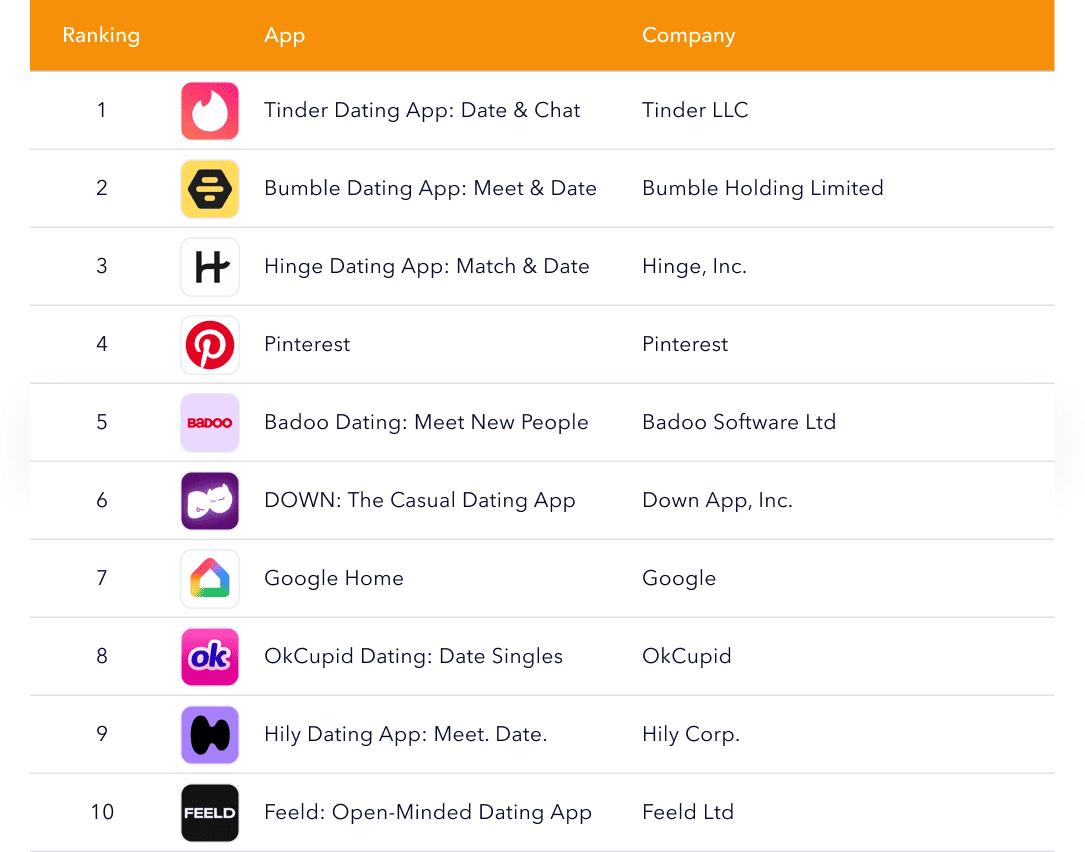
- Tinder fits the most common “dating app” search behavior where users just want to start meeting people fast. It performs well because the intent behind dating searches is broad and high-volume, and Tinder’s name carries strong familiarity that improves tap and install rates. Its listing keeps the promise simple with dating/date/chat language that mirrors exactly what people type.
- Bumble takes the same core flow, matching and messaging, but frames it with a more guided dynamic and, in many versions, extra modes for meeting people beyond dating. That positioning helps in search because it still matches mainstream “meet” and “date” queries while giving users a clearer idea of the experience, which can lift conversion among people comparing multiple apps.
- Hinge leans into profile detail and prompts, which pushes the experience toward conversation and relationship-oriented discovery rather than pure swipe speed. It performs well because many users search with “relationship” expectations even if they type generic dating keywords, and Hinge’s positioning can reduce mismatch by signaling a different tone. Its metadata typically blends broad dating terms with wording that implies better matches and more meaningful chats, helping it stand out in crowded results.
- Pinterest functions more like a visual search and saving tool than a social feed. People come to collect ideas across home, fashion, food, travel, and DIY, then organize them into boards. It ranks well because “ideas” and “inspiration” intent is wide and evergreen intent, and many users look for Pinterest by name when they want quick direction on what to do, buy, or plan. By staying broad with terms like ideas, inspiration, and saving to boards, it stays relevant across many lifestyle queries.
- Badoo Dating sits in the “meet nearby” lane, mixing dating and social discovery with profiles and chat that help users connect quickly. It performs well because “meet new people” is a high-volume, outcome-driven search phrase, and the app communicates that result clearly enough to convert.
- DOWN is positioned with more explicit intent, aimed at users who want casual dating and a faster path to matching. It performs well in search because that clarity helps conversion for people who already know the vibe they’re looking for, and it reduces wasted installs from users who want something else. Its metadata keeps things short and high-signal, “casual dating” plus direct verbs, so the intent is obvious immediately.
- Google Home is a utility app for setting up and managing smart home devices, speakers, displays, Chromecast, and other compatible products, then controlling them day to day. It performs well because installs are often triggered by a setup moment, which is highly intent-driven, and it benefits from the Google ecosystem, where users already expect an official control app.
- OkCupid Dating: Date Singles is known for compatibility-style matching built around questions and richer profiles. It performs well because a sizable part of dating demand is about narrowing down options, and that promise resonates with users who want more than a quick swipe. The core intents are relationship-focused dating, compatibility-driven discovery, and conversation that starts from profile info.
- Hily Dating App focuses on the basics,finding matches, chatting, and meeting, using simple, action-oriented framing that works well when users are comparing several dating apps quickly. It performs well because it doesn’t overcomplicate the value proposition: the most common dating searches are verb-based (“meet,” “date”), and this app aligns tightly with that language.
- Feeld is designed for a more specific audience, centered on open-minded dating and alternative relationship preferences, with a stronger emphasis on consent and community norms. It performs well because niche intent searches often convert better; users looking for this kind of experience are actively filtering for it, which improves match quality and reduces churn.