











Looking to boost your app's visibility and acquire more users? Our 2025 ASO Report is your ultimate guide to navigating the evolving app store landscape. Packed with data-driven insights, keyword trends, and top-ranking app strategies, this report will equip you with the knowledge to optimize your app's presence and achieve organic growth.
App Store Optimization is no longer about guesswork or one-off tricks; it requires a structured, data-driven strategy. With millions of apps up for attention, a solid ASO strategy is essential to make your app discoverable and encourage downloads.
According to Apple, 65% of downloads come from search queries, underscoring that ranking higher in app store search results is crucial for growth. This means that ASO marketing strategy is a fundamental part of any successful app growth plan.
In this article, we’ll break down the ASO strategy essentials, from foundational ASO guidelines to competitor intelligence and creative optimization, to help you build a smarter app growth plan. By the end, you’ll see why the only sustainable approach today is visibility-first and research-driven, anchored in real market data instead of assumptions.

What is an ASO strategy?
An ASO strategy is a plan for improving your app’s visibility and conversion in the app stores. In simple terms, it’s the blueprint for how you will optimize your app’s listing so that more people find it in searches and more of those who find it will download it. This involves systematically refining your app’s metadata for higher search rankings, and polishing visual elements (icon, screenshots, video) to boost conversions.
A well-crafted ASO strategy ties together multiple components: keyword research, metadata optimization, competitive analysis, and creative optimization (visual assets like icons and screenshots). It also covers ongoing efforts like managing user ratings, reviews, and regular updates. All of these work together to improve organic visibility and conversion rates.
Think of ASO as the app store equivalent of SEO for websites, just as businesses use SEO strategies to rank higher on Google, app publishers use ASO strategies to rank higher in App Store and Google Play searches.
It’s important to note that an ASO strategy is not a one-time setup but a continuous process. The app store algorithms and market trends evolve constantly. New competitors emerge, popular search terms change, and user preferences shift. Therefore, your approach to ASO must be iterative, regularly analyzing performance and making data-driven adjustments.
ASO marketing strategy: Why you need a plan for app growth
Simply publishing an app without a strategic plan is a recipe for obscurity. An ASO marketing strategy is the cornerstone of acquiring organic users. It ensures your app reaches the right audience and performs well in search results, rather than getting lost in the sea of apps. A strong, well-defined strategy provides a data-driven process for continuous improvement, rather than relying on sporadic updates or guesswork. Here’s why investing time in an ASO strategy is so important:
- Improved visibility: With millions of apps in the App Store and Google Play, standing out is tough. An effective ASO strategy helps your app rank higher in search results by targeting the right keywords and optimizing metadata (title, description, tags). Higher rankings mean more eyes on your app.
- Quality user acquisition: ASO doesn’t just drive more traffic, it drives the right traffic. By aligning your app listing with user demand (the keywords and features your ideal users care about), you attract high-quality users who are actually searching for what your app offers. This leads to better retention and engagement down the line.
- Better conversion rates: A comprehensive ASO plan covers conversion rate optimization as well. This means once users find your app, your store listing persuades them to download. From a clear app title to compelling screenshots, every element is optimized to convert impressions into installs. An optimized listing with relevant keywords, a compelling description, and eye-catching visuals builds trust and encourages users to hit “Download”.
- Staying competitive: An ongoing ASO strategy keeps you from falling behind industry trends. Apps that ignore optimization or only make random tweaks will quickly get outpaced by competitors who are actively optimizing. A good ASO strategy is ongoing; it helps you respond to algorithm changes, monitor competitors, and adapt to shifts in user behavior. In short, it’s your defensive and offensive playbook in a dynamic market.
- Measurable growth: With a structured plan, you set clear goals (e.g. target keyword rankings, conversion rate improvements) and track key metrics. This makes app growth more predictable and repeatable. You’re not guessing what might work; you’re implementing changes based on data and measuring the results. This feedback loop removes the guesswork from app marketing.
How to build a solid ASO strategy
Once your fundamentals are in place, the next step is to work smarter by leveraging ASO strategy services and tools for competitive intelligence and category research. Using ASO tools can give you actionable data on what users are searching for, what your competitors are doing, and where the gaps lie. In fact, understanding what works for your competitors can offer invaluable insights for your ASO strategy, revealing trends and helping you identify missed opportunities.
Here’s how you can use competitive research and tools to supercharge your ASO strategy:
-
Competitor keyword analysis
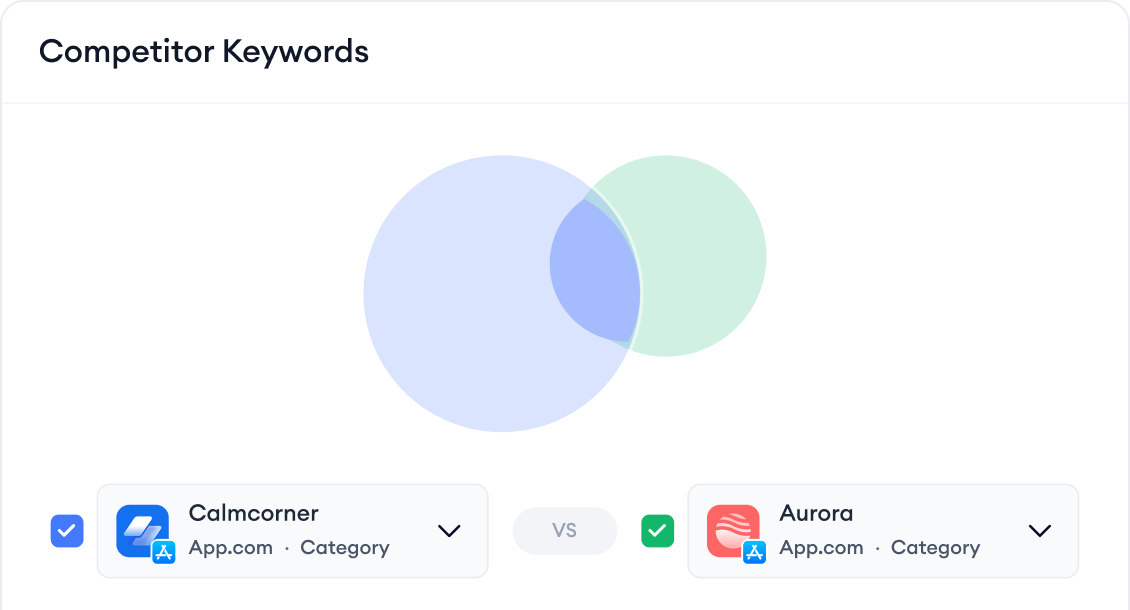
One of the fastest ways to expand your keyword list is by investigating which keywords your direct competitors rank for. ASO Tools allows you to “spy” on competitor keywords. For example, you can input a competitor’s app and see the list of keywords they rank highly on. This often reveals relevant search terms you hadn’t considered. It’s not about copying blindly, but about discovering both high-volume terms and niche long-tail keywords that competitors are leveraging.
If a rival app consistently ranks in the top 10 for certain keywords, ask whether those terms align with your app’s features or audience. You might find keywords where competitors rank well but their app doesn’t fully satisfy the user intent, that’s a chance for you to position your app as a better solution. MobileAction’s ASO Intelligence makes this easy by showing a competitor’s keyword rankings and even suggesting keywords they use that you’re missing.
-
Keyword opportunities
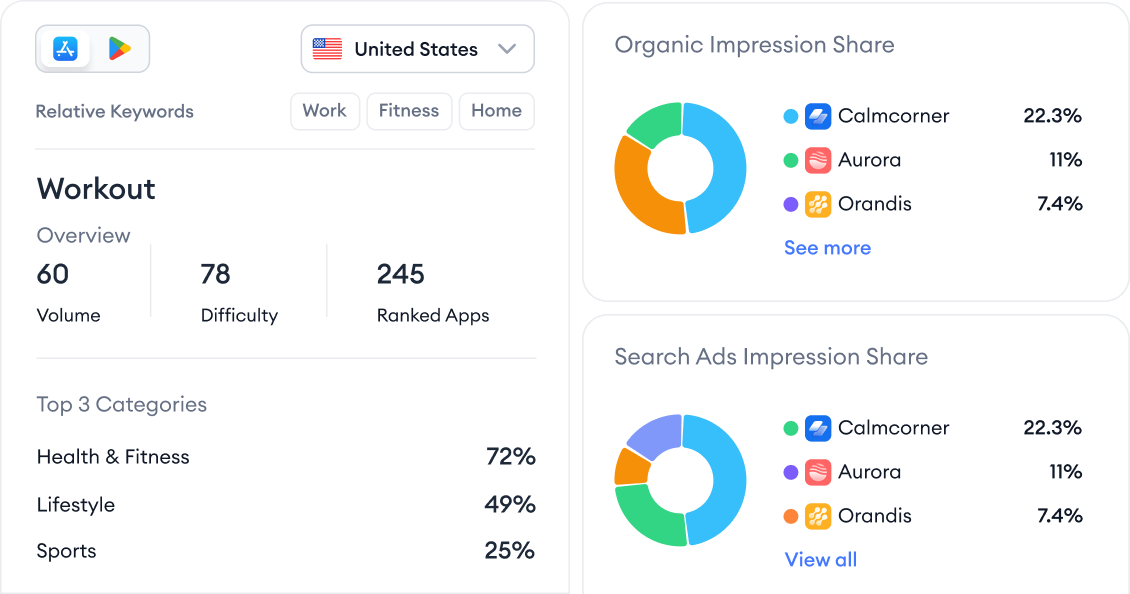
Not all keywords are equal. A smart strategy involves choosing your keywords based on data. Look for keywords that have a high search volume (popularity) but also a high chance for you to rank. By using these data-driven metrics, you can strategically target keywords that give you the best ROI for your efforts, balancing between high-competition, high-reward terms and low-hanging fruit. This is how you align your metadata with actual user demand and with what your app can realistically achieve. It’s a shift from the old approach of just guessing popular keywords or copying the top charts; instead, you’re basing decisions on tangible data.
-
Category & market research
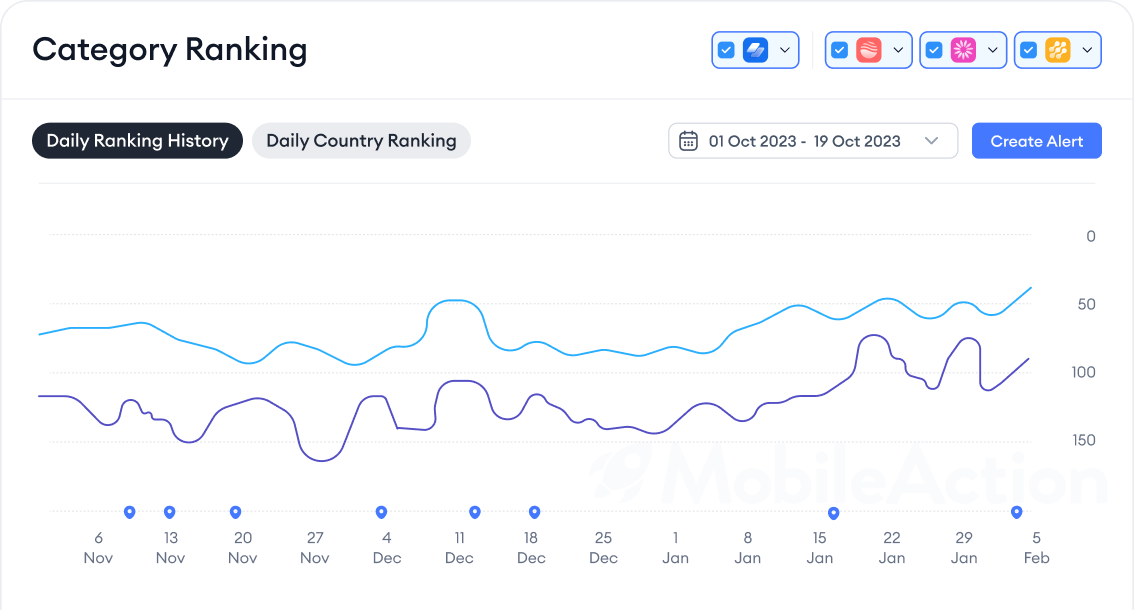
Beyond individual competitors, consider the app category as a whole. App Market Intelligence lets you analyze top charts and emerging apps in your category or niche. Pay attention to category rankings, trending search terms, and any seasonality in your app’s domain. For instance, if you have a finance app and notice that every tax season a bunch of “tax prep” apps surge in ranking, that’s a seasonal opportunity to optimize your keywords or run a campaign.
Market research can also inform your positioning strategy: identify what unique value or feature your app offers that others don’t, and emphasize that in your ASO (in keywords and screenshots). Moreover, analyzing category trends helps in shaping your app strategy. For example, if you see user interest shifting toward a certain sub-feature (like “AI photo filters” becoming popular in photography apps), you might decide to highlight or develop those features in your app, then reflect it in your ASO.
-
Competitive positioning & gap analysis
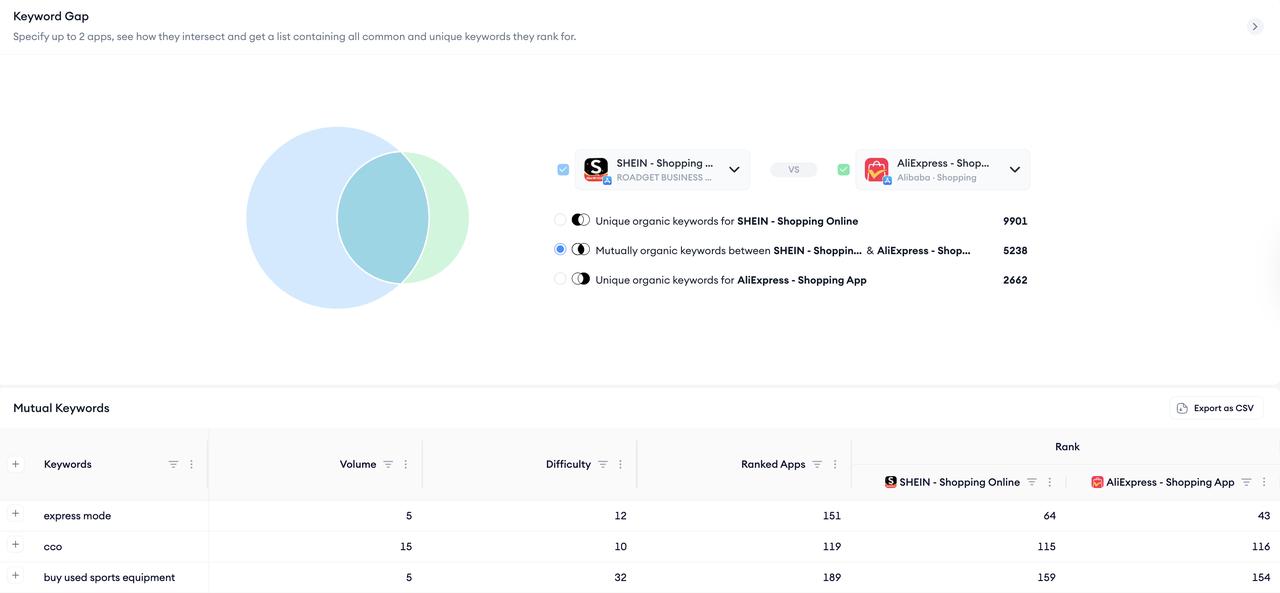
Through competitor intelligence, you should map out where each competitor stands: which keywords they dominate, what their messaging is (via their screenshots and descriptions), and how their user reviews describe their strengths and weaknesses. This analysis lets you find gaps in the market. Perhaps you discover that a top competitor has a lot of negative reviews about a missing feature. If your app provides that feature, highlight it in your metadata and screenshots to attract users searching for it. Or you might find a certain mid-volume keyword that none of the top apps have deliberately targeted (it might not appear in their titles or keyword lists), which could be a golden opportunity for you to optimize for. Competitor research provides a roadmap for improving your app store presence by learning from others’ successes and failures.
-
Utilizing ASO strategy services
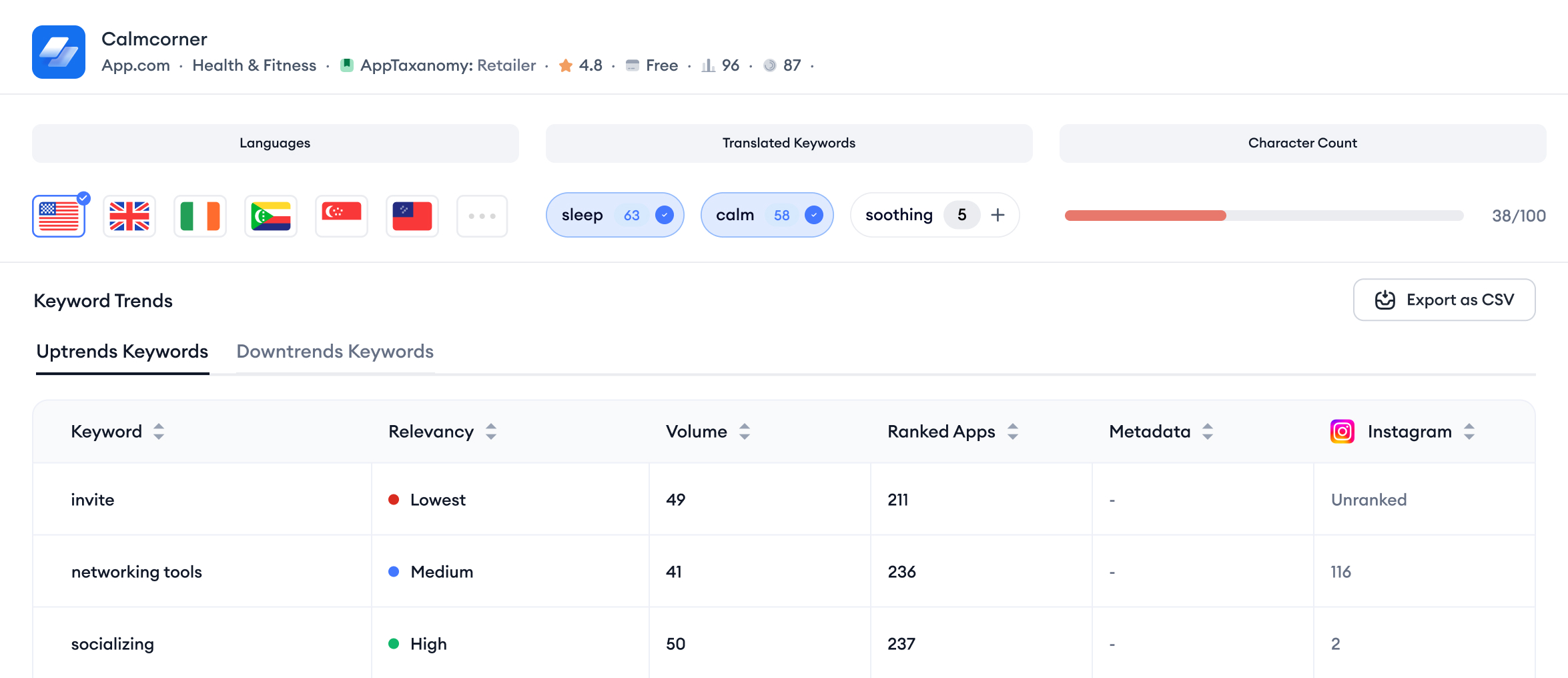
If all this sounds like a lot to track manually, that’s where ASO strategy services (tools and platforms) shine. Platforms like MobileAction’s ASO Intelligence are built to handle this data deluge and present it in actionable ways. For example, MobileAction provides detailed data on keyword performance, visibility trends, and competitor insights. It can send alerts when a competitor makes a major metadata update or when new apps enter your space. You can track your own keyword rankings over time and see the impact of your updates. Essentially, these ASO services act as your co-pilot: you still set the course (decide strategy), but they continuously feed you the navigation data (market signals) to adjust and optimize that strategy. Many companies consider these tools indispensable ASO strategy services because they turn what could be a guessing game into a clear, metrics-driven process.
By leveraging competitive intelligence, you transform your ASO approach from reactive to proactive. Instead of just following generic best practices, you’re now basing your ASO services strategy on real market evidence. High-performing apps align their metadata with actual user demand and choose keyword battles based on opportunity. Now you can too!
ASO strategy: Continuous monitoring and optimization

Here’s a truth about ASO: it’s never truly “finished.” The app store ecosystem is changing, rankings fluctuate, new competitors enter, algorithms update, and user search trends evolve. To maintain and grow your app’s presence, you need to adopt an ASO strategy of continuous monitoring and optimization.
In practice, this means regularly checking your app’s performance, analyzing the results of your ASO efforts, and making iterative improvements as needed. Successful app publishers treat ASO as an ongoing cycle: Implement → Measure → Learn → Adjust → Implement (again).
If you’re ready to put this into practice, ASO Intelligence is your companion. You can start by trying out some of these features on your own app. There’s no better way to validate an ASO strategy than seeing real data translate into real results. Remember, successful ASO is no longer about guessing or simply copying what others do; it’s about building a smarter plan grounded in data. With the right strategy and tools in hand, you’re on your way to predictable, repeatable app growth. Sign up today and start optimizing!
Frequently asked questions
What is an ASO strategy?
An ASO strategy is a structured plan for optimizing your app’s presence in the app stores (Apple App Store and Google Play) to increase its visibility in search and improve conversion from views to downloads. It encompasses keyword optimization (so your app shows up for relevant searches), attractive and informative app listing visuals/text (to convince users to download), and ongoing efforts like updating content, gathering positive reviews, and monitoring performance. In short, it’s the app marketing strategy focused specifically on app store discovery and conversion. A good ASO strategy is data-driven and continuous, meaning you regularly update your keywords and creatives based on market research and performance metrics, rather than treating optimization as a one-time task.
What is the best ASO strategy?
The best ASO strategy in today’s market is one that is research-driven and holistic. It’s not about one single tactic, but a combination of best practices executed cohesively. This means:
- Thorough keyword research to target terms your ideal users actually search for (including long-tail keywords), using data to balance volume and competition.Metadata optimization by placing those keywords strategically in your app title, subtitle, and description (following each platform’s guidelines without keyword stuffing).
- Creative optimization of your icon, screenshots, and app previews to maximize conversion by highlighting features that match user intent and by using compelling design.
- Competitor analysis to understand what similar apps are doing – and then finding opportunities to differentiate your app (targeting keywords they miss, emphasizing features they lack, etc.).
- Continuous monitoring and updates, i.e., treating ASO as an ongoing process: you measure results (rankings, conversion rates, etc.), keep an eye on algorithm changes and competitor moves, and refine your approach regularly.
The best ASO strategy is one that creates predictable, repeatable growth – instead of relying on luck, it builds on insights and adapts over time. In 2025, this typically means leveraging ASO intelligence tools to gather those insights and streamline the process. In essence, a “best” ASO strategy is visibility-first (focus on being found by the right users) and conversion-focused (ensure those users install), all underpinned by data rather than hunches.
What is the ASO strategy for 2025?
ASO strategy in 2025 continues to evolve with the app ecosystem, but a few themes stand out for a winning approach:
- Data and AI Integration: More than ever, developers are using data analytics and even AI to inform ASO decisions. This could mean AI-driven suggestions for keywords or creatives, but fundamentally it means we lean on real market data to decide how to optimize.
- Holistic Optimization: ASO in 2025 isn’t isolated from other marketing efforts. The strategy often ties into broader app strategy – for example, coordinating ASO with Apple Search Ads campaigns (where a strong organic presence can improve paid ad efficiency and vice versa), or aligning ASO updates with major app updates/PR campaigns for a one-two punch effect on visibility.
- Continuous Experimentation: The app stores have provided more tools for experimentation (e.g., custom product pages, in-app events on iOS, liveops and store listing experiments on Google Play). A modern ASO strategy leverages these to continuously test different approaches to see what drives the most growth. Marketers in 2025 are in a mindset of constant learning – what worked last year might not work now, so they use experiments to stay ahead.
- Quality Over Quantity: The algorithms in 2025 put even greater emphasis on user experience signals. High retention rates, strong engagement, and low crash rates can boost your app’s standing. That means ASO strategy is not just about storefront metadata anymore; it extends into ensuring your product delivers value so that users stick around (which feeds back into better rankings). It’s a synergy of product quality and ASO. So, the strategy includes working closely with product teams – for example, using review insights from ASO to guide app improvements, which in turn lead to better reviews and rankings.

Content Marketing Manager
Resources that you'll love






Grow your app on the App Store and Google Play Store with our solutions now