








Looking to boost your app's visibility and acquire more users? Our 2025 ASO Report is your ultimate guide to navigating the evolving app store landscape. Packed with data-driven insights, keyword trends, and top-ranking app strategies, this report will equip you with the knowledge to optimize your app's presence and achieve organic growth.
Mobile app monetization is the process of turning app downloads into revenue through models such as paid downloads, in-app purchases, subscriptions, in-app advertising, and hybrid monetization approaches.
In 2025, competition is stronger, user expectations are higher, and privacy changes continue to reshape how apps acquire and convert paying users. This makes it essential for teams to understand which app monetization models work, how to structure them, and how to optimize every step of the user journey, from discovery to purchase.
This blog post explains every major app monetization model, how to monetize an app, and how to choose the right strategy. Our goal is to provide a clear path you can use when evaluating or redesigning your app monetization strategy.
What is mobile app monetization?
Mobile app monetization is the process of generating revenue from your app’s users. It includes the models, pricing structures, and purchase flows that turn your product into a sustainable business. In simple terms, you create value, allow users to access that value, and capture revenue through methods like subscriptions, in-app purchases, ads, or hybrid approaches.
When we talk about how to monetize an app, we look at both direct and indirect methods. Direct revenue comes from purchases inside your app, such as subscriptions, IAP, paid downloads, or paywalls. Indirect revenue comes from activities around the app, such as affiliate links, selling physical products, partnerships, or sponsorships.
Mobile app monetization includes all models that convert user activity, downloads, sessions, engagement, and in-app actions into income. The most common monetization models are:
- Subscriptions (auto-renewing or non-renewing)
- In-app purchases (consumable, non-consumable, or feature unlocks)
- In-app advertising (rewarded ads, interstitials, banners)
- Paid (premium) apps
- Hybrid models (e.g., subscription + IAP + ads)

What are mobile app monetization models?
Mobile app monetization models are structured ways of earning revenue from your app. Each model defines:
- When users pay (before install, during usage, or on a recurring basis)
- What they pay for (features, content, access, or convenience)
- How often they pay (one-time, occasionally, or monthly/annually)
Most app revenue models in 2025 are built on a small set of core mobile app monetization models. You can use one model or combine several into a hybrid approach.
Below are the primary app monetization models you should understand before deciding how to monetize an app.
1. Paid app (one-time purchase)
A paid app requires users to buy the app upfront before downloading it. You receive revenue immediately, making it a straightforward way to monetize. However, users expect strong value from the start since they pay before experiencing the product.
Paid apps often work best when the value is clear, the audience is niche, and the competition is limited. Because users only pay once, future revenue depends on reaching new downloads instead of retaining paying users.
2. In-app purchases (IAP)
In-app purchases allow users to buy specific items, features, or upgrades inside the app. You can offer two types of IAP:
- Consumables: Items users can buy repeatedly (credits, coins, boosts).
- Non-consumables: One-time unlocks that stay permanently (themes, filters, premium tools).
This model gives flexibility because users only pay for what they need. You can also design a free experience that is fully functional while encouraging users to purchase optional enhancements.
IAP works especially well when you want to offer layers of value instead of one fixed premium plan.
3. Subscription-based monetization
Subscriptions let users pay every week, month, or year for continued access to your premium features.
There are two types:
- Auto-renewable: Renews automatically unless the user cancels.
- Non-renewing: Users repurchase manually after a period.
This model provides predictable revenue and aligns well with apps that deliver continuous updates, education, content libraries, or personalized experiences. To succeed, you must justify recurring value and maintain trust.
4. In-app advertising (IAA)
You keep your app free, and you earn money by showing ads. There are a few types of ads you can use:
- Rewarded ads (users watch an ad to get something in return)
- Interstitial ads (shown between screens or actions)
- Banners (small ads at the top or bottom)
- Native ads (blend into the app’s content)
This model works well for high-traffic apps because you earn based on impressions or user interactions. The challenge is designing the ad experience without harming engagement. Rewarded ads often perform best because users choose to watch them in exchange for a benefit.
5. Hybrid monetization models
Most top apps don’t rely on just one model. They combine multiple models so users can choose how they want to pay.
Some examples:
- Free app + rewarded ads + IAP
- Subscription + IAP for extra features
- Ads + subscription to remove ads
- Subscription + IAP + seasonal content
- Free version + paid “Pro” version
Many successful apps rely on hybrid approaches because they diversify revenue and reduce dependence on one model. However, combining too many approaches can create friction, so each part must support the overall experience.
How to monetize an app with effective app monetization strategies
In 2025, app monetization strategies are more diverse and flexible than ever. As we mentioned earlier, rather than relying on a single revenue stream, most apps combine multiple approaches to reach different user segments and increase overall earnings.
1. In-app purchases (consumable & non-consumable)
In-app purchases (IAP) let users download your app for free and pay later for specific items, features, or content. You can sell two main types of IAP:
- Consumable IAP: Used once (coins, tokens, hints, boosts).
- Non-consumable IAP: Purchased once and kept forever (unlocking a premium feature, removing ads, buying a filter pack, buying a level pack).
When you use IAP as a core app monetization strategy, you need to design the product around demand for these purchases. Users should want to buy because the purchase clearly improves their experience, not because you blocked essential functionality behind a paywall.
In games, consumable IAP often supports progression (extra lives, in-game currency, energy refills). In non-gaming apps, non-consumable IAP is more common (premium filters, exporting without watermark, one-time unlocks for advanced tools).
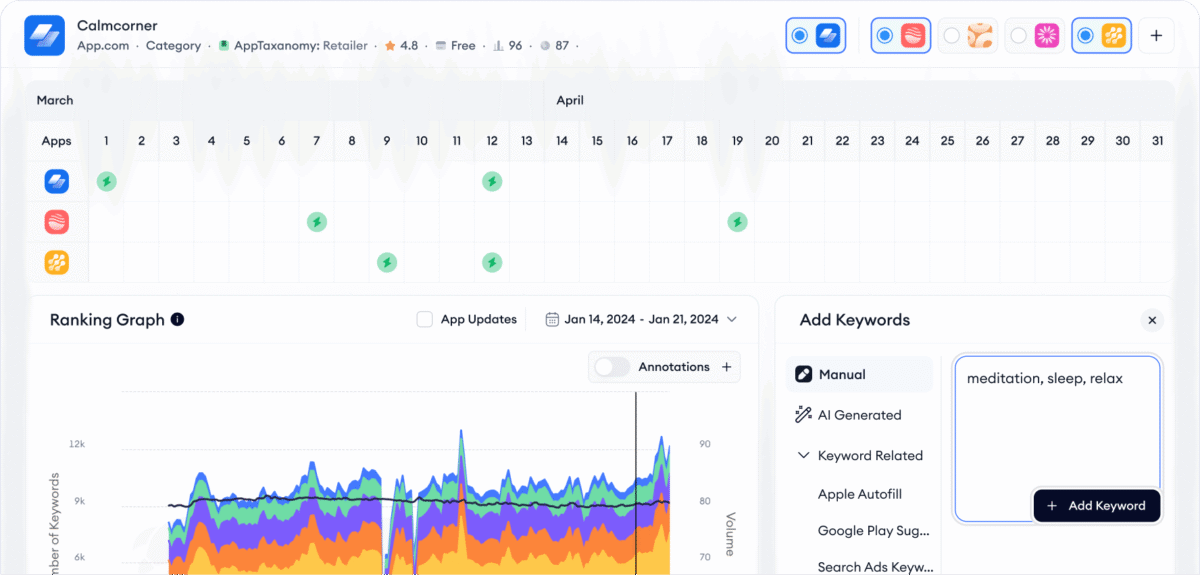
MobileAction’s ASO Intelligence helps you to identify keywords that attract users who are more willing to purchase add-ons (e.g., “premium”, “pro”, “offline content”). This helps align store visibility with revenue-driving intent.,
2. Subscriptions (auto-renewable / non-renewable)
Subscriptions turn your app into a recurring revenue engine. Users pay on a monthly, quarterly, or yearly basis in exchange for ongoing access to premium content, tools, or services. There are two broad types:
- Auto-renewable subscriptions: Renew automatically until the user cancels.
- Non-renewable subscriptions: Expire after a set time; the user must renew manually.
Subscriptions are one of the most powerful mobile app monetization strategies today, but they only work if you provide continuous value. Users ask themselves, “If I stop paying, what do I lose?” Your answer must be clear and meaningful.
Strong subscription apps usually:
- Solve a recurring problem (tracking health, managing finances, learning, productivity).
- Update content or features often enough to justify ongoing payment.
- Communicate premium benefits (“export without watermark”, “access full library”, “unlock all workouts”).
Key elements to design well:
- Pricing tiers: Basic vs. Pro, monthly vs. yearly, single vs. family plan.
- Trial or intro offer: Free trial or discounted introductory period to reduce friction.
- Cancellation experience: Simple and transparent. If the app feels “sticky” only because it is hard to cancel, churn will show up later in reviews and ratings.
SearchAds.com by MobileAction SearchAds.com shows which keywords with paying or subscription-ready intent your competitors are bidding on. This helps you understand which keyword themes they see as valuable for attracting users who are more likely to convert.
3. In-app advertising (banner, reward, interstitial, video)
In-app advertising lets you monetize free users without requiring them tospend money. You show ads inside your app and earn revenue from impressions or clicks. The main formats are:
- Banner ads: Small, persistent placements, usually at the top or bottom.
- Interstitial ads: Full-screen ads shown at natural breaks.
- Rewarded ads: Users choose to watch an ad in exchange for a reward.
- Video ads: Often full-screen and skippable or non-skippable.
Ads are a volume-based app monetization strategy. They work best when you have a large user base with high daily or monthly active users, session lengths and frequency are high, the product can tolerate interruptions without breaking core tasks.
Your main job is balancing revenue and user experience. Too many or badly placed ads cause drop-offs and negative reviews. Too few ads limit revenue.
- Use rewarded ads wherever possible. They give users control and are perceived as more fair.
- Place interstitials at clear breakpoints (end of a level, end of a session), not in the middle of actions.
- Test ad frequency and cap the number of ads per session to maintain retention.
- Segment users where possible: heavy users might see fewer, better-placed ads; low-engagement users might see slightly more.
In a privacy-restricted environment (post-ATT), contextual targeting and high-quality placements become more important than complex tracking. Focus on making ads feel integrated into the flow and not like a punishment.
4. Paid apps
Paid apps are a simple strategy, users pay once on the store to download your app. This overlaps with the paid app monetization model but here, the strategy angle is about when it actually makes sense in 2025.
Paid apps can still work when:
- You serve a niche or professional use case.
- Your brand or product category is already known and trusted.
- The value proposition is clear without a free trial (e.g., a specific calculator, a professional tool, a specialized utility).
Because users pay before using the app, your app store optimization (ASO) becomes critical. You must;
- Use screenshots and videos that show real functionality and outcomes.
- Write descriptions that clearly explain what the user gets and who the app is for.
- Collect strong ratings and reviews early to reduce risk perception.
Paid apps lower download volume but can provide predictable revenue when each new user is worth more. You should choose this strategy only when you are comfortable with smaller, more targeted acquisition and when your category still supports paid pricing.
5. Affiliate monetization
Affiliate monetization means you promote other products or services inside your app and earn a commission when users purchase through your links or referrals. The app itself remains free, and revenue comes from users taking external actions.
This strategy works well when:
- Your app influences purchase decisions (finance, shopping, travel, content discovery).
- You can recommend products that match the user’s intent.
- You maintain trust by recommending only relevant, high-quality partners.
Affiliate monetization is most effective as a complementary revenue stream, not the only one. It pairs well with content-heavy apps where users already seek guidance on what to buy or use.
6. Sponsorships & brand partnerships
With sponsorships and brand partnerships, you collaborate with companies that want exposure to your user base. Instead of standard ad networks, brands pay you directly for placements, campaigns, or integrated content.
This strategy is useful when:
- You have a well-defined, attractive audience segment.
- Your app has strong engagement and brand alignment with sponsors.
- You can integrate branded experiences in a way that feels natural.
Compared to generic in-app advertising, partnerships often offer higher revenue per impression but require more manual work: negotiation, integration, reporting, and sometimes legal review.
To keep user trust, you should:
- Clearly label sponsored experiences.
- Maintain control over which brands you work with.
- Ensure collaborations still support the user’s primary goals.
7. Selling physical products or services
Not all apps make money from digital content, subscriptions, or IAP.
Some apps generate revenue by selling real, physical products or real-world services.
In these cases, the app becomes a sales channel, similar to a mobile storefront or booking system. Revenue doesn’t come from features inside the app, it comes from the actual product or service sold.
That’s why this method is considered a valid app monetization strategy.
Examples include:
- IKEA – users explore the catalog, add furniture to cart, and schedule delivery or pickup directly in the app.
- Wayfair – the app functions as a full e-commerce channel for home products, including 3D previews and product configurations.
- Starbucks – customers order and pay for drinks and food in the app, then pick up in store; the app increases order volume and loyalty.
Because the revenue comes from real-world fulfillment, the challenges go beyond digital execution. You need reliable inventory management, delivery logistics, service capacity planning, and clear customer support processes for cancellations, refunds, and changes.
To monetize effectively, your app must present products or services clearly, show accurate pricing and availability, and offer a smooth checkout flow. Transparent policies, like delivery times, cancellation rules, or return conditions, build trust and reduce friction. Post-purchase communication, tracking, and reminders also play a key role in customer satisfaction.
This strategy works best when you already have (or can build) a strong operational backend.
8. Crowdfunding
Crowdfunding allows you to raise money from users before or during development. Instead of relying on subscriptions or in-app purchases, you collect funding upfront through platforms like Kickstarter or Indiegogo, or through your own in-app contribution flow. This model is useful when you need resources to build the first version of your app, launch a major redesign, or validate demand before making a large investment.
Crowdfunding works best when you clearly explain what you plan to build, why it matters, and when users will receive it. Backers usually receive perks such as early access, exclusive content, credits, or lifetime plans. Since campaigns are time-limited and goal-based, crowdfunding provides a one-time funding boost, not ongoing mobile app monetization. For most teams, this strategy is a complementary model rather than a primary long-term revenue source.
For example, The team behind Zombies, Run!, a story-driven running app, funded its initial development through a Kickstarter campaign. The screenshot below shows a typical crowdfunding layout with the project summary, backer count, and total amount pledged. By offering early access and exclusive missions to supporters, the creators validated demand and secured the budget they needed before building the full app.
This illustrates how crowdfunding can support early-stage development or major product expansions when you need upfront capital and want to test user interest before committing to long-term work.
9. Hybrid monetization
Hybrid monetization combines multiple strategies to cover different user segments and maximize revenue. For example:
- Free app + ads + IAP.
- Freemium + subscription tiers + limited ads.
- Marketplace transaction fees + subscriptions for power users.
- Physical product sales + subscriptions for supplementary content.
In practice, almost every successful app in 2025 ends up with some form of hybrid strategy. Users have different levels of willingness to pay; hybrid models allow you to:
- Monetize high-intent users through subscriptions, IAP, or premium tiers.
- Monetize low-intent users through ads or affiliate links.
- Keep a free path open for growth while still building sustainable revenue.
The risk is complexity. If you add too many monetization models, users get confused, and your product feels more like a store than a solution.
To design an effective hybrid strategy, start with one primary model, such as subscriptions or IAP, and add a secondary approach only when you know exactly which user segment it supports. Keep pricing and paywall logic simple and consistent so users always understand how your model works. Review performance regularly and remove anything that doesn’t contribute to revenue or user experience.
How to choose the right monetization model for your app type
Choosing the right mobile app monetization model depends heavily on the type of app you’re building. Different categories have different user expectations, engagement patterns, and willingness-to-pay levels. Instead of forcing one model across all app types, it’s more effective to match the monetization model to how users naturally behave in your category.
Below, we break down how to align monetization with the most common app categories. The goal is to give you a clear decision-making framework for how to monetize an app based on real audience behavior.
Gaming
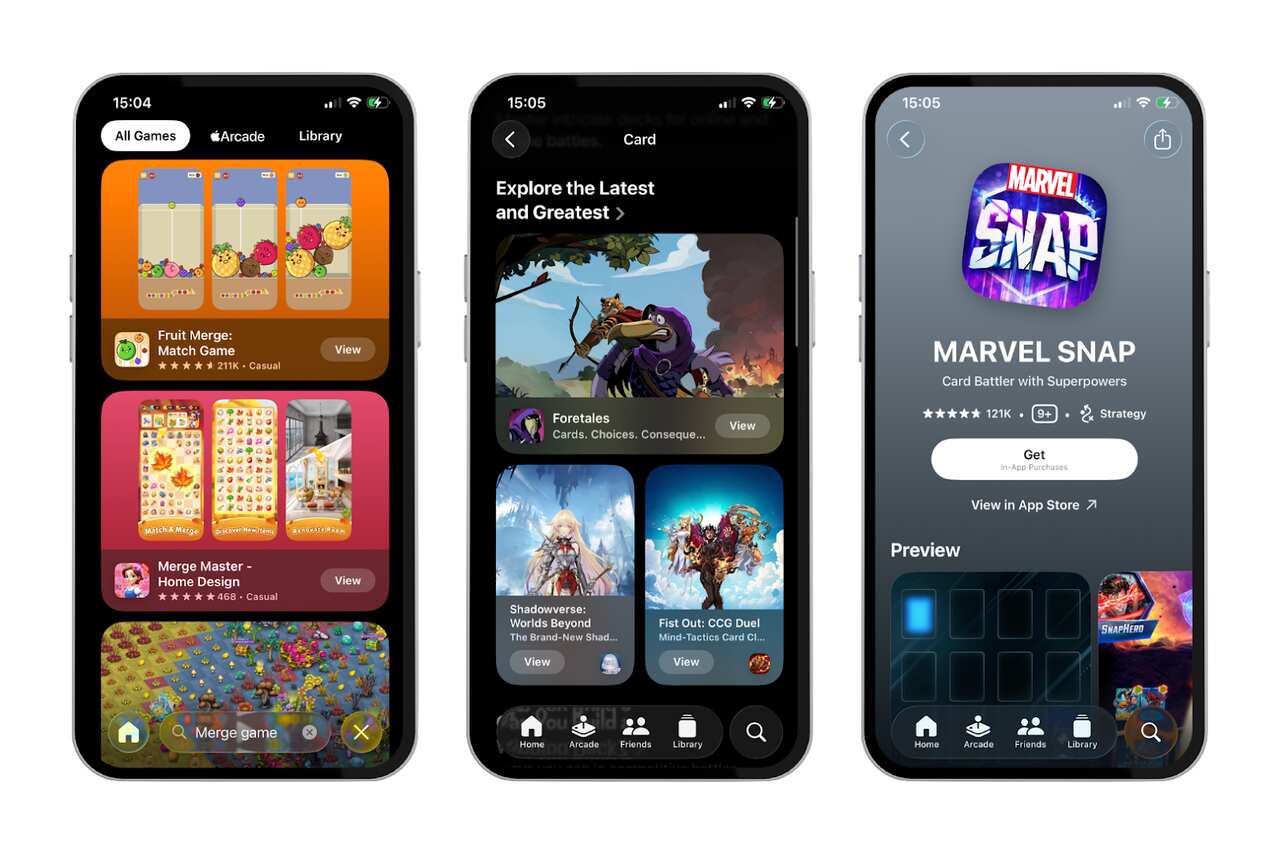
Gaming apps typically rely on frequent engagement, high session lengths, and repeat usage. Because players spend significant time in the app, you can layer monetization options that fit different behavior levels.
Games usually perform best with:
- In-app purchases (consumables and non-consumables) to support progression, customization, or faster advancement.
- Rewarded ads when players choose to watch ads in exchange for benefits.
- Hybrid models (IAP + ads) to monetize both paying and non-paying users.
Subscription models (e.g., “VIP passes”) also work when they offer daily or weekly benefits. Paid games can work in premium niches, but free-to-play dominates.
Shopping
Shopping apps depend on clear product discovery, trust, and smooth checkout. Because users interact with listings, promotions, and product catalogs, monetization is tied to transactions and visibility.
Best matches:
- Transaction or commission-based fees tied to each purchase.
- Seller subscriptions for enhanced listing, analytics, or storefront tools.
- Promoted placements where brands pay for visibility.
- Loyalty-based subscriptions offering perks such as free shipping or exclusive discounts.
Paid downloads and IAP rarely work here; users expect free access to browse and shop.
Delivery
Delivery apps rely on consistency, frequency, and local logistics. Users pay for convenience, speed, and reliability.
Effective models:
- Delivery and service fees as the primary revenue stream.
- Commission-based fees from restaurant or store partners.
- Subscription passes offering free or discounted delivery.
- Sponsored listings where partner merchants pay for better visibility.
Ads must be used carefully since they can disrupt the booking flow.
Finance
Finance apps handle sensitive personal information and long-term user habits. Monetization must feel transparent and trustworthy.
Best matches:
- Subscriptions for premium analytics, credit tools, or investment insights.
- Freemium where core features remain free and advanced tools are gated.
- Transaction fees on trading, transfers, or currency operations.
- Marketplace commissions if users access financial partners through the app.
Ads are usually avoided due to trust concerns; data monetization must be fully anonymized.
Travel
Travel apps revolve around planning, booking, and discovery. Users often compare options, evaluate prices, and look for convenience.
Strong fits:
- Affiliate or referral revenue from hotels, flights, or tours.
- Transaction fees for bookings completed inside the app.
- Sponsored placements from travel partners seeking visibility.
- Subscriptions offering premium itineraries, discounts, or exclusive content.
IAP works only for digital add-ons like detailed guides or offline maps.
Casino & real money
Real-money apps require compliance, user trust, and a clear value exchange. Users expect transparency around deposits and payouts.
Most effective models:
- Real-money deposits as the core revenue driver.
- Transaction fees tied to withdrawals or transfers (in regulated markets).
- VIP subscriptions offering enhanced limits, bonuses, or faster support.
Ads are rarely used due to legal restrictions and user expectations.
Dating
Dating apps depend on visibility, matching, and social behavior. Users pay for access, speed, or increased reach.
Best matches:
- Subscriptions enabling unlimited likes, advanced filters, or visibility boosts.
- IAP boosts such as “super likes,” priority visibility, or profile promotion.
- Freemium with essential matching free and advanced features locked.
- Ads for broad, low-intent audiences.
Hybrid models work best in dating because they monetize both casual and committed users.
Health & fitness
Health & fitness apps provide continuous value through workouts, coaching, and tracking. Users are comfortable with recurring payments when the product supports ongoing improvement.
Effective models:
- Subscriptions for full access to workout libraries, coaching, and analytics.
- Freemium with basic workouts free and structured programs premium.
- IAP for challenges, advanced plans, or specialized content.
- Paid downloads only for fixed, self-contained programs.
Ads are typically avoided because they interrupt workouts or tracking flow.
How to make the right decision?
When choosing the right app monetization model, focus on three questions:
- How often do users interact with your app? High-frequency categories support subscriptions; low-frequency categories may require IAP or one-time models.
- Is your value continuous or moment-based? Continuous value → subscription. Moment-based value → IAP, paid app, or transactions.
- Does monetization enhance or interrupt usage? If interruptions harm the experience, avoid ads. If interruptions don’t matter or can be optional, ads may work well.
By matching your monetization model to your app category and usage patterns, you increase revenue while keeping user experience consistent and reliable.

Common mistakes when monetizing an app
Even strong apps struggle with revenue when the monetization strategy creates friction or confuses users. Below are the most common mistakes teams make in 2025. Each one directly affects conversions, retention, or long-term revenue. Keeping these in mind helps you design a cleaner, more predictable mobile app monetization strategy.
Over-monetization
Trying to monetize too aggressively, too many paywalls, too many ad placements, or constant upgrade prompts, reduces trust and leads to fast churn. Users should never feel pressured. Monetization should support the experience, not interrupt it.
Wrong feature gating
Locking the wrong features behind paywalls causes users to abandon the app. Essential functionality should stay free so users understand the core value. Premium features should feel like meaningful improvements, advanced tools, deeper personalization, or time-saving benefits.
Bad paywall UX
Complex paywalls with long text, unclear plans, and too many options confuse users. If they cannot understand what they’re paying for in a few seconds, they won’t convert. Simple plans, clear benefits, and minimal friction always perform better.
Pricing misalignment
Many apps set prices too high without showing enough value, or too low and weaken long-term revenue. Your pricing should match what users expect in your category and reflect the real value you provide. Skipping regional pricing is another common mistake and often reduces conversions in global markets.
Using too many monetization models at once
Combining ads, subscriptions, IAP, paywalls, and partnerships without a clear structure leads to cluttered UX and inconsistent messaging. Users get confused about what is free, what is premium, and why they should upgrade.
A clean, focused monetization model with optional supporting strategies works better than overcomplicating the experience.
Conclusion
In this blog post, we showed the core elements of mobile app monetization in 2025; selecting the right app monetization model, structuring pricing and paywalls clearly, and improving conversion through continuous experimentation. Each decision you make across acquisition, product, and pricing affects how effectively your app can generate predictable, long-term revenue.
Access to accurate market insights significantly improves this process. MobileAction’s ASO Intelligence provides visibility into keywords with commercial intent, competitor creative strategies, custom product page usage, and overall category trends. These insights help you evaluate opportunities, prioritize improvements, and adjust your monetization approach based on real data rather than guesswork.
As your product evolves and user behavior shifts, your monetization structure will also need refinement. Teams that continuously review performance, test new ideas, and update their listings and in-app flows create stronger, more sustainable revenue outcomes.
If you want to explore how ASO insights can support your growth and help you make clearer, data-driven decisions, you can sign up free today and start using MobileAction whenever you’re ready.
Frequently asked questions
How to monetize an app as a beginner?
Start with one simple monetization model that fits your app type. For most apps, the best starting point is a subscription or IAP-based freemium model because users can try the product before paying. Add a paywall after showing core value, use a short trial, and focus on clear messaging. As you learn user behavior, expand with additional strategies like hybrid monetization or contextual IAP.
What is the best app monetization model?
There’s no universal “best” model. Subscription works well for ongoing value, IAP fits games and creative tools, ads suit high-volume apps, and transaction models work for marketplaces. The right model depends on your app’s category, usage patterns, and user expectations.
How do free apps make money?
Free apps usually earn revenue through ads, optional in-app purchases, subscriptions, affiliate links, or transaction fees. Many combine multiple methods so they can monetize both paying and non-paying users.
How to monetize a mobile app without ads?
Use subscriptions, IAP, paid downloads, or freemium gating. You can also consider affiliate revenue, donations, or selling physical products. Monetization does not require ads, many high-revenue apps avoid them completely.
Related reading

Content Marketing Specialist
Resources that you'll love
Grow your app on the App Store and Google Play Store with our solutions now